
Business and Economy
TCN picks holes on IKEDC’s stand on grid instability

By Chidera Orji
The Transmission Company of Nigeria (TCN) has rejected the recent publication by Ikeja Electric (IKEDC) in which the distribution company allged that the several Band A feeder outages recorded on 3rd and 4th November 2026 were attributed to “grid instability” , which was assigned to TCN as the responsible party.
The TCN in a strong worded statement signed by the Management of the agency clearly noted that the attribution by Ikeja Electric was inaccurate and misleading, for the following reasons:
- Root-cause determination is not the mandate of a DisCo.
By virtue of Section 67 of the Electricity Act 2023, the determination of the root cause of disturbances, shortfalls and interruptions on the national grid falls exclusively within the defined functions of the Nigerian Independent System Operator (NISO). IKEDC, like every other market participant, has no authority to make such determinations, and NISO has made none attributing the outages in IKEDC’s notice to TCN. - NISO has already stated the true position.
In its public clarification of 5 November 2026, NISO attributed the current decline in power generation to constraints in gas supply to thermal power stations and reduced output from hydroelectric stations due to lower reservoir inflows. NISO explained that this reduced available generation, which in turn reduced the energy allocated to DisCos and led to fewer hours of supply and increased load shedding across distribution networks. The impact on each DisCo varies with available generation and its allocation. - The facts are inconsistent with the “grid instability” claim.
The shortfall in supply to IKEDC’s customers is a consequence of reduced generation and the resulting allocation, not of any failure of TCN’s transmission network. TCN can only transmit the energy made available to it and cannot transmit energy that is not generated. - The records for all feeders supplying IKEDC confirm the national picture NISO described. Of the interruptions recorded on 1 and 2 November, 68% were frequency-control load-shedding arising from low generation. A further 26% were due to IKEDC’s non-compliance with load allocation by the National Control Centre (NCC) of NISO, or to faults and works on IKEDC’s own network. The remaining 6% were TCN planned maintenance, switching or a line limitation. None of the recorded interruptions was a TCN equipment fault or trip.
TAN said that the ” feeders named in IKEDC’s notice do not support the claim either. Of the 46 interruptions recorded on the 33kV feeders named in the notice, 29 were frequency-control load-shedding arising from low generation, and 14 were recorded against IKEDC: 9 for non-compliance with load allocation and 5 for faults or trips on its own network. The other 3 were scheduled TCN maintenance on the Ogba–Alimosho line on 1 November. On 2 November, for example, the Rack Centre feeder was interrupted by a cable fault on IKEDC’s network, which its own crew repaired. IKEDC’s notice itself assigns several of these feeders, including MTN, Iju Water Works and Rack Centre, to IKEDC (“IE”) for 33kV faults.
” IKEDC’s position is therefore out of step with the true state of the Nigerian Electricity Supply Industry. Attributing shortfalls caused by generation constraints to TCN misinforms customers, undermines public confidence and obscures the real challenges that all stakeholders must work together to resolve.
TCN therefore urges IKEDC and all other DisCos to desist forthwith from making unfounded claims about the causes of supply shortfalls to their customers. DisCos should communicate based on verified information from NISO, the body responsible for the operation of the grid.
TCN also urged electricity customers to refer to NISO’s official platforms for accurate information on the state of the NESI, while also sympathising with customers affected by the reduced hours of supply.
The agency said that It remains committed to transmitting all available energy safely, reliably and efficiently within the prevailing operational constraints, and to working with NISO, generation companies and DisCos to improve the situation.

Business and Economy
LG reinforces leadership in Nigeria’s refrigerator market with award-winning innovation
By Charles Olewezi
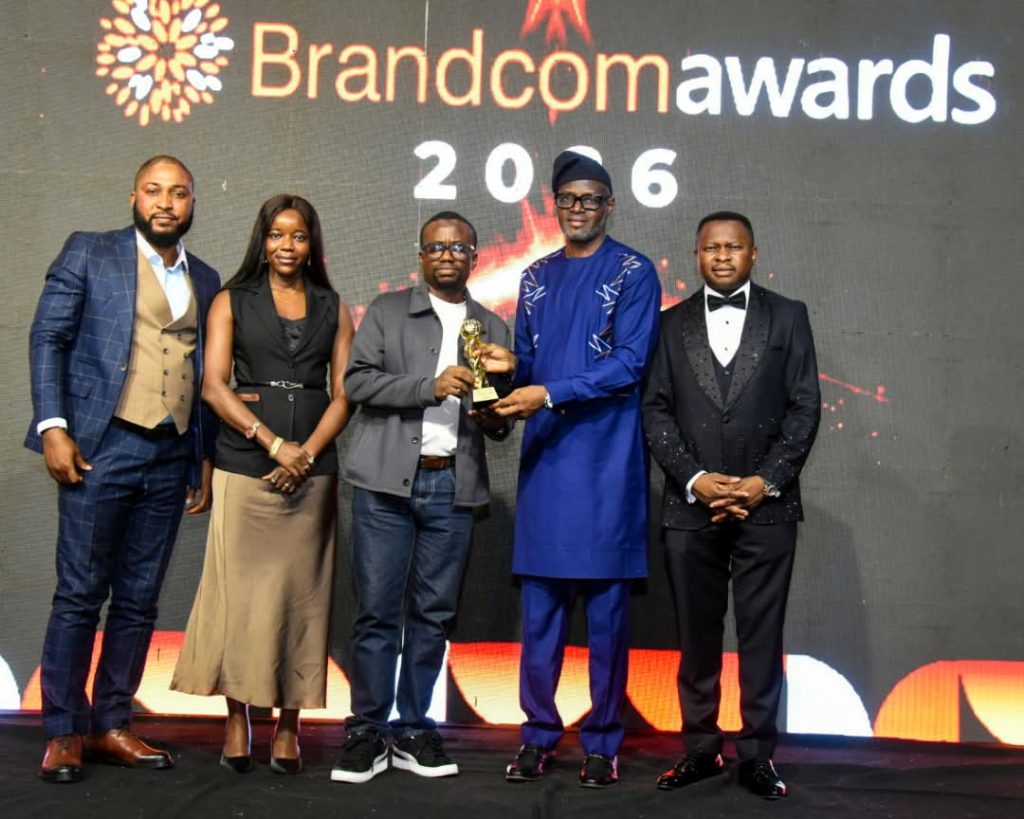
LG Electronics has strengthened its reputation as a leader in home appliance innovation following the recognition of its revolutionary MoodUP™ Refrigerator at the BRANDCOM Awards 2026, held in Lagos recently. The award underscores LG’s continuous commitment to delivering innovative technologies that enhance everyday living while meeting the evolving needs of today’s consumers.
The recognition reflects not only the uniqueness of the MoodUP™ Refrigerator but also LG’s broader dedication to developing advanced refrigeration solutions that combine smart technology, energy efficiency, convenience and reliable performance. For Nigerian consumers, it further reinforces LG’s focus on delivering appliances that support modern lifestyles while providing long-term value.
The LG MoodUP™ Refrigerator stands out with its customizable LED door panels, smart connectivity and contemporary design, allowing users to personalize their kitchen experience like never before. More than a design statement, MoodUP™ represents LG’s vision of transforming home appliances into intelligent lifestyle solutions that seamlessly blend innovation with everyday practicality.
While its striking appearance has captured global attention, the principles behind MoodUP™ innovation extend across LG’s entire refrigerator portfolio. From preserving food freshness to helping households manage energy consumption more efficiently, LG continues to develop solutions that address the practical needs of modern families.
Selected LG refrigerator models are equipped with advanced technologies such as Smart Inverter Compressor™, LINEARCooling™ and DoorCooling+™, which work together to deliver energy-efficient operation, more consistent cooling and longer-lasting freshness for stored food. These innovations are particularly valuable in today’s environment, where consumers increasingly prioritize efficiency and performance alongside everyday convenience.
Commenting on the recognition, Oktai Kim, General Manager, Home Appliances Solutions, LG Electronics, said: “Innovation is most meaningful when it improves everyday life for consumers. The recognition of LG MoodUP™ reflects our commitment to developing technologies that respond to changing lifestyles and expectations. In Nigeria, we remain focused on delivering refrigeration solutions that combine efficient performance, reliability and lasting value for our consumers. Our goal is to ensure that innovation is not only admired but experienced every day in homes across the country.”
As consumers become increasingly discerning in their appliance choices, purchasing decisions are being driven not only by initial cost but also by long-term performance, energy efficiency and overall value. LG’s approach to refrigeration reflects this shift, offering products that balance advanced technology with practical benefits that matter to everyday households.
The BRANDCOM 2026 recognition further highlights the importance of continuous investment in research, design and consumer-focused innovation within the home appliance industry. For LG Electronics, technological advancement remains a continuous journey guided by one objective: creating products that make life better for consumers.
Beyond celebrating the success of the MoodUP™ Refrigerator, the award reinforces LG’s broader commitment to delivering smart, reliable and energy-efficient refrigeration solutions that meet the evolving needs of Nigerian families.
By Our Reporter
Nigeria’s external debt stock rose by 6.6 percent to $145.02 billion in 2025, from $135.99 billion in 2024, according to the World Bank.
The World Bank detailed the country’s external borrowing profile in its International Debt Report 2026, which tracks external borrowing and debt-service trends across low- and middle-income countries.
Published on Friday, the report put Nigeria’s public and publicly guaranteed llllllllllllldebt at $62.4 billion, while private non-guaranteed debt accounted for $54.48 billion.
Short-term debt stood at $28.14 billion, the multilateral said.llllll
NIGERIA’S $5 BILLION SWAP DEAL BACKED BY $6.7 BILLION IN DOMESTIC SECURITIES
The World Bank also said Nigeria obtained $5 billion through a total return swap (TRS) arrangement in 2026, pledging about $6.7 billion in domestic government securities as collateral.
The institution said the transaction had a three-year maturity and a collateralisation ratio of approximately 133 percent, meaning the value of securities pledged was about 33 percent higher than the financing obtained.
The institution said the TRS arrangements have been identified in Angola, Argentina, Colombia, Nigeria and Senegal since 2024, with financing amounts ranging from about $1 billion to $9.3 billion.
“Maturities have generally ranged from one to three years, and disclosed collateralization ratios have typically been between 133 and 198 percent,” the report said.
The World Bank said collateral for the transactions included domestic government securities, external sovereign bonds, US treasury securities or a combination of the instruments.
The report also said Nigeria raised $2.3 billion through a dual-tranche international bond issue, making it the third-largest issuer in the region.
The bond sale, according to the Bretton Woods organisation, comprised a 10-year tranche with an interest rate of 8.625 percent and a 20-year tranche at 9.125 percent.
READ ALSO: Tinubu dumps $20.5bn borrowing plan, seeks approval for $7.7bn loan
On Nigeria’s debt burden, the World Bank put the country’s external debt-to-exports ratio at 212 percent in 2025, while external debt-to-gross national income stood at 51 percent.
Debt service accounted for 19 percent of exports, while debt service-to-gross national income was 5 percent.
The report showed that Nigeria’s average interest rate on new borrowing from official creditors was 1.9 percent in 2025, compared with 9.6 percent for private creditors.
The World Bank said new borrowing from official creditors had an average maturity of 25 years and a five-year grace period, while private creditor financing had a 12-year maturity and an eight-year grace period.
According to the report, external debt across low- and middle-income countries rose 5.5 percent to a record $9.4 trillion in 2025.
“Access to international finance has improved, but the price of that finance has not,” the report said.
Haishan Fu, the World Bank Group’s chief statistician and director of development data, welcomed the return of private lending, but said it came with significant costs.
Fu said while the return of private lending to low- and middle-income countries is welcome, “these countries are borrowing more, paying more, and in many cases leaving less for long-term development”
Business and Economy
Obasanjo criticises Tinubu frequent borrowing patterns, says debt worse than leprosy
By Our Reporter
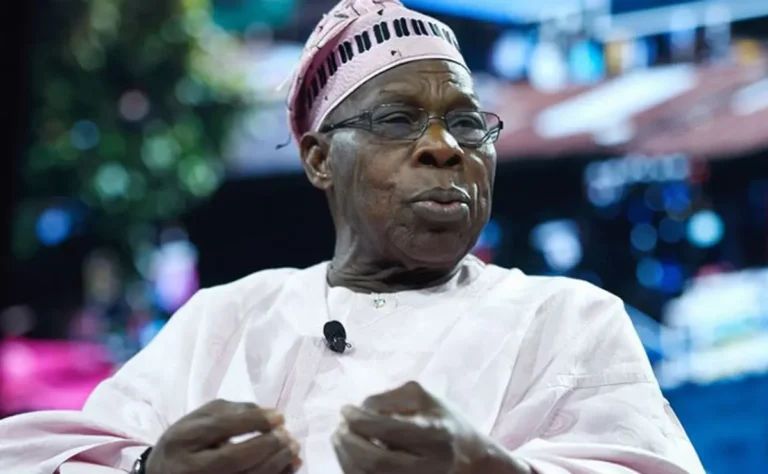
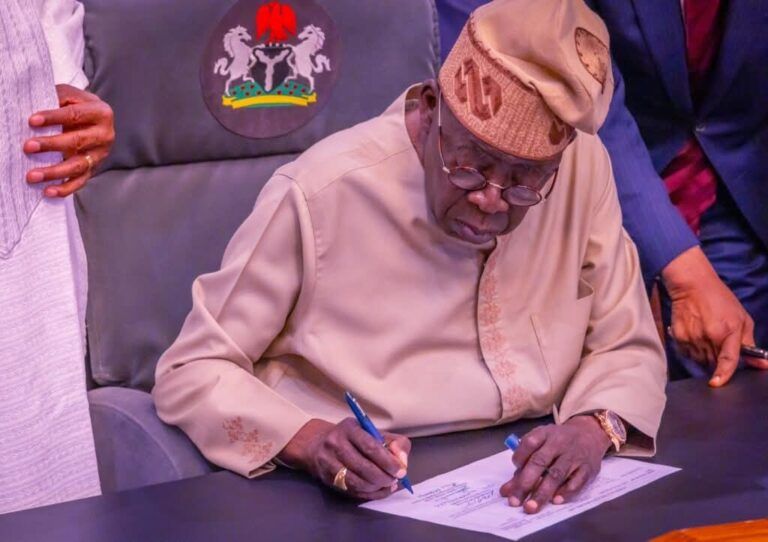
Former President Olusegun Obasanjo has criticised President Bola Tinubu’s position on government borrowing, describing as “absolute nonsense” the president’s assertion that borrowing should not be regarded as a negative practice.
Obasanjo made his position known on Friday in Abeokuta, Ogun State, while speaking at the Ajibosin Platform, a public forum themed “Leveraging Artificial Intelligence to solve grassroots problems and accelerate National Development.”
In April, Tinubu defended his administration’s decision to continue borrowing when necessary, arguing that loans were not inherently bad if the government worked hard to repay them.
The president made the remarks at the State House during a meeting with Plateau State leaders led by Governor Caleb Mutfwang and the All Progressives Congress (APC) National Chairman, Nentawe Yilwatda.
“If we have to borrow, we borrow. Borrowing is not leprosy, we just have to work hard to be able to pay for it,” the president had said.
However, responding to the president’s position, Obasanjo argued that the consequences of excessive borrowing were more damaging than those associated with leprosy, particularly because public debt could affect several generations.
The former president said: “And for anybody to say debt is no leprosy, is absolute nonsense. Debt is worse than leprosy. Because leprosy destroys only one person. Debt destroys generations.”
Obasanjo also expressed concern over Nigeria’s economic performance, particularly the sharp depreciation of the naira against the United States dollar over the years.
To illustrate the extent of the currency’s decline, he recalled the exchange rate when he established his farm nearly five decades ago.
“When I started my farm, 47 years ago, naira to the dollar was one naira to $1.85. Forty-seven years ago. What has Nigeria done in 47 years that we now have 1,500 naira to the dollar? What have we done?” he asked.
He further questioned the knowledge and decision-making capacity of the country’s political leaders, demanding to know what they understood about governance and how such knowledge could translate into better living conditions for Nigerians.
“What do our leaders know? And what do they not know? And from what they know, what can they do for us?” he asked.
The former president also faulted Nigeria’s reliance on international financial institutions, particularly the World Bank and the International Monetary Fund (IMF), arguing that their economic prescriptions might not adequately reflect the country’s peculiar needs and development challenges.
He maintained that the institutions were established before Nigeria gained independence and questioned their suitability in determining the country’s economic direction.
Recalling Nigeria’s agricultural policies, Obasanjo said the country was discouraged from providing certain forms of support to farmers despite similar interventions being available to agricultural producers in developed economies.
“World Bank and IMF were not designed for us. They were not built by us. They were built before we became independent. And that’s the people who would determine what we do,” he said.
Obasanjo also cautioned against the unquestioning adoption of economic policies recommended by foreign-trained experts, stressing the need for policymakers to consider Nigeria’s peculiar economic conditions when making decisions.
-
 General News4 weeks ago
Rivers 2027: We are not part of Rainbow Coalition – APC Legacy Group slams Wike, Fubara meeting
-

 Politics2 months ago
2027: ASAF backs APC governors, rejects rainbow coalition
-
General News2 months ago
JOHESU demands: MHWUN puts FG on notice over fresh action
-

 Politics2 months ago
You have demonstrated diligence, loyalty, statesmanship in leadership, Ekechi salutes Shetimma at 60
-

 Politics3 months ago
2027: Advertising experts raise concerns over irregular regulation of sector
-
FCT News3 months ago
2027: Hasana-Moneme pledges skills, empowerment, credit access for FCT women
-
General News3 months ago
2027: Dame Princess Esom-Nwafor Orizu confirmed as APC flagbearer for Nnewi North /South /Ekwusigo Federal Constituency as INEC releases names of candidates
-
Uncategorized4 months ago
Rescue of Oyo schoolchilden: Tinubu commends security agencies, says action breakthrough in fight against criminality