
General News
Sowore’s trial: Court orders INEC Chair to produce Tinubu’s 1999, 2023 election documents

By Our Reporter
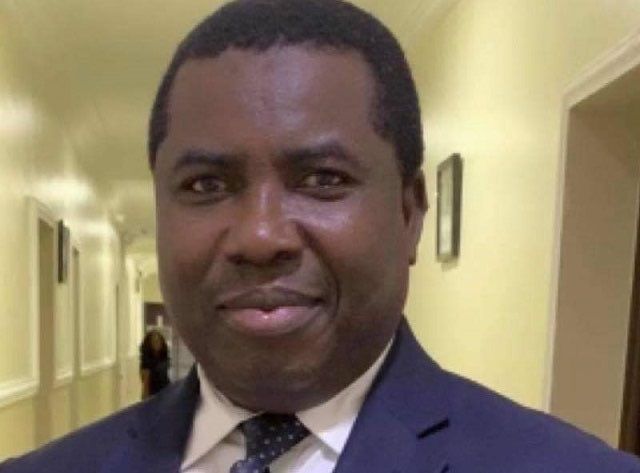
The Federal High Court in Abuja has ordered the Chairman of the Independent National Electoral Commission (INEC), Prof. Joash Amupitan to produce President Bola Tinubu’s nomination documents for the 1999 Lagos governorship and 2023 presidential elections in Omoyele Sowore’s criminal trial.
The court directed Amupitan to produce the documents and testify in the trial of Sowore, publisher of Sahara Reporters, who is being prosecuted by the Department of State Services (DSS) over his social media posts about Tinubu.
The subpoena, issued in charge number FHC/CR/484/2025, specifically requested Tinubu’s INEC Form CF001, including the affidavit relating to lost certificates, which he submitted as a candidate in the 1999 Lagos governorship election.
It also requested the president’s Form CF001 submitted to INEC for the 2023 presidential election.
The document, titled “Subpoena Duces Tecum”, was addressed to Amupitan and signed by the presiding judge, Mohammed Umar.
The development followed the court’s decision on Monday to grant the defence’s request to subpoena the INEC chairman and Joe Igbokwe, a former publicity secretary of the All Progressives Congress (APC) in Lagos, as witnesses.
At the proceedings on Monday, Ruben Adakole, counsel to Sowore, informed the court that the defence intended to call the two individuals as witnesses.
The judge granted the request and directed that subpoenas be issued to them.
In another ruling, the court dismissed Sowore’s application seeking to compel Akinlolu Kehinde, lead counsel to the DSS, to testify as a defence witness.
The judge set aside the subpoena earlier issued to Kehinde, holding that lawyers owe their clients a duty of confidentiality and cannot ordinarily be compelled to disclose communications relating to legal representation.
He said a legal practitioner could only be compelled to testify in limited circumstances, particularly where the evidence sought concerns an uncontested matter or would not prejudice the client’s interests.
He also agreed with the prosecution that the application against Kehinde was intended to delay the trial and had been brought in bad faith.
The court adjourned the case until November 11 for the appearance of the subpoenaed defence witnesses.
Sowore is being prosecuted by the DSS over social media posts in which he allegedly described President Bola Tinubu as a “criminal”.

By Our Reporter
Joseph Tegbe, minister of power, says the federal government will begin replacing infrastructure across the national grid within the next one to two months.
Tegbe spoke on Monday during a TVC television programme monitored by TheCable.
“So in the next one or two months, we will commence infrastructure replacement across our grid…. President Tinubu is extremely supportive of what we are doing,” he said.
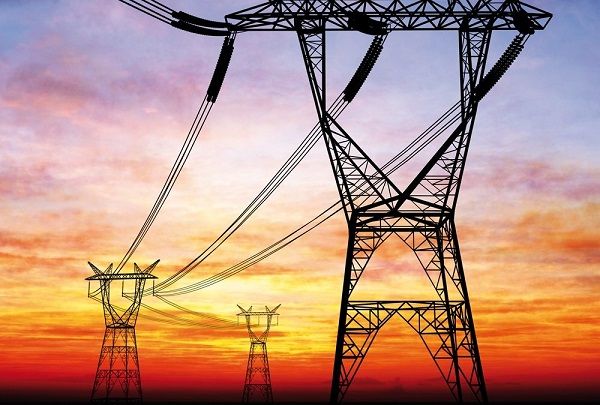
The minister identified transmission as the biggest constraint in the power sector, noting that some of the country’s transmission lines have been in operation for as long as 50 years.
Tegbe said the ministry is conducting a technical audit of the power sector to identify the infrastructure requiring repairs or replacement and ensure that funds are allocated to the right areas.
“I’m a systems person. So do a technical audit of the entire power sector. And today, we’ve gone about one month into the technical audit. We’ve seen some of the results,” he said.
The minister said the audit also identified faults at several facilities.
“There are places where it is towers that have issues. There are places where it’s insulators. There are places where it’s a conductor relay,” he said.
“What you don’t want to do is start spending money on insulators when you are meant to fix a conductor relay. Now we’re getting a clear picture.”
Furthermore, Tegbe said Nigeria has sufficient gas to generate electricity, but constraints in the gas supply chain, including debts owed to electricity generation companies (GenCos), are limiting supply.
On November 5, the Nigerian Independent System Operator (NISO) attributed the lower power generation partly to limited gas availability and reduced water inflows into hydroelectric stations.
However, on November 7, the Nigerian National Petroleum Company (NNPC) Limited said its gas transportation network has no operational constraints responsible for the recent decline in electricity generation.
Commenting on the conflicting positions, the minister said his priority is to give Nigerians access to electricity, asking both parties to forget the argument on whether gas is available or not and whether the grid is collapsing.
The minister said his role is to ensure all agencies work together.
“We have gas as a nation. However, sometimes, that liquidity issue becomes a constraint,” Tegbe said.
The minister dismissed concerns about gas availability, insisting that Nigeria has sufficient reserves to support power generation but faces constraints within the supply chain.
“There’s availability of gas for us as a nation. It’s a comparative advantage. However, within the gas supply chain, there are constraints,” he said.
The minister said one of the constraints is the inability of generating companies to purchase gas due to outstanding debts owed to them.
He put the debt at N3.3 trillion, adding that the federal government, with the support of President Bola Tinubu, had begun settling the outstanding obligations.
“In the last few months, we’ve paid down N1.23 trillion. We only have N2 trillion left. That N2 trillion, hopefully next year,” the minister said.
Tegbe also identified the age of some power plants as another challenge affecting electricity generation, noting that the government is replacing some of the ageing facilities with newer ones.
He said addressing the constraints across the gas supply chain and improving generation infrastructure would help strengthen power supply.
By Our Reporter
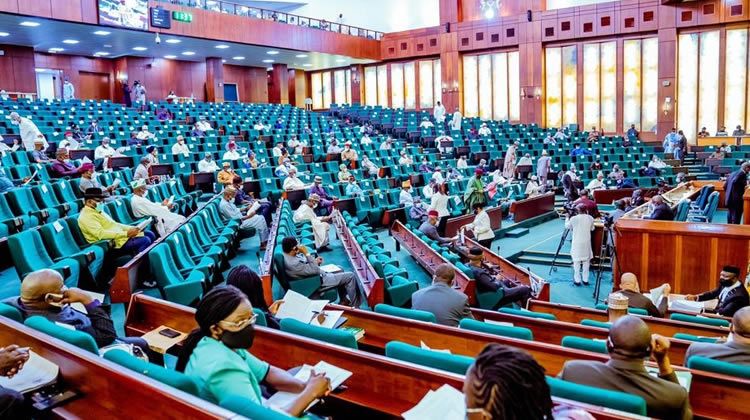
The House of Representatives Public Accounts Committee, on Monday, questioned officials of the Nigerian Railway Corporation (NRC) over unresolved financial discrepancies involving about ₦12.91bn, warning that agencies found wanting in the management of public funds would face appropriate sanctions.
The committee raised concerns over the Corporation’s handling of public funds following the examination of audit queries contained in the 2023 Auditor-General for the Federation’s report.
At an investigative hearing on Monday, the committee, chaired by its Deputy Chairman, Jeremiah Umaru, scrutinised the NRC’s responses to three major audit queries involving unaccounted transfers to its outstations, discrepancies in internally generated revenue and alleged under-remittance of revenue to the Consolidated Revenue Fund.
The NRC’s Managing Director, Dr Kayode Opeifa, represented the Corporation at the hearing.
The committee expressed dissatisfaction with some of the explanations and supporting documents presented by the railway authorities, and set up reconciliation committees to establish the actual financial position of the Corporation.
It also requested additional documents to determine the extent of the alleged financial infractions and the outstanding liabilities, where applicable.
On the reported ₦6.62bn in transfers to the Corporation’s outstations, the committee examined the NRC’s explanation, particularly the utilisation of ₦5.16bn reportedly transferred to various districts.
Although the Corporation presented evidence of diesel purchases, lawmakers demanded further clarification on the outstanding transactions.
The committee subsequently constituted a reconciliation committee to scrutinise the records and establish how the funds were utilised.
A similar concern arose over a reported ₦2.86bn discrepancy between revenue captured in treasury receipt booklets and the amount recognised in the Corporation’s audited accounts.
The committee expressed dissatisfaction with the explanation offered by the NRC and directed a reconciliation of the figures to resolve the discrepancies.
The lawmakers also examined an audit query involving the alleged under-remittance of ₦1.71bn in internally generated revenue.
Following the Corporation’s presentation, the committee requested additional supporting documents to establish the actual amount remitted and determine whether any liability remained outstanding.
The audit findings also raised questions about the Corporation’s compliance with financial regulations in the award of contracts, management of investment income, expenditure on official travel, and the retirement of cash advances.
Among the other queries were the award of 26 contracts valued at ₦858.6m without appropriate authorisation; non-remittance of ₦410m in investment income to the CRF; and expenditure of ₦19.6m on a chartered flight without sufficient evidence of utilisation.
The report further identified ₦221.8m in expenditure “on store items without ledger charges, ₦136.3m spent on residential buildings without corresponding rental income, and ₦39.45m in unretired cash advances.”
Other flagged transactions included “₦28.13m spent on foreign trips without the required approvals and ₦4.64m in training fees paid in violation of the Federal Government’s e-payment policy.”
The committee warned that it would not “hesitate to impose appropriate sanctions on any agency found wanting in the discharge of its financial responsibilities.”
The warning underscores the House’s efforts to strengthen accountability in the management of public resources, particularly through the examination of annual audit reports submitted by the Auditor-General of the Federation.
The Public Accounts Committee, chaired by the member representing Ede North/Ede South/Ejigbo/Egbedore Federal Constituency of Osun State, Mr Bamidele Salam, is constitutionally empowered to examine accounts showing the appropriation of sums granted by the National Assembly and the reports of the Auditor-General, with a view to ensuring that public funds are properly accounted for.
The NRC, a major public institution responsible for railway operations and infrastructure, is expected to provide satisfactory explanations for the flagged transactions and demonstrate compliance with applicable financial regulations.
The reconciliation committees are expected to establish the actual figures and provide a basis for the committee’s further decisions on the outstanding audit queries.
Since its inauguration, the Salam-led Committee has recovered revenue for the Federal Government in both local and foreign currencies, particularly from oil companies and government-owned enterprises.
By Our Reporter
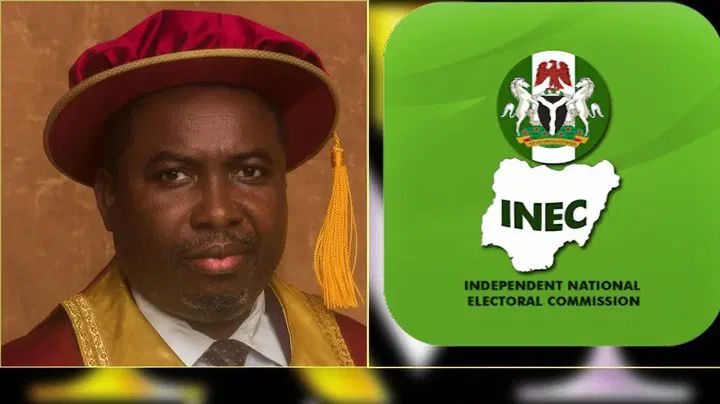
The Independent National Electoral Commission (INEC) has removed 1,608,660 invalid registrations from the preliminary register of voters following a nationwide review of entries from the 2025/2026 Continuous Voter Registration exercise.
The commission also removed 876 records belonging to persons verified to be deceased, while 873 additional records of deceased persons were identified and removed, bringing the total number of deceased persons removed to 1,749.
The INEC Chairman, Prof. Joash Amupitan (SAN), disclosed this on Monday while briefing journalists on the outcome of the review of the preliminary register of voters.
He said the commission received 11,088,238 registration records from the three phases of the 2025/2026 CVR exercise.
Amupitan explained that the current National Register of Voters contained records from successive registration and Continuous Voter Registration exercises conducted since 2011, adding that they were captured using different technologies and operational standards.
He said: “It must be noted that the current National Register of Voters evolved through successive registration and Continuous Voter Registration (CVR) exercises since 2011. It therefore contains biometric and demographic data captured under different technologies, operational arrangements and quality standards.
“Although the register has undergone cleansing and biometric comparison at different points, significant historical integrity questions remain since 2011 and require a national, systematic response.”
According to him, INEC’s Automated Biometric Identification System initially flagged 1,545,052 records for further examination.
However, Amupitan clarified that being flagged by the automated system did not automatically make a registration invalid, as each case underwent further examination and authorised adjudication.
He said 1,277,052 registrations were confirmed invalid and excluded before the publication of the preliminary register.
Following complaints, claims and objections received during the seven-day display exercise between October 9 and 15, the commission subjected another 268,000 cases to adjudication.
READ ALSO: Court orders INEC Chair to produce Tinubu’s 1999, 2023 election documents in Sowore’s trial
Of these, 217,722 were confirmed invalid and removed, while 50,278 were cleared as valid and retained.
Amupitan said additional screening subsequently identified another 113,886 invalid registrations, bringing the total number of invalid records removed after the review to 331,608.
The 331,608 records were removed in addition to the 1,277,052 registrations previously excluded, bringing the total number of invalid registrations removed to 1,608,660. The 873 additional records of deceased voters were treated as a separate category.
The clean-up exercise followed complaints, claims and objections raised by Nigerians after the preliminary register was displayed nationwide between October 9 and 15, 2026.
Amupitan said the commission was required by law to consider objections and complaints received during the period.
“Pursuant to section 19(2) of the Electoral Act, 2026, the Commission is required to accept and consider objections, claims and complaints raised by the public to the Preliminary Register of Voters within fourteen (14) days after displaying the Voters Register,” he said.
“After verifying the objections, claims and complaints, the Commission is expected to take corrective action and ensure that the register is cleaned up ahead of the publication of the Final Register.”
The preliminary register attracted criticism after Nigerians and civil society organisations reportedly identified irregularities, including suspected artificial intelligence-generated photographs, duplicate registrations, unusual names and entries belonging to deceased persons.
Some of the questionable photographs circulated on social media, prompting concerns about the integrity of the voter registration process and INEC’s verification procedures.
The commission subsequently reviewed the register to investigate the complaints and remove entries found to be invalid.
Amupitan said the findings had raised serious questions about the integrity of the registration process and the conduct of some personnel involved in voter registration.
He disclosed that the commission’s technical assessment uncovered instances of deliberate circumvention of established registration procedures, including the misuse of provisions intended for exceptional registration circumstances, particularly those relating to persons with disabilities.
He said the affected records had been identified and subjected to verification and remediation, while personnel allegedly connected with the infractions had been identified for further administrative investigation.
“Fifty-four persons across ten states have been identified as complicit, and necessary disciplinary action will be taken against them, including possible prosecution,” he said.
The INEC chairman, however, warned that the exercise had not completely resolved the integrity concerns surrounding the national voters’ register, as significant irregularities predated the latest registration exercise.
He said most of the complaints involving multiple registrations and suspicious photographs circulating on social media related to historical records captured between 2011 and 2023.
According to him, the commission’s decision to defer the proposed nationwide voter revalidation exercise until after the 2027 elections did not suspend its existing mechanisms for identifying and removing invalid registrations.
Amupitan said the commission, at its meeting on Monday, resolved to address outstanding duplications in the historical register, directing that records already flagged through public complaints and obvious cases identified internally should be removed after proper verification.
INEC said it would publish the cleaned-up register of voters in December, ahead of the 2027 general elections.
-

 General News1 month ago
Rivers 2027: We are not part of Rainbow Coalition – APC Legacy Group slams Wike, Fubara meeting
-
General News2 months ago
JOHESU demands: MHWUN puts FG on notice over fresh action
-

 Politics2 months ago
2027: ASAF backs APC governors, rejects rainbow coalition
-

 Politics2 months ago
You have demonstrated diligence, loyalty, statesmanship in leadership, Ekechi salutes Shetimma at 60
-

 Politics3 months ago
2027: Advertising experts raise concerns over irregular regulation of sector
-
FCT News3 months ago
2027: Hasana-Moneme pledges skills, empowerment, credit access for FCT women
-
General News3 months ago
2027: Dame Princess Esom-Nwafor Orizu confirmed as APC flagbearer for Nnewi North /South /Ekwusigo Federal Constituency as INEC releases names of candidates
-
Uncategorized4 months ago
Rescue of Oyo schoolchilden: Tinubu commends security agencies, says action breakthrough in fight against criminality