
General News
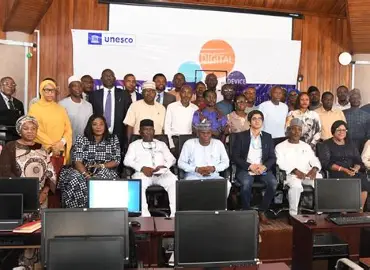
UNESCO Trains 1,445 teachers in AI in Bayelsa

Our Reporter
The United Nations Educational, Scientific and Cultural Organisation (UNESCO), in partnership with the Bayelsa Ministry of Education, is training 1,445 teachers in digital pedagogy and Artificial Intelligence (AI) to improve teaching and learning.
Esther Ikenye, UNESCO Programme Assistant, disclosed this on Tuesday at the second phase of the master trainers’ training in Yenagoa.
The theme of the programme is: “Education and Youth Empowerment in Nigeria: Expand, Integrate and Strengthen Systems to Build Teachers’ Capacity and Resilience”
According to Ikenye, the programme was designed to strengthen teachers’ professional competence, and promote inclusive and technology-driven education.
She said that 40 master-teacher trainers were being trained to step down the programme to 1,445 nominated teachers from Nov. 16 to 21.
The programme assistant said that the training would take place at designated centres in Yenagoa, Kolokuma/Opokuma and Sagbama Local Government Areas.
“Participants will also continue learning online through self-paced modules after the physical training,” she said.
Ikenye further said that the programme would equip teachers with the practical skills to use digital tools and AI in lesson planning, learner engagement, assessment and classroom management.
She encouraged teachers in Bayelsa and other parts of the country to register on the system’s online learning portal to access the free modules, and obtain certificates after successful completion.
In his remarks, the Commissioner for Education, Mr Gentle Emelah, said that the training was designed to improve teachers’ knowledge and capacity in AI and digital teaching methods.
Represented by Mr Monday Ake, the Director, Planning, Research and Statistics, Emelah said that teachers had a responsibility to equip pupils with the knowledge and skills needed to compete academically with their counterparts.
Mr Adam Sadiq, member of the Innovation and Instructional Technology Department, Universal Basic Education Commission (UBEC), Abuja, described digital pedagogy and AI as emerging areas in teaching and learning.
He said that many children were growing up as digital natives, and that it was necessary for teachers to acquire the skills to engage them effectively.
“Teachers need digital pedagogy and AI competencies to understand and respond to the learning needs of children in an increasingly technology-driven environment,” he said.

Our Reporter
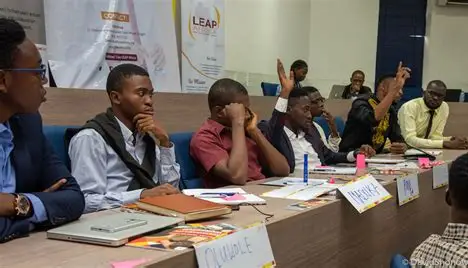
Obafemi Awolowo University (OAU), Ile-Ife, has emerged winner of the grand finale of the Youth Leadership Development Programme (YLDP) debate competition, organised by Leadership, Effectiveness, Accountability, and Professionalism (LEAP) Africa in Abuja.
OAU’s Team Invictus, represented by Olabisi Lalekan and Omopo Ifeoluwa, clinched the first position, defeating Lagos State University (LASU) Team Orators, which finished second.
The grand finale of the debate held as part of the fifth anniversary celebration of Nigeria Youth Futures Fund (NYFF).
The motion argued at the finale was: “Community Policing Offers a More Sustainable Solution to Insecurity than Increased Military Deployment”.
The OAU team, which opposed the motion, argued that increased military deployment remained a more effective approach to tackling insecurity, particularly in addressing sophisticated security threats.
The debaters questioned the capacity of community policing structures to confront heavily armed criminal groups, citing limitations in technical expertise, surveillance capabilities and access to sophisticated weapons.
They also warned that arming local security structures could expose them to manipulation by corrupt politicians and community leaders.
The team maintained that proximity to communities did not necessarily guarantee effective security, arguing that familiarity could create opportunities for infiltration and compromise.
It further challenged the proposition team to provide Nigeria-specific evidence demonstrating how community policing could effectively address the country’s complex security challenges.
LASU’s Team Orators, represented by Sherifat Umar and Atere Olateju, finished second after proposing that community policing offered a more sustainable solution to insecurity.
The team argued that visible police presence and community-based security arrangements could strengthen deterrence, improve public confidence and discourage criminal activities.
It maintained that the involvement of security personnel within communities would promote closer engagement with residents and enhance efforts to prevent crime.
The University of Ibadan’s Team Vanguard Voices, represented by Adebayo Esther and Michael Oluwagunwa, emerged third in the competition.
The winners received a cash prize of N2.5 million and two laptops, while the second-placed team received N1.5 million and two tablets.
The University of Ibadan team received N1 million and two mobile phones for securing the third position.
The competition provided a platform for young Nigerians to demonstrate their research, critical thinking, public speaking and leadership abilities while engaging with pressing national issues.
It also underscored the importance and governance challenges
General News
Emir urges procurement professionals to embrace technology, transparency

Abu Umar
The Emir of Zazzau, Amb. Ahmed Nuhu Bamalli, has urged procurement professionals to embrace technology, transparency and ethical standards to strengthen public institutions and promote sustainable development.
Bamalli made the call at the opening of the three-day Kaduna State International Procurement Summit (KADProSummit 2026) in Kaduna on Tuesday.
The summit has the theme: “Consolidating the Gains of Procurement for Sustainable Development and Public Trust.”
The Emir said procurement had evolved beyond the routine acquisition of goods and services to become a strategic driver of economic growth, public value, institutional performance and sustainable development.
He said every contract awarded, supplier engaged and procurement process designed had the potential to shape outcomes that directly affected citizens and communities.
According to him, achieving value for money goes beyond securing the lowest price, but requires consideration of quality, reliability, timely delivery, risk management and long-term impact.
He stressed that public confidence in institutions depended largely on the fairness and transparency of procurement processes.
Bamalli warned that opaque procurement systems increased the risks of waste, fraud, favouritism and corruption, while transparent and rules-based processes promoted competition and effective utilisation of public resources.
He also highlighted the growing importance of digital procurement platforms, data analytics, electronic sourcing tools and artificial intelligence in improving efficiency, reducing errors and strengthening compliance.
The traditional ruler, however, stressed the need to match technological advancement with adequate capacity development and sound ethical judgement among procurement practitioners.
He further called for the integration of sustainability considerations into procurement decisions to support local industries, promote ethical labour practices, reduce environmental impact and encourage inclusive economic growth.
Bamalli urged stakeholders to invest in professional development, certification, leadership and institutional collaboration, saying procurement officers should be regarded as strategic advisers rather than mere compliance officers.
Earlier, Gov. Uba Sani said his administration remained committed to strengthening procurement institutions and ensuring that public resources translated into measurable development outcomes.
Sani, represented by the Secretary to the State Government (SSG), Dr Abdulkadir Mayere, said procurement was a strategic instrument for economic transformation, institutional strengthening and sustainable development.
He said Kaduna had continued to consolidate its position as one of Nigeria’s leading states in procurement reforms.
The governor recalled that Kaduna became the first state in Nigeria to domesticate the Public Procurement Law in 2007, establishing a foundation for transparent, competitive and accountable procurement processes.
He said the administration had strengthened regulatory oversight, contract management and professional development while promoting greater compliance across Ministries, Departments and Agencies (MDAs).
Sani disclosed that Kaduna remained the only state in Nigeria operating a unified legal and institutional framework regulating both public procurement and public asset disposal.
He also said the state was the first and only sub-national government in the country to adopt a Gender Responsive Procurement Policy and establish a dedicated institutional framework for its implementation.
According to him, the policy has expanded opportunities for women-owned and women-led businesses through registration incentives, reduced tender fees, targeted procurement reservations and capacity-building initiatives.
He acknowledged the contributions of development partners, particularly UN Women, towards the implementation of the policy.
The governor also cited Kaduna’s membership of the Infrastructure Transparency Initiative and participation in the Open Government Partnership as evidence of its commitment to openness, accountability and citizen participation.
He said the state’s development investments were being distributed across the three senatorial zones to ensure that no local government or community was left behind.
Sani urged participants to ensure that discussions at the summit translated into practical reforms that would strengthen institutions, improve service delivery and enhance public confidence.
Also speaking, Evelyn Hernandez, Technical Director of the Infrastructure Transparency Initiative (CoST), commended Kaduna for introducing procurement reforms, including its gender-responsive procurement policy and infrastructure disclosure portal.
Hernandez, who joined the summit virtually, however, urged the state to address gaps in project information disclosure and citizen participation.
She said findings from Kaduna’s first Infrastructure Transparency Index showed progress in regulatory and institutional capacity but identified weaknesses in the publication and quality of procurement information.
According to her, a recent assessment of the state’s infrastructure portal showed that more than 80 per cent of projects had data quality concerns.
She called for complete, reliable and regularly updated project records across government agencies to enable citizens and public officials to monitor project implementation.
Hernandez also urged the state to strengthen engagement with communities, contractors, women-owned businesses and small-scale enterprises to identify barriers to participation in public procurement.
She cited experiences from Uganda, Malawi and Ghana, where community engagement, climate-related infrastructure monitoring and independent project reviews had helped improve accountability.
The Director-General of the Kaduna State Public Procurement Authority (KADPPA), Engr. Sanusi Yero, said the summit was designed to deepen reforms and strengthen procurement as an instrument of good governance.
Yero said Kaduna’s decision to domesticate the Public Procurement Law in 2007 had positioned it as a pioneer in procurement regulation in the country.
He said the state would continue to promote transparency, accountability, professionalism and value for money in public spending.
The NAN reports that the summit attracted procurement professionals, policymakers, development partners, civil society organisations, academics and private sector representatives.

Abibat Omosua
The Nigerian Correctional Service (NCoS) has confirmed the escape of two inmates from the Medium Security Custodial Centre, Okene, Kogi.
The Service Public Relations Officer, CSC Jane Osuji, disclosed this in a statement on Tuesday in Abuja.
Osuji said the inmates escaped on Sunday, adding that efforts had commenced in collaboration with relevant security agencies to recapture them.
She said the Controller-General of Corrections, Sylvester Nwakuche had ordered a thorough investigation to establish the circumstances surrounding the incident and identify any lapses.
The NCoS assured the public that necessary measures were being taken to rearrest the fleeing inmates.
-

 General News1 month ago
Rivers 2027: We are not part of Rainbow Coalition – APC Legacy Group slams Wike, Fubara meeting
-
General News2 months ago
JOHESU demands: MHWUN puts FG on notice over fresh action
-

 Politics2 months ago
2027: ASAF backs APC governors, rejects rainbow coalition
-

 Politics2 months ago
You have demonstrated diligence, loyalty, statesmanship in leadership, Ekechi salutes Shetimma at 60
-

 Politics3 months ago
2027: Advertising experts raise concerns over irregular regulation of sector
-
FCT News3 months ago
2027: Hasana-Moneme pledges skills, empowerment, credit access for FCT women
-
General News3 months ago
2027: Dame Princess Esom-Nwafor Orizu confirmed as APC flagbearer for Nnewi North /South /Ekwusigo Federal Constituency as INEC releases names of candidates
-
Uncategorized4 months ago
Rescue of Oyo schoolchilden: Tinubu commends security agencies, says action breakthrough in fight against criminality