
General News
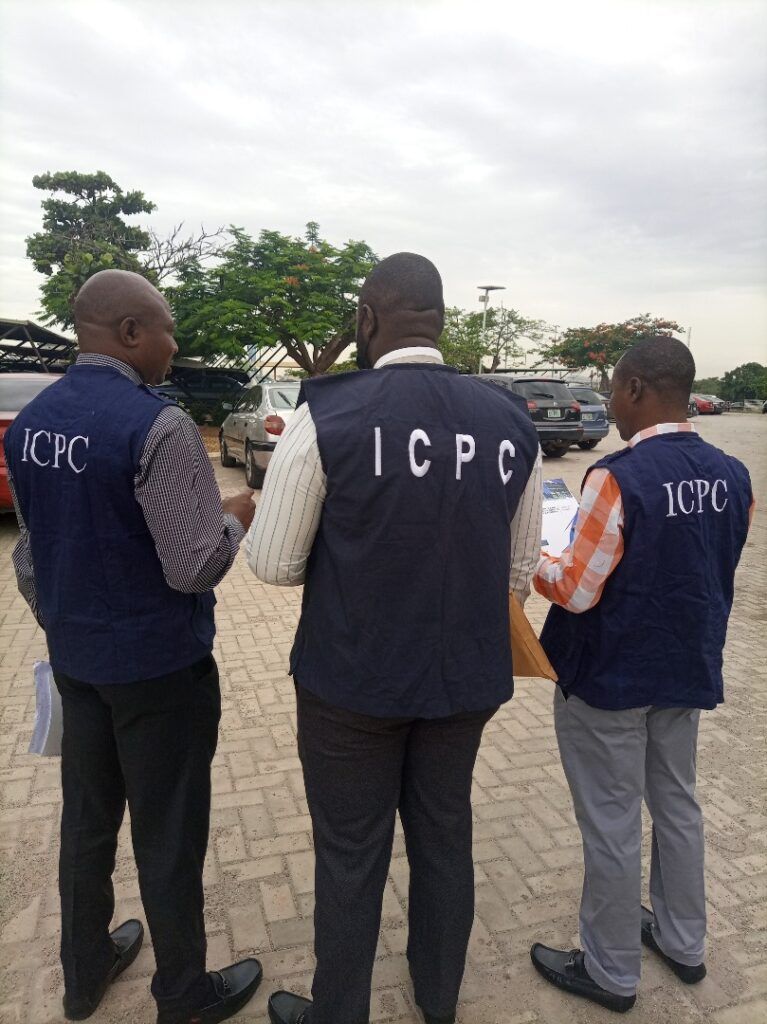
ICPC recovers N5.3bn from local government accounts in 7 states, FCT

By our reporter
The Independent Corrupt Practices and Other Related Offences Commission (ICPC) has recovered more than N5.3bn from local government accounts across seven states and the Federal Capital Territory (FCT), following investigations into their financial activities.
The commission also announced plans to collaborate with the National Information Technology Development Agency (NITDA) to ensure that all 774 local government areas in the country make their financial records and other relevant information accessible to the public through dedicated websites.
The ICPC Chairman, Dr Musa Aliyu, disclosed this during the launch of the ICPC-NITDA Local Government Websites Pilot in Nasarawa State.
According to a statement issued on Thursday by the commission’s spokesperson, John Odey, the initiative is aimed at promoting transparency, strengthening accountability and preventing corruption in local government administration through digital platforms.
Aliyu said the recovery of the funds exposed the financial irregularities that could occur at the grassroots level when public resources were not adequately monitored.
“The ICPC has recovered over N5.3 billion from a review of local government accounts in seven states and the Federal Capital Territory, and is now moving to make councils across the country publish their finances online.
“The recoveries show both the scale of the risk at the grassroots and what scrutiny can achieve, and the websites are the preventive side of the same effort,” he said.
He explained that the Supreme Court’s July 2024 judgment affirming the financial autonomy of local government councils, including the direct payment of their statutory allocations, had made effective financial oversight more important.
The ICPC chairman stressed that the autonomy granted to councils must be accompanied by responsible management and transparent utilisation of public resources.
“Autonomy brings responsibility. Funds that now flow directly to the councils must be spent openly and for the benefit of the people,” he said.
Under the proposed arrangement, local government councils will be required to upload details of their budgets, statutory allocations, internally generated revenue, expenditure, audit reports, debts, procurement activities and human resources.
The platforms will also provide channels through which residents can engage with their councils, submit complaints and report suspected cases of financial misconduct.
Aliyu said making such information publicly available would empower citizens and the media to scrutinise government spending while helping relevant oversight agencies identify possible irregularities.
“When these records are published regularly, citizens can follow the money, the media can ask informed questions and oversight institutions can detect risks early, before they become losses,” Aliyu added.
He said NITDA would provide the technical support required to establish the platforms, including domain registration, website development and hosting services for a minimum of one year.
The ICPC, on its part, would develop the content requirements and accountability framework to guide the publication of financial information.
Aliyu urged local government chairmen to appoint officials responsible for managing the websites and ensuring that information uploaded was accurate and regularly updated.
He maintained that the commission intended to implement the programme as a corruption prevention initiative rather than a tool for witch-hunting public officials.
Speaking at the event, the Director-General of NITDA, Kashifu Inuwa Abdullahi, said the project would strengthen governance, improve citizen participation and create new economic opportunities.
He noted that digital platforms would make it easier for residents to obtain information about government activities and projects, as well as communicate their concerns to public authorities.
“Our people are online; therefore, government needs to be online to serve them better,” he said.
Abdullahi said NITDA would establish operational standards, develop website templates and provide training for citizens to support the effective use of the platforms
He added that the project was designed to extend beyond the pilot phase in Nasarawa State to cover all 774 local government areas nationwide.
“Our ambition is not 774 websites. It is 774 digitally empowered local governments delivering better experience to millions of Nigerians,” he said.


By Our Reporter
Operatives of the Fe deral Capital Territory (FCT) Police Command have arrested four suspects over the killing of a man, Goodness Oghenetega Imonighavr, who was allegedly trailed and shot by unidentified gunmen along the Gwarinpa Expressway in Abuja.
The incident occurred while the victim was reportedly driving from Dawaki to his office in Maitama when he came under attack.
The Force Public Relations Officer, Ani Iniedu, confirmed the development in the police daily operational report released on Thursday.
According to Iniedu, the police received a distress call from a Total filling station along the Gwarinpa Expressway, alerting them to the shooting.
He explained that the victim, after being shot, lost control of his vehicle and crashed into the premises of the filling station, while the assailants escaped with his mobile phone.
The victim was subsequently taken to the National Hospital, Abuja, where he later died from his injuries.
Iniedu stated, “Following a distress call from Total Filling Station along Gwarinpa Expressway, it was reported that Goodness Oghenetega Imonighavr was trailed and shot by unknown assailants while en route from Dawaki to his office at Maitama.
“The victim crashed into the filling station premises before his attackers made away with his mobile phone. He was rushed to National Hospital, where he succumbed to his injuries.
The police spokesperson disclosed that subsequent investigative efforts resulted in the arrest of four suspects, who are currently being detained for questioning.
“A follow-up operation was launched, resulting in the arrest of four suspects who are currently in custody undergoing investigation,” he added.
He further said the case had been transferred to the Criminal Investigation Department (CID) in Abuja for further investigation.

Amal Chime
Managing Director/Chief Executive of the Nigeria Social Insurance Trust Fund (NSITF), Oluwaseun Faleye, has assured personnel of the Nigeria Security and Civil Defence Corps (NSCDC) of comprehensive protection under the Employees’ Compensation Scheme (ECS) for injuries, disabilities and diseases sustained in the line of duty.
He also said that their dependents will be taken care of in the case of death during the course of work.
Speaking at the sensitisation and onboarding ceremony of the NSCDC on the ECS at the Corps’ National Headquarters in Abuja, the NSITF MD said the engagement was of critical importance to the welfare of men of the Corps who risk their lives daily to protect critical national assets and infrastructure.
“An institution entrusted with protecting the nation must therefore have a dependable system for protecting its own workforce. Those who protect our nation must themselves be protected. That is the principle that brings us together today,” he said.
He commended the Commandant General of the NSCDC for his foresight and proactive leadership in initiating the partnership, noting that since registering with NSITF on the 23rd of August 2024, the Corps has demonstrated commitment by making provision for the Scheme in its 2026 budget and engaging the Office of the Accountant-General of the Federation on budgetary arrangements.
According to the MD, the Employees’ Compensation Scheme, established under the Employees’ Compensation Act, 2010, provides compensation and support to employees who suffer work-related injuries, occupational diseases, or disabilities, and for their dependents in the case of death in the course of employment.
He explained that for a frontline security agency like the NSCDC, the protection is especially relevant, citing scenarios of officers injured while defending critical infrastructure, during rescue operations or from exposure to hazardous conditions.
“The Scheme provides practical protection against these risks. An officer who suffers a compensable workplace injury can access medical treatment, hospitalisation, medication and rehabilitation, including prosthetic and assistive devices where needed,” he stated.
“It provides income support during temporary incapacity and statutory compensation for permanent partial or total disability. Most importantly, where an officer dies in the course of work, eligible dependants receive compensation, so that the family left behind does not bear the full financial burden of that loss alone.”
Faleye stressed that the Scheme is more than a statutory obligation, describing it as an investment in personnel welfare, institutional resilience and operational effectiveness.
He urged the NSCDC to go beyond registration and remittance of the statutory one per cent contribution and establish designated ECS Desks at the National Headquarters, State Commands and Area Commands to serve as contact points for reporting injuries, guiding affected officers and families through the claims process and liaising promptly with NSITF.
He also called for the appointment of a central coordinating officer to manage the Corps’ engagement with the Fund.
The MD assured that NSITF would provide technical guidance and hands-on support through its Compliance, Claims and Compensation, and Occupational Health and Safety teams on onboarding, personnel data harmonisation, sensitisation and claims administration.
“Our commitment does not end with today’s ceremony; we intend to build a responsive and enduring partnership,” he said.
He added that the success of the partnership would not be measured by the number of personnel registered or contributions remitted, but by whether an injured officer receives timely support and no eligible personnel is left behind.
“Together, let us ensure that those who protect Nigeria are never left unprotected,” he said.
While declaring the programme opened, the Commandant General of NSCDC, Dr. Ahmed Abubakar Audi, said the onboarding of his officers and men onto the Employees’ Compensation Scheme (ECS) of the NSITF was strategic in strengthening the welfare and protection framework for personnel of the Corps.
He expressed appreciation to the management of NSITF for its commitment to the welfare of NSCDC personnel, describing the partnership as an important milestone in institutional cooperation.
“This partnership represents an important step towards strengthening institutional cooperation and ensuring that our personnel benefit from the provisions of the Employees’ Compensation Act,” he said.
The CG, represented by DCG Ibrahim Ningi, Deputy Commandant General,Technical Services noted that NSCDC occupies a critical place in Nigeria’s internal security architecture, with personnel engaged in the protection of critical national assets and infrastructure, safeguarding lives and property, disaster management and emergency response — duties that often expose them to occupational hazards and injuries.
“Consequently, the welfare, safety and protection of our personnel must remain a priority. We recognise that the effectiveness of any security organisation is not determined solely by its operational capacity, but also by the extent to which it protects, motivates and provides adequate support for its workforce,” he stated.
He described the Employees’ Compensation Scheme as a significant intervention that provides compensation and support to employees who suffer work-related injuries, disabilities, occupational diseases or death in the course of employment.
“Beyond its financial benefits, the scheme provides an important social protection mechanism that promotes dignity, security and confidence among workers and their families,” he added.
The Commandant General said the Corps considers its onboarding onto the ECS a strategic institutional priority aimed at ensuring that all eligible personnel are properly registered and that administrative structures are established to facilitate access to benefits.
He explained that the sensitisation programme will equip Insurance Desk Officers with requisite knowledge of the scheme’s provisions, registration and onboarding procedures, claims processing, reporting obligations and other operational requirements.
“I therefore urge all participants to take full advantage of this programme. You must approach the sessions with seriousness, commitment and a clear understanding that the knowledge acquired is expected to translate into practical results,” he charged.
The CG directed participants to become effective resource persons within their commands and formations after the training, and charged relevant officers to maintain accurate personnel records, ensure timely submission of required information and establish effective communication channels with NSITF.
He emphasised that successful implementation requires sustained collaboration, transparency, accountability and institutional commitment.
“We must move beyond sensitisation to actual implementation, ensuring that no eligible personnel is left out of the process,” he said.
The Commandant General expressed confidence that the partnership between NSCDC and NSITF will strengthen the Corps’ personnel welfare system and contribute to a more motivated, secure and productive workforce.

The Kwara Government in collaboration with Concerned Medics Foundation has organised Genotype, Sickle cell screening for 1000 school students in the state.
Speaking at an awareness campaign in Ilorin on Thursday, wife of the Kwara Governor, Prof Olufolake Abdulrazaq stated that sickle cell disease was a public health challenge that affected countless families in Nigeria.
She emphasized the need for timely information and appropriate counseling as preventive measures against sickle cell.
Abdulrazaq, who was represented by the Kwara Commissioner for Health, Dr Amina El-Imam, said that Nigeria carries the world’s burden of sickle cell disease, accounting for between 2.5 per cent and 3.5 per cent of the disease globally.
She stated that genotype testing had become critical and should be part of our normal conversation and health education right from childhood.
Abdulrazaq expressed support to the campaign and other complementary efforts to strengthen genotype awareness, promote early screening and expand access to counselling.
“I envision a Kwara where no young person enters adulthood without knowing their genotype.
“I envision a Kwara where prospective couples have access to appropriate counselling and make informed choices,” she said.
Also speaking, a Consultant Paediatrician with the NHS in England and Founder of Concerned Medics Foundation, Dr Sadia Gumi-Bennett, said that genotype screening must be approached with sensitivity, professionalism and respect for the dignity of every student.
She explained that participating healthcare workers were trained on the required knowledge and skills.
Gumi-Bennett stated that the training was expected to aid workers to screen appropriately, interpret results, provide counselling, maintain confidentiality and facilitate referral where necessary.
She said the objective was to provide knowledge, promote informed decisions and encourage access to appropriate counselling and healthcare services.
According to her, the foundation, made up of diasporans, was focused on bringing back expertise to the country through projects such as Sickle Cell Counselling, Research, Education and Early Notification (SCREEN).
She said that the team had already trained at least 40 healthcare workers in the state and screened over 500 students in the previous day alone.
“During the screening, about six children were found to have sickle cell disease without prior knowledge.
“The students would be referred for confirmatory testing and further management in the hospital,” Gumi-Bennett said.
She said the education component had already made impact, noting that in one of the schools visited, students initially mistook sickle cell for HIV, but now understood what sickle cell is and what the different genotypes mean.
She commended the health workers in Kwara for being active and enthusiastic, and described the students as well-behaved and eager to learn.
Earlier in his welcome address, the Permanent Secretary of Kwara Ministry of Health, Dr Taoheed Abdullahi said that the initiative represented another significant step in the collective effort to promote preventive healthcare, improve health awareness and protect the health and future of children.
He said the campaign was particularly important because it focuses on providing appropriate counselling and encouraging individuals and families to make informed health decisions.
Abdullahi acknowledged the vision, passion, advocacy and commitment of the wife of the Governor to the health and wellbeing of women, children and young people.
He said that this has continued to inspire meaningful health innovations across the state.
The Permanent Secretary said the initiative reflected concern for the future of children and the need to ensure that preventive healthcare is driven through awareness and early childhood intervention.
-

 General News1 month ago
Rivers 2027: We are not part of Rainbow Coalition – APC Legacy Group slams Wike, Fubara meeting
-

 Politics2 months ago
2027: ASAF backs APC governors, rejects rainbow coalition
-
General News2 months ago
JOHESU demands: MHWUN puts FG on notice over fresh action
-

 Politics2 months ago
You have demonstrated diligence, loyalty, statesmanship in leadership, Ekechi salutes Shetimma at 60
-

 Politics3 months ago
2027: Advertising experts raise concerns over irregular regulation of sector
-
FCT News3 months ago
2027: Hasana-Moneme pledges skills, empowerment, credit access for FCT women
-
General News3 months ago
2027: Dame Princess Esom-Nwafor Orizu confirmed as APC flagbearer for Nnewi North /South /Ekwusigo Federal Constituency as INEC releases names of candidates
-
General News4 weeks ago
Senator Mandiya slipped, died in Abuja bathroom, corpse discovered after 3 days, says Sen Ningi