
General News
NUSA laments tragic killings of 2 Nigerians in S/Africa

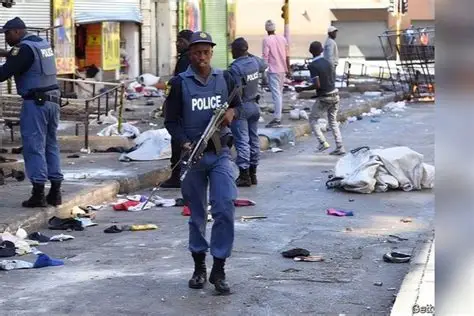
The Nigerian Union South Africa (NUSA) on Saturday condemned the recent tragic killings of two Nigerian nationals, Bishop Michael Fakunle and Mr James Nwankwo in Johannesburg, South Africa.
The NUSA National Publicity Secretary, Mr Akindele Olunloyo, disclosed this in a statement issued in Abuja.
He expressed concern over the tragic development, saying the circumstances surrounding their deaths, including allegations of threats, torture and police brutality were matters that could not and must not be treated lightly.
According to him, it is with deep sorrow and outrage that the organisation condemn the recent tragic killings of two Nigerian nationals in South Africa.
“These senseless acts of violence are unacceptable and underscore the urgent need for enhanced safety measures and justice for members of the Nigerian community.
“We call on the relevant South African authorities to intensify efforts to thoroughly investigate these incidents and ensure that those responsible are brought to justice,” Olunloyo said.
He stressed the organisation’s commitment to advocating the protection, safety, and well-being of all Nigerians living in South Africa.
Olunloyo also urged all members of the Nigerian community to remain vigilant, law-abiding, and united during these challenging times.
“We encourage Nigerians who wish to participate in the voluntary repatriation exercise to take advantage of the screening and clearance process organised by the Nigeria High Commission and the Consulate General in South Africa.
“Also to adhere strictly to the guidelines provided by the relevant authorities. NUSA reiterates unwavering commitment to serving and safeguarding the interests of Nigerians in South Africa,” he said.
He reiterated that the organisation would continue to engage Nigerian and South African authorities, community leaders, civil society organisations, and other relevant stakeholders to ensure the welfare, and security of Nigerian community remain priority.
In another development Olunloyo expressed gratitude to the Redeemed Christian Church of God (RCCG) for its contribution of 500 one-way tickets to facilitate voluntary repatriation of stranded Nigerian nationals residing in South Africa.
He described the gesture, which was made possible through approval of the General Overseer of RCCG, Pastor Enoch Adejare Adeboye, as timely and significant.
He said that such intervention provided support to many vulnerable Nigerians who faced challenges while living abroad.
“We commend RCCG for its unwavering commitment to the welfare and dignity of Nigerians in the Diaspora.
“We also acknowledge and support the recent statement by the Nigerian National Assembly, which has taken firm position by suspending all official visits to South Africa and boycotting South African-hosted legislative activities,” he said.
He explained such decisive action directed by the joint leadership of the Senate and House of Representatives underscored the seriousness which Nigerian government viewed xenophobic attacks and other forms of hostility directed at Nigerians, and African nationals in South Africa.
He further reassured that NUSA would stand in solidarity with the National Assembly’s efforts to protect the dignity, safety, and rights of Nigerians abroad. (NAN).


By Lemmy Ughegbe, Ph.D
Nigeria has never suffered from a shortage of institutions created to fight corruption. We have the Economic and Financial Crimes Commission. We have the Independent Corrupt Practices and Other Related Offences Commission. We have the Code of Conduct Bureau. We have the Code of Conduct Tribunal. We have the police. We have courts. We have laws prohibiting practically every conceivable manifestation of public corruption.
Yet corruption has proved remarkably unimpressed.
Now comes another proposition. The leadership of the Code of Conduct Tribunal is pushing for the Tribunal to be transformed into a full fledged National Anti Corruption Court, with seven judicial divisions and 37 judges dedicated to corruption cases.
The attraction is immediately obvious.
The CCT says it inherited about 1,037 unresolved cases, some of which had remained unattended for between five and ten years. Under the proposed arrangement, corruption trials would proceed through a summary procedure designed to conclude cases within six weeks of arraignment.
Six weeks? In a country where politically exposed defendants can spend years travelling through adjournments, preliminary objections, interlocutory appeals and changes of counsel before the substance of allegations against them is determined, six weeks sounds almost revolutionary.
The frustration behind the proposal is therefore understandable.
Justice delayed is not merely justice denied to defendants or victims. In corruption cases, delay can become a defence strategy.
Witnesses disappear. Memories fade. Investigators are transferred. Governments change. Political alliances shift. Public attention moves elsewhere.
Eventually, a scandal that once dominated newspaper headlines becomes another dusty case file.
So, there is merit in asking whether Nigeria needs a judicial structure specifically designed to prevent corruption trials from becoming marathons.
But before creating another institution, we should ask a more uncomfortable question.
Is the absence of a specialised court really the principal reason Nigeria struggles to punish corruption?
That question matters because Nigeria has a familiar response to institutional failure.
We create another institution.
When an agency is ineffective, we establish a committee. When the committee disappoints, we create a task force. When the task force falters, we propose a commission. And when existing courts appear too slow, we contemplate another court.
Institutional multiplication can sometimes disguise institutional weakness.
A National Anti Corruption Court may accelerate trials. But it cannot investigate a case for the EFCC or ICPC. It cannot manufacture evidence that investigators failed to obtain. It cannot rescue a badly drafted charge. It cannot prevent witnesses from being compromised. It cannot replace diligent prosecution. And it cannot guarantee that politically powerful defendants will be treated exactly like ordinary citizens.
Those are the harder parts of the corruption problem.
A judge can decide only the case placed before the court. If investigators bring weak evidence and prosecutors present defective cases, giving the judge six weeks instead of six years will merely produce a faster failure.
That is why the conversation must extend beyond speed.
Nigeria needs competent investigation, professional prosecution and judicial efficiency operating together.
There is another question. What happens after judgment?
A specialised anti corruption court would still exist within Nigeria’s constitutional judicial architecture. Defendants must retain their rights to fair hearing and appeal. Any reform that pursues speed by sacrificing due process would simply exchange one problem for another.
Corruption trials should be swift. They must also be fair. The objective cannot be conviction at all costs. It must be credible justice delivered without unnecessary delay.
There is nevertheless something deeply troubling about a system in which corruption cases can remain unresolved for five or ten years. If the figure of 1,037 inherited cases reported by the CCT tells us anything, it is that the status quo cannot simply be defended.
No serious justice system should regard a decade as a reasonable period for determining whether a public officer violated the law.
But perhaps the more useful lesson is that deadlines should not begin and end with judges. Investigating agencies should have performance standards. Prosecutors should face consequences for habitual incompetence. Courts should control frivolous adjournments.
Defence lawyers should be entitled to deploy every legitimate protection available to their clients, but the administration of justice should not permit procedure to become an instrument for ensuring that substance is never reached.
And where corruption is established, sanctions must be sufficiently certain to deter the next offender.
That last point may be more important than the name on the courthouse.
People are not principally deterred by the number of anti corruption agencies or courts a country possesses. They are deterred by the probability that wrongdoing will be discovered, prosecuted and punished.
Certainty matters.
If a public officer believes there is a substantial chance that stolen money can purchase influence, frustrate investigation, finance endless litigation or eventually disappear into a negotiated political settlement, another court building will not frighten him.
But if he knows that suspicious transactions will be detected, investigators will follow the money, prosecutors will present competent evidence, trials will proceed without needless delay and punishment will follow conviction, behaviour begins to change.
That is deterrence.
There is therefore a case for considering the CCT proposal seriously. Specialisation can improve expertise. Dedicated judges can reduce competing caseloads. Strict case management can prevent unnecessary delay.
But Nigeria should resist the temptation to believe that institutional redesign is itself reform.
The National Assembly must interrogate the proposal carefully. What jurisdiction will the new court possess? How will it relate to existing Federal and State High Courts? What constitutional amendments may be required? How will its judges be appointed? What safeguards will protect their independence? How will appeals work? And, crucially, what prevents the same culture of delay migrating into the new institution?
These questions are not arguments against reform. They are the conditions for making reform meaningful.
Nigeria’s anti corruption struggle has produced enough agencies, slogans, arrests, arraignments and televised declarations of war against corruption.
What it desperately needs is consequence.
If a National Anti Corruption Court can help deliver competent, independent and timely justice, then it deserves serious consideration.
But if we simply change the signboard, appoint 37 judges, create seven divisions and reproduce the weaknesses already haunting our justice system, corruption will adapt quickly. It always has.
The real measure of this proposal will therefore not be how quickly Nigeria creates another court. It will be whether those who steal from Nigeria finally begin to believe that the law will catch them.
Until then, we may have another court. But will corruption be afraid?
Lemmy Ughegbe, Ph.D, FIMC, CMC
Email: lemmyughegbeofficial@gmail.com
WhatsApp ONLY: +2348069716645

Abubakar Kabir
A child rights organisation funded by the Malala Fund is seeking stronger backing from the Bauchi State Government to return adolescent girls who dropped out of school due to marriage back to classrooms.
The Women Child Youth Health and Education Initiative, WCY, made the appeal during an advocacy visit to the Ministry of Women and Child Development in Bauchi.
WCY Senior Programme Officer, Kamal Ali Bello, said the group is focused on enrollment, retention and completion for out-of-school children, with special attention to girls who left school early.
“The organisation is poised to ensure the return, retention and completion of adolescent girls who dropped out as a result of marriage or any other reason,” Bello said.
He also asked the ministry to set up the implementation and monitoring committee provided for in the state’s Child Protection Law to help track progress.
Permanent Secretary of the ministry, Hajiya Talatu Musa Gar, reiterated the government’s commitment to the health and welfare of women and children. She assured that the ministry will partner with any organisation willing to improve their welfare.
The ministry said it is ready to work with WCY and other partners to reduce Bauchi’s out-of-school numbers.

Abu Umar
Detectives of the Bauchi State Police Command have arrested a 53-year-old man accused of posing as a commercial motorcycle rider to kidnap and rob 35 women in Bauchi metropolis.
The suspect, identified as Gambo Hassan, alias “Anahaka”, of Igbo Quarters, Bauchi, was arrested on Thursday, September 11, 2026, at about 8:45pm by operatives of ‘B’ Division, GRA, during a routine patrol along Adamu Jumba Road.
This was disclosed on Saturday by the Police Public Relations Officer, SP Nafiu Habib.
According to SP Nafiu, Hassan specialized in night operations, posing as an Okada rider to pick unsuspecting passengers, mostly women, before robbing, kidnapping, and in some cases, sexually assaulting them.
“Preliminary investigation revealed that the suspect disguised himself as a commercial motorcycle rider during evening hours to target, kidnap, rob and, at times, rape unsuspecting passengers, particularly women,” the statement said.
At the time of his arrest, the suspect was wearing a black face mask and a face cap, and was riding a Bajaj motorcycle with registration number BAU 150G. A sharp knife was also recovered from him.
During interrogation, Hassan reportedly made a voluntary confession and led detectives to 15 women initially identified as victims. The figure rose to 35 after further investigation.
Following the confession, police executed a search warrant at his residence. Items recovered and suspected to be proceeds of crime include 15 assorted mobile phones, 3 power banks, 6 ladies’ wristwatches, 6 native caps, 5 bundles of women’s wrappers, 3 hijabs, and cash totaling ₦425,435. Kenyan and Turkish currency notes were also found.
The suspect and all exhibits have been transferred to the State Criminal Investigation Department, SCID, Bauchi for further investigation and prosecution.
The Commissioner of Police, CP Sani-Omolori Aliyu, commended the ‘B’ Division team for their vigilance and professionalism.
He reaffirmed the Command’s commitment to tackling crime and urged residents, especially victims, to come forward with useful information to aid investigation.
-

 Politics1 week ago
You have demonstrated diligence, loyalty, statesmanship in leadership, Ekechi salutes Shetimma at 60
-

 Politics1 month ago
2027: Advertising experts raise concerns over irregular regulation of sector
-
FCT News4 weeks ago
2027: Hasana-Moneme pledges skills, empowerment, credit access for FCT women
-
General News1 month ago
2027: Dame Princess Esom-Nwafor Orizu confirmed as APC flagbearer for Nnewi North /South /Ekwusigo Federal Constituency as INEC releases names of candidates
-
Uncategorized2 months ago
Rescue of Oyo schoolchilden: Tinubu commends security agencies, says action breakthrough in fight against criminality
-
General News3 weeks ago
Chi-Jenco CEO, Jude Orji loses mother
-
Uncategorized2 months ago
PCC Anambra Commissioner pays courtesy visit to FRSC sector commander
-
Uncategorized2 months ago
INEC flags off Mega Continuous Voter Registration Centre, enrols 31,835 new voters