
General News
Adeleke urges vigilance over alleged planned attacks on worship centres

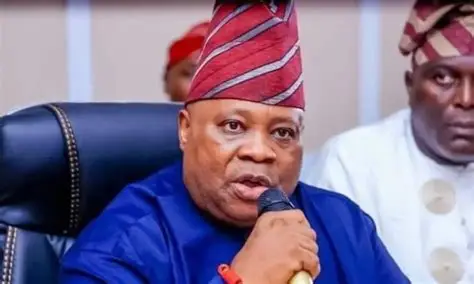
Gov. Ademola Adeleke of Osun has urged residents to report any suspicious movements or individuals in their communities to security agencies without delay.
Adeleke made the call in a statement issued by his spokesperson, Malam Olawale Rasheed, on Sunday in Osogbo.
The appeal followed reports of alleged plans by terrorists to attack places of worship and other public gathering centres in the state.
The governor urged residents to alert security agencies whenever they noticed an influx of strange faces, particularly in border communities.
“We must provide the police and other security agencies with intelligence reports on noticeable threats in our communities.
“As we are aware of alleged plots to attack our places of worship, we must become extra vigilant. Report anything unusual without any delay,” he said.
Adeleke commended the Department of State Services (DSS) for taking proactive measures to counter the alleged threats.
“I charge other security agencies to review the situation and develop an action plan to strengthen the security of lives and property.
“I will soon convene a State Security Council meeting to assess the situation and the workability of our response plans.
“As residents of this state, we must collaborate with the security agencies through information sharing.
“We should be wary of people we host in our communities.
“On this note, I charge our royal fathers to also convene meetings of their traditional councils to deliberate on this development. We must nip in the bud the evil plans of enemies of public peace,” he said.
The governor said his administration remained committed to post-election peace-building and would tighten security across the state to foil any attempt by terrorists and bandits to disrupt public peace.
It was learnt that the DSS had alerted Muslim and Christian leaders in the state to an alleged plan by terrorists to attack places of worship and other public gathering centres as part of efforts to frustrate the 2027 general elections.
The DSS was also said to have held separate meetings with the Muslim community and the Christian Association of Nigeria (CAN) in Osogbo on Wednesday, where religious leaders were advised to take preventive measures against possible attacks.
The development followed an intelligence report that terrorists were plotting to spread insecurity to the southern part of the country, particularly the South-West, and create tension ahead of the 2027 presidential election.
The President of the State Muslim Community, Alhaji Mustapha Olawuyi, and the Chairman of CAN in the state, Pastor John Adeleke, confirmed meeting with the DSS over the matter.
They said the security report was genuine, adding that the religious bodies had been advised on preventive measures.(NAN).

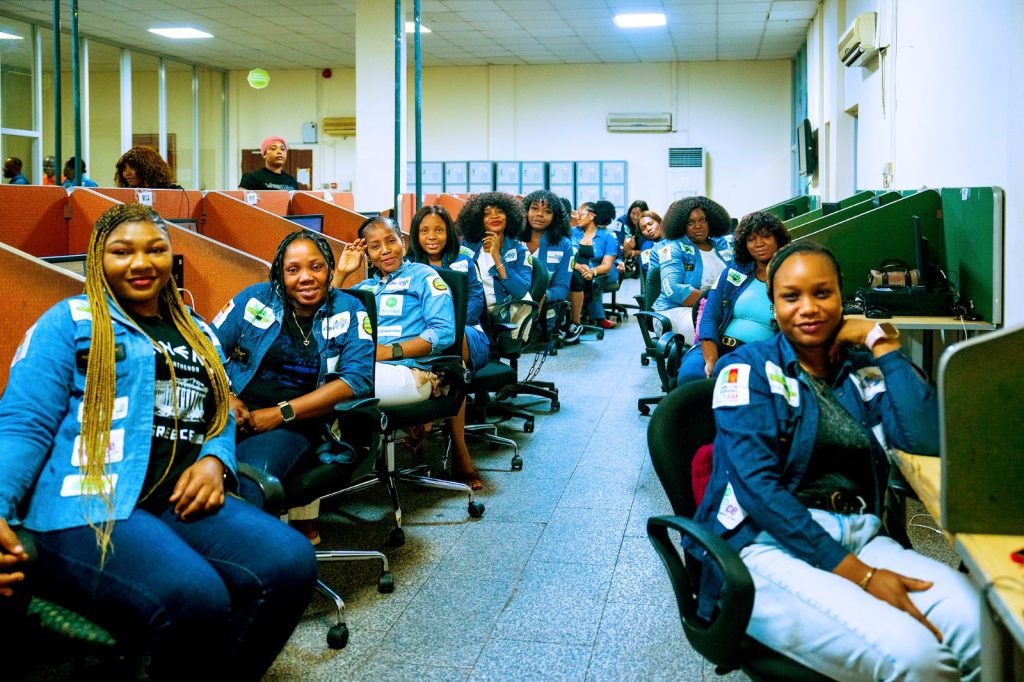
The Nigerian Communications Commission (NCC) the telecoms industry regulator, has commended Globacom on its outstanding performance in consumer complaint management and resolution.
In a letter to the company, which was signed by Kabiru S. Haruna, Principal Manager, Consumer Protection & Advocacy
Consumer Affairs Bureau (CAB), the Commission expressed happiness at Globacom’s treatment and resolution of customer issues during the month of August, 2026.
The letter read in part: “We are pleased to note that your organization achieved and surpassed the Commission’s complaint resolution thresholds of 90% and 97% for Level 2 (L2) complaints. This accomplishment reflects your commitment to regulatory compliance, consumer satisfaction, and the continuous improvement of service delivery.”
NCC noted that Globacom’s dedication to timely complaint resolution and adherence to established Service Level Agreements (SLAs) put in place by the Commission has contributed significantly to enhancing consumer confidence and promoting a positive customer experience within the telecommunications sector.
The Commission further encouraged Globacom to sustain this level of outstanding performance while continuing to implement measures aimed at further improving service quality and consumer satisfaction.
Globacom noted that constant training of its customer-interfacing staff and investment in the latest technology were responsible for observed improvement. The company promised not to relent in this regard.
Business and Economy
TCN, NISO, KEDCO, others meet in Kano to map out outage, load diversion on Kumbotso-Dan Agundi 132KV transmission line
By Chidera Orji
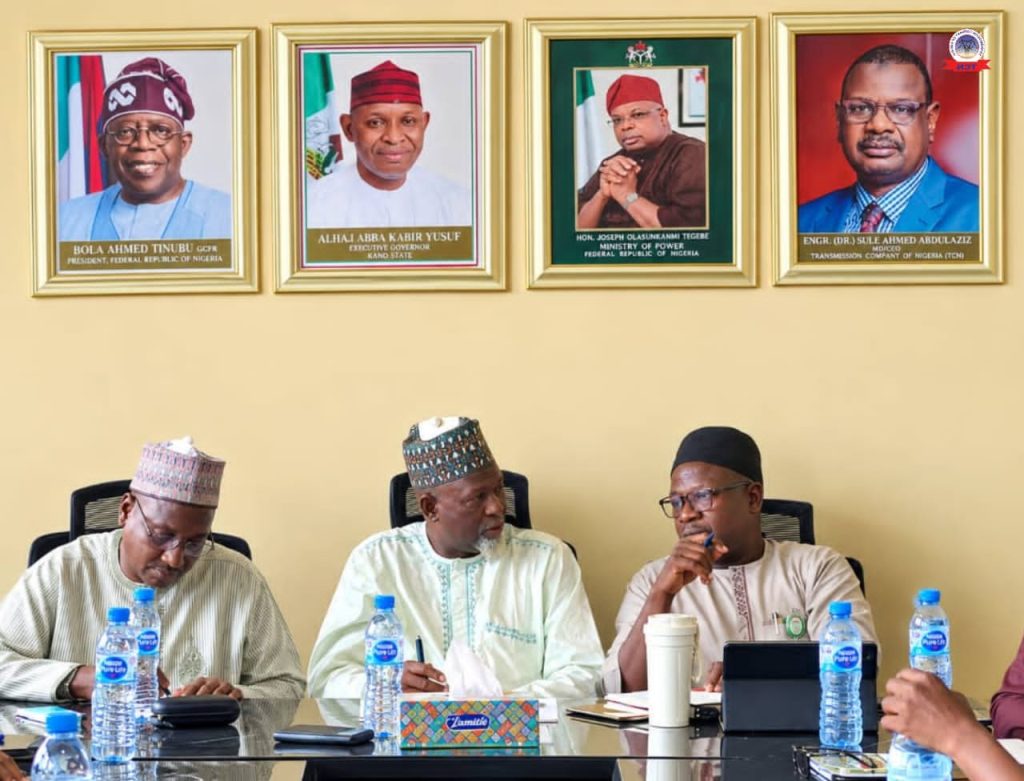
The Transmission Company of Nigeria (TCN), Kano Region, has held a coordinating meeting with Nigerian Independent System Operator (NISO), Kano Electricity Distribution Company (KEDCO), project contractors, and Kano State Ministry of Works, aimed at discussing a proposed outage and load diversion for the elongation of Towers 27 and 28 on the Kumbotso–Dan Agundi 132kV Transmission Line.
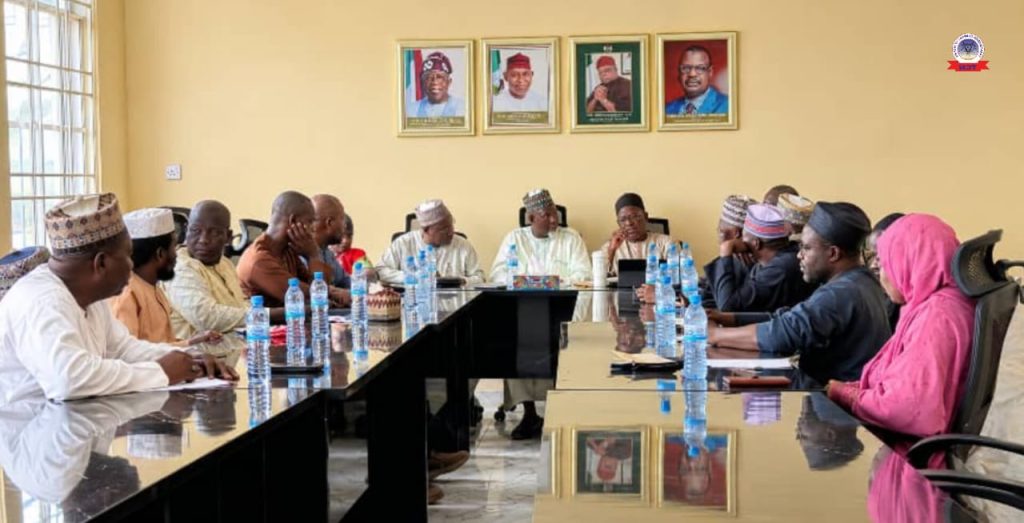
The meeting, which was held on Monday, October 5, , at the Regional Conference Room, Kano, was chaired by General Manager (Transmission), Kano Region, Engr. M. K. Bello, according to press statement made available to DISCLOSURE News by the Management of Transmission Company of Nigeria (TCN), yesterday.
In his opening remarks, Engr. Bello expressed confidence in the contractors’ competence but emphasized that they must thoroughly assess all proposed technical connections and switching arrangements before implementation to ensure operational safety and network reliability.
Also speaking at the meeting, the NISO Regional Operations Coordinator (ROC), Engr. Kunle Egbedinni, stressed the need for strict Grid Code compliance, particularly the requirement to submit planned outage applications at least 14 days in advance for approval.
The Head, Operations and Maintenance, KEDCO, Engr. Sabiu Haruna proposed diverting the load served by Dan Agundi 132kV Substation to alternative substations, including Dakata 132kV, Tamburawa 132kV, Rimin Zakara 330kV, Kumbotso 330kV, and Wudil 132kV substations, within a proposed two-day outage window.
Participants reviewed network capacity and alternative supply arrangements for the exercise. They observed that Hadejia 132kV Substation could not absorb the full 60MW load earmarked for diversion, and assessed supply options from the Tamburawa, Rimin Zakara and Dakata substations. They also emphasised the need to ensure the safety of personnel and equipment.
The meeting concluded with all stakeholders committing to strengthen inter-agency coordination, ensure regulatory compliance, and facilitate timely project execution.
The All Progressives Congress (APC) has released a revised list of its Presidential Campaign Council for the 2027 general elections.
It appointed the Minister of the Federal Capital Territory (FCT), Nyesom Wike, and Governor Ademola Adeleke of Osun State to key campaign positions.
Wike will coordinate President Bola Tinubu’s re-election campaign in Rivers State and the FCT, while Adeleke has been named the campaign coordinator for Osun State.
The appointments were contained in a notice obtained on Tuesday, which announced the inauguration of the campaign council for Wednesday, October 14, 2026, at the Banquet Hall of the Presidential Villa, Abuja.
The revised list also names Delta State Governor Sheriff Oborevwori as Director of Finance, while Governor Dapo Abiodun of Ogun State and Zacch Adedeji, chairman of the Nigeria Revenue Service (NRS), will coordinate fundraising.
Senator Ibrahim Dankwambo, a member of the Peoples Democratic Party (PDP), has been listed among the campaign council advisers alongside Obafemi George, who will also advise on media matters.
Deputy Speaker of the House of Representatives Benjamin Kalu has been appointed Deputy Director-General for South II, while Rivers State House of Assembly Speaker Martin Amaewhule will serve as South-South Deputy Coordinator for State Assemblies mobilisation.
Minister of Works David Umahi has also been named Deputy Director-General for Infrastructure and Sensitisation.
In the media and communications team, the list includes Minister of Aviation and Aerospace Development Festus Keyamo, Abdulmumin Jibrin, Lere Olayinka, media aide to Wike, and Segun Sowunmi.
Former Super Eagles captain Joseph Yobo has been appointed Deputy Director for Sports Sector Mobilisation, while businessman Ayiri Emami will serve as Director of Special Duties.
Former Kano State Governor, Abdullahi Ganduje, has been named Director of Stakeholder Mobilisation, while former Lagos State Governor Babatunde Fashola will coordinate stakeholder mobilisation in the South-West.
Senator Abdulaziz Yari retains his position as Director-General of the campaign council, with Senator Adams Oshiomhole serving as Deputy Director-General for Mobilisation and Femi Gbajabiamila as Deputy Director-General for Administration.
Governor Hope Uzodimma of Imo State also retains his position as secretary of the council. APC National Secretary Senator Ajibola Bashiru and Hadiza Bala-Usman will serve as deputy secretary and assistant secretary, respectively.
Dele Alake remains the campaign council’s spokesman, while James Faleke will oversee election planning, coordination and monitoring as Deputy Director-General.
The revised list follows controversy over the composition of the campaign council initially unveiled in August.
President Tinubu had constituted the council ahead of the 2027 general elections, with himself as chairman and Vice President Kashim Shettima as vice chairman. APC National Chairman Nentawe Yilwatda was also named a vice chairman.
Yari was appointed Director-General, while the initial list generated controversy over the inclusion and exclusion of some political figures and party leaders.
The Presidency had previously dismissed reports that the list was withdrawn for a comprehensive review, maintaining that it remained valid but could be adjusted where necessary.
Sunday Dare, Special Adviser to President Tinubu on Media and Public Communication, made the clarification during an interview on Channels Television’s Sunrise Daily.
Dare explained that the campaign structure was still being developed and that additional names would be included in the subcommittees yet to be constituted.
“As it is with every other list, there’s a room for subcommittees. Those subcommittees have not been formed, and so many other names will come into that subcommittee,” he had said.
-
General News3 weeks ago
JOHESU demands: MHWUN puts FG on notice over fresh action
-
 Politics4 weeks ago
2027: ASAF backs APC governors, rejects rainbow coalition
-

 Politics1 month ago
You have demonstrated diligence, loyalty, statesmanship in leadership, Ekechi salutes Shetimma at 60
-
 General News4 days ago
Rivers 2027: We are not part of Rainbow Coalition – APC Legacy Group slams Wike, Fubara meeting
-

 Politics2 months ago
2027: Advertising experts raise concerns over irregular regulation of sector
-
FCT News2 months ago
2027: Hasana-Moneme pledges skills, empowerment, credit access for FCT women
-
General News2 months ago
2027: Dame Princess Esom-Nwafor Orizu confirmed as APC flagbearer for Nnewi North /South /Ekwusigo Federal Constituency as INEC releases names of candidates
-
Uncategorized3 months ago
Rescue of Oyo schoolchilden: Tinubu commends security agencies, says action breakthrough in fight against criminality