
Business and Economy
NCC commends Glo’s efforts on customer service

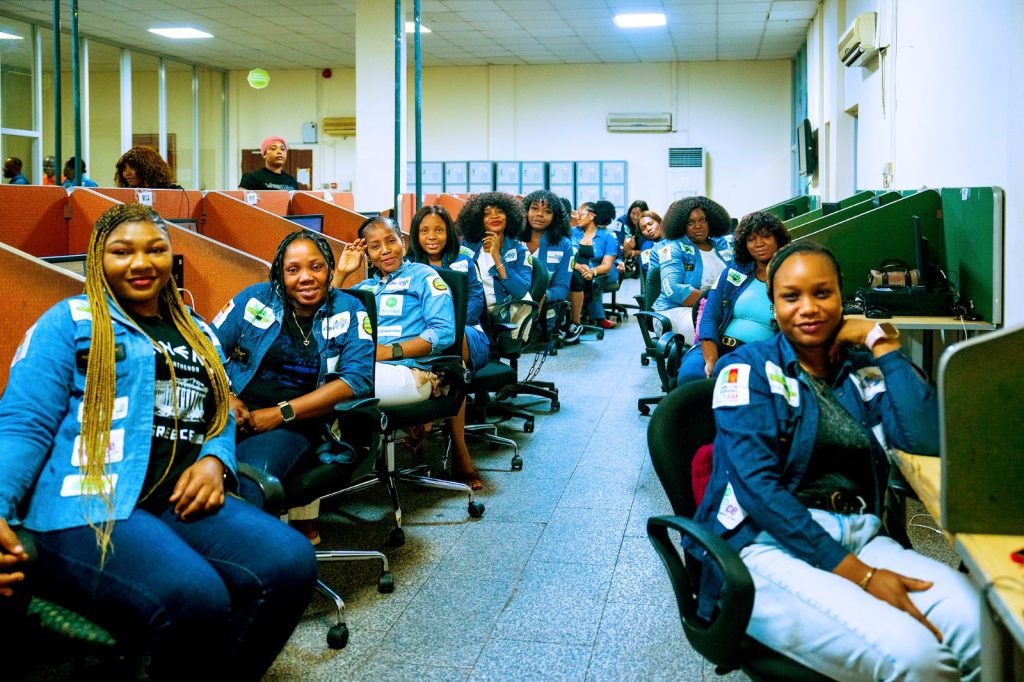
The Nigerian Communications Commission (NCC) the telecoms industry regulator, has commended Globacom on its outstanding performance in consumer complaint management and resolution.
In a letter to the company, which was signed by Kabiru S. Haruna, Principal Manager, Consumer Protection & Advocacy
Consumer Affairs Bureau (CAB), the Commission expressed happiness at Globacom’s treatment and resolution of customer issues during the month of August, 2026.
The letter read in part: “We are pleased to note that your organization achieved and surpassed the Commission’s complaint resolution thresholds of 90% and 97% for Level 2 (L2) complaints. This accomplishment reflects your commitment to regulatory compliance, consumer satisfaction, and the continuous improvement of service delivery.”
NCC noted that Globacom’s dedication to timely complaint resolution and adherence to established Service Level Agreements (SLAs) put in place by the Commission has contributed significantly to enhancing consumer confidence and promoting a positive customer experience within the telecommunications sector.
The Commission further encouraged Globacom to sustain this level of outstanding performance while continuing to implement measures aimed at further improving service quality and consumer satisfaction.
Globacom noted that constant training of its customer-interfacing staff and investment in the latest technology were responsible for observed improvement. The company promised not to relent in this regard.

Business and Economy
TCN, NISO, KEDCO, others meet in Kano to map out outage, load diversion on Kumbotso-Dan Agundi 132KV transmission line
By Chidera Orji
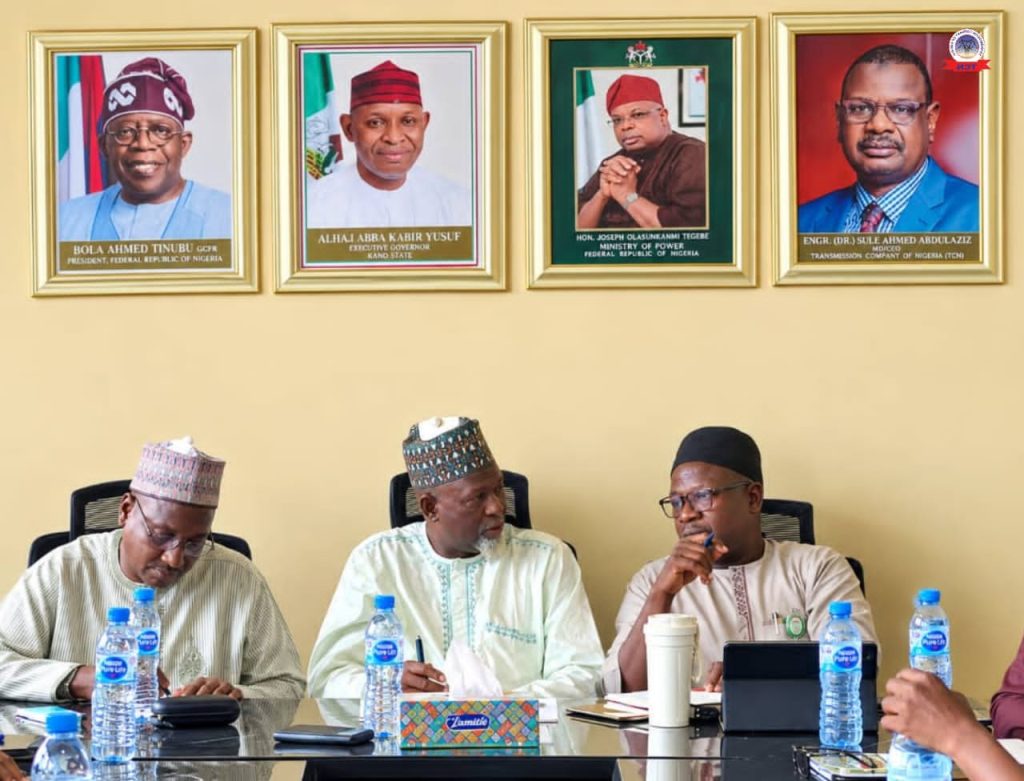
The Transmission Company of Nigeria (TCN), Kano Region, has held a coordinating meeting with Nigerian Independent System Operator (NISO), Kano Electricity Distribution Company (KEDCO), project contractors, and Kano State Ministry of Works, aimed at discussing a proposed outage and load diversion for the elongation of Towers 27 and 28 on the Kumbotso–Dan Agundi 132kV Transmission Line.
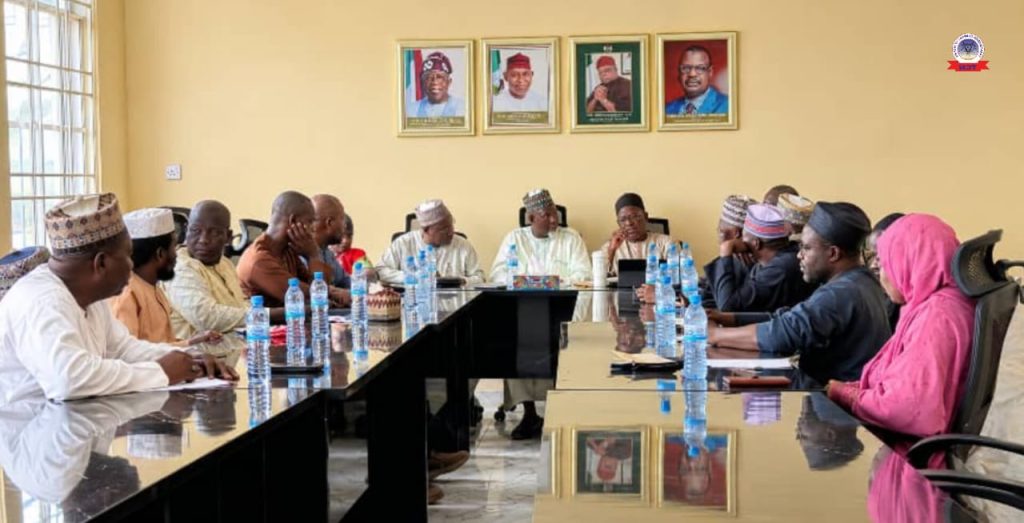
The meeting, which was held on Monday, October 5, , at the Regional Conference Room, Kano, was chaired by General Manager (Transmission), Kano Region, Engr. M. K. Bello, according to press statement made available to DISCLOSURE News by the Management of Transmission Company of Nigeria (TCN), yesterday.
In his opening remarks, Engr. Bello expressed confidence in the contractors’ competence but emphasized that they must thoroughly assess all proposed technical connections and switching arrangements before implementation to ensure operational safety and network reliability.
Also speaking at the meeting, the NISO Regional Operations Coordinator (ROC), Engr. Kunle Egbedinni, stressed the need for strict Grid Code compliance, particularly the requirement to submit planned outage applications at least 14 days in advance for approval.
The Head, Operations and Maintenance, KEDCO, Engr. Sabiu Haruna proposed diverting the load served by Dan Agundi 132kV Substation to alternative substations, including Dakata 132kV, Tamburawa 132kV, Rimin Zakara 330kV, Kumbotso 330kV, and Wudil 132kV substations, within a proposed two-day outage window.
Participants reviewed network capacity and alternative supply arrangements for the exercise. They observed that Hadejia 132kV Substation could not absorb the full 60MW load earmarked for diversion, and assessed supply options from the Tamburawa, Rimin Zakara and Dakata substations. They also emphasised the need to ensure the safety of personnel and equipment.
The meeting concluded with all stakeholders committing to strengthen inter-agency coordination, ensure regulatory compliance, and facilitate timely project execution.
Business and Economy
Collapse of transmission towers affects 33kv feeders at Keffi, Akwanga substations – TCN
By Chidera Orji
Following the collapse of Towers T78, T79 and T80 along the Karu-Keffi-Akwanga 132kV Transmission Line corridor, the Transmission Company of Nigeria (TCN) has disclosed that all 33kV outgoing feeders at the 132/33kV Keffi and 132/33kV Akwanga transmission substations are currently not available .
It will be recall that at about 4:06pm Wednesday, 7th October 2026, during rainy and windy conditions, the 132kV Karu-Keffi-Akwanga Single Circuit Transmission Line tripped on over current relay protection, as investigations revealed that three transmission towers have collapsed.
A press release from the management of TCN and made available to DISCLOSURE News, added that all 33kV outgoing feeders at the Keffi and Akwanga Transmission Substations are presently unavailable. No load can therefore be nominated on the affected feeders on the interim.
The release said that “engineers are currently on site, to assess the extent of the damage to enable them determine requirements needed to commence restoration activities, regretting the inconvenience the development will cause electricity customers taking supply from substations affected by the tower imcident.
By Sam Otuonye
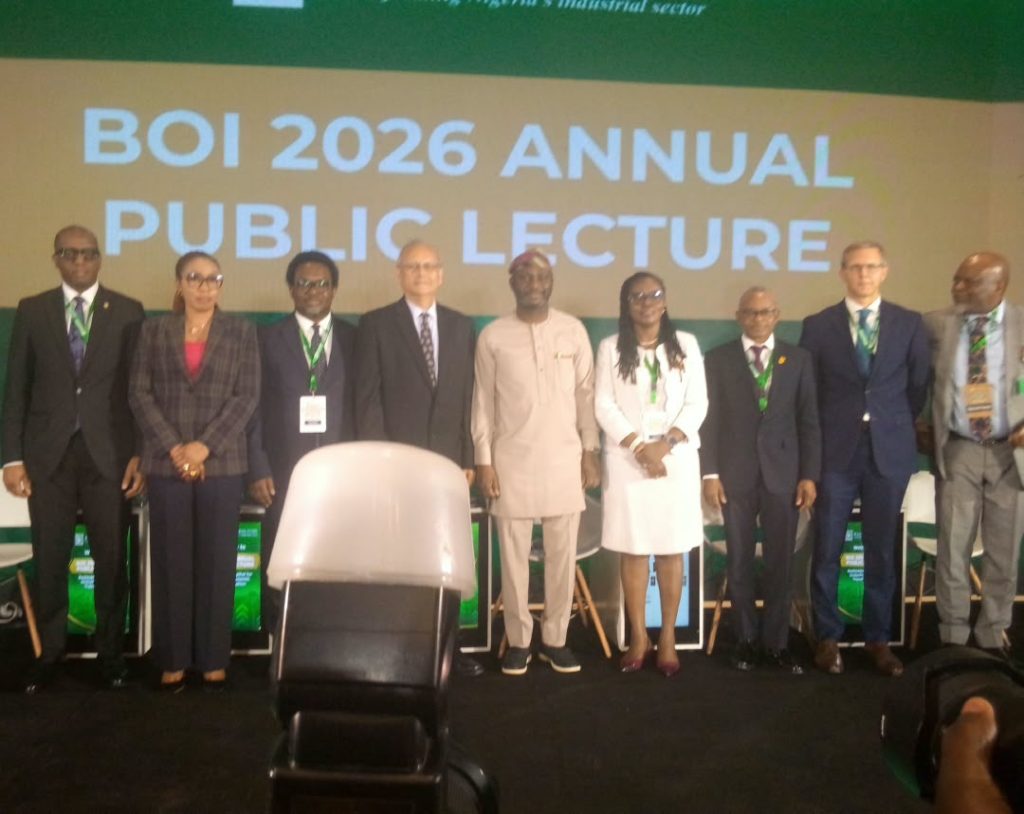
Manufacturers Association of Nigeria (MAN) has praised the Bank of Industry (BOI), for extending credit facilities at minimal interest rates and ease of processing to its members, even as the Managing Director and Chief Executive Officer (MD/CEO) of the bank, Dr Olasupo Olusi highlighted that the bank disbursed N465 billion, supported over 12,000 businesses and impacted 1.68 million jobs in 2025.
Speaking during a panel session at the BOI 2026 Annual Public Lecture in Abuja, on Tuesday September 29, 2026, with the theme: ‘Rethinking Capital for Inclusive Economic Transformation’, MAN okayed the rates at which BOI grants its members loan, even as it urged BOI to bring more members onto the single-digit interest rate loan bracket, and de-risk investment in the sector.
Director, MAN Abuja Liaison Office, Adeyemi Folorunsho, representing the Director-General, Segun Ajayi-Kadir, said: “The current management of BOI has been doing exactly what we want. What we are getting from BOI is fair enough. BOI loans have a good tenure,” he enthused.
Aligning with Folorunsho, Group Managing Director and Chief Executive Officer of Flour Mills of Nigeria, Omoboyede Olusanya, in representation, and MD/CEO InfraCredit, Chinua Azubike, represented by Daniel, a Senior staff member, respectively, commended BOI on their rising profile of supporting businesses, noting that cost of financing is key to improving productivity, inclusiveness, and economic transformation.
On her part, Executive Director, Policy Innovation Centre and a Senior Fellow at the NESG, Dr Osasuyi Dirisu, commended BOI but urged it to do more for the rural and underserved women.
The MD/CEO of BOI, Dr Olusi, in his opening remark, speaking to the theme of the lecture, stated that Nigeria needed capital that can support long-term industrial growth, reach underserved businesses, and attract private investment into the productive sector, noting that BOI has the mandate to spearhead Nigeria’s sustainable and inclusive industrial development.
“This requires us to think carefully about how capital is mobilized, structured and deployed, and the development outcomes it ultimately delivers.
“These issues are central to BOI’s mandate to spearhead Nigeria’s sustainable and inclusive industrial development. In 2025, the bank disbursed N465 billion, supported over 12,000 businesses and impact 1.68 million jobs.
“The scale of the opportunity ahead is significant. We need to mobilise more long-term capital, extend financing to businesses and sectors that remain underserved, use development finance to unlock greater private investment, and ensure that financing translates into measurable economic impact.”
The Keynote speaker, Dr Asad Alam, Adjunct Professor at Georgetown University, Washington, D.C, argued that there is more to capital than just accumulation and investment, noting that efficiency of capital is essential to drive impact and growth.
He stated that as countries grow, total capital productivity becomes more important, highlighting that human capital contribution remains modest but huge potential gives existing gaps with high income countries. He said that greater equity can support potential growth investments in technology and climate action with the potential to spur productivity and structural transformation.
The guest lecturer maintained that for Nigeria to maximize the impact of capital, it must make policies that would foster trade and market openness, innovation, competition, and sustainability.
He said that strong institutions is essential to ensure the enthronement of rule of law, effective State, service delivery, private enterprise, and regulations, adding that inclusiveness must give birth to equitable distribution of public good and job creation.
-
General News3 weeks ago
JOHESU demands: MHWUN puts FG on notice over fresh action
-
 Politics4 weeks ago
2027: ASAF backs APC governors, rejects rainbow coalition
-

 Politics1 month ago
You have demonstrated diligence, loyalty, statesmanship in leadership, Ekechi salutes Shetimma at 60
-
 General News4 days ago
Rivers 2027: We are not part of Rainbow Coalition – APC Legacy Group slams Wike, Fubara meeting
-

 Politics2 months ago
2027: Advertising experts raise concerns over irregular regulation of sector
-
FCT News2 months ago
2027: Hasana-Moneme pledges skills, empowerment, credit access for FCT women
-
General News2 months ago
2027: Dame Princess Esom-Nwafor Orizu confirmed as APC flagbearer for Nnewi North /South /Ekwusigo Federal Constituency as INEC releases names of candidates
-
Uncategorized3 months ago
Rescue of Oyo schoolchilden: Tinubu commends security agencies, says action breakthrough in fight against criminality