
Main cover
2027: Every action will reflect the will of Nigerians, INEC promises

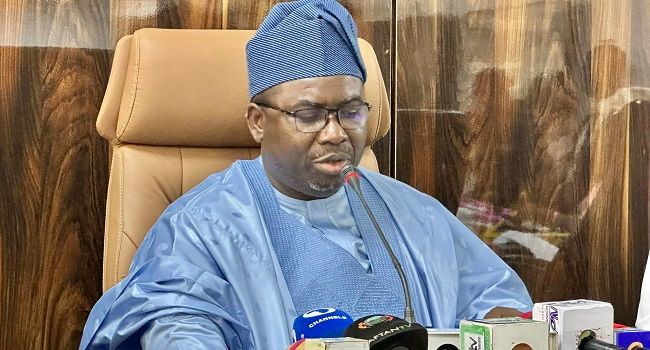
By Eze Nnadi
The Independent National Electoral Commission (INEC) has allayed opposition parties fear and loss of confidence over its ability to conduct a free, fair and credible 2027 general election that would meet international standards as it expressed commitment to conducting a transparent, credible, inclusive and peaceful election.
The commission gave the assurance when it received a delegation of the African Union (AU) Pre-Election Needs Assessment Mission on Tuesday in Abuja.
The AU delegation, led by former Deputy Prime Minister and Minister of Foreign Affairs of the Federal Democratic Republic of Ethiopia, His Excellency Demeke Mekonnen, in Nigeria to assess the country’s overall electoral preparedness and identify areas requiring further support and intervention ahead of the upcoming general election.
Receiving the delegation at the INEC headquarters in Abuja, the Chairman of commission, Joash Anupitan described the AU misdion as an important opportunity for peer assessment, institutional learning and the strengthening of Nigeria’s electoral processes at a critical period in the nation’s democratic journey.
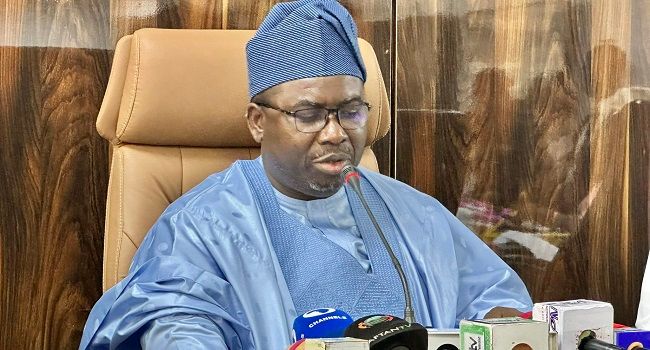
The chairman, who was represented by Prof. Rhoda Gumus said the commission values its partnership with the African Union in advancing democratic standards and credible electoral governance across the continent. She noted that the mission should not be viewed as a formality, but as an indispensable mechanism that strengthens institutional resilience and reinforces public confidence in the ballot box.
She highlighted the scale of preparations already underway for the 2027 General Election, stating that INEC is undertaking extensive operational, technological and logistical preparations to ensure effective participation by all eligible Nigerians. She added that lessons drawn from recent off-cycle elections in Anambra, the Federal Capital Territory, Ekiti and Osun continue to serve as valuable learning opportunities for the Commission.
The Chairman also outlined specific areas where technical and institutional support from the AU would be valuable, including digital training for ad hoc election personnel, countering election-related disinformation and deepfakes, strengthening the Election Monitoring and Support Centre, and deepening inclusivity and gender-mainstreaming frameworks.
She emphasised that electoral integrity remains a collective responsibility involving electoral institutions, political parties, civil society, security agencies, the media, development partners and the electorate, while reaffirming the absolute independence, neutrality and professional resolve of the Commission.
“The final outcome of the 2027 General Election will reflect nothing less than the sovereign will of the Nigerian electorate,” he declared.
The chairman’s assurance comes as INEC intensifies preparations for what is expected to be one of the largest electoral exercises in the country’s history, involving almost 100 million registered voters, 176,846 polling units and more than 1.4 million ad hoc personnel.
The commission assured that under the watch of the current Commission led by Prof. Joash Amupitan, SAN, “every administrative decision will strictly follow the law, every technical deployment will serve transparency, and the final outcome of the 2027 General Election will reflect the sovereign will of the Nigerian electorate.”
Speaking on the purpose of the visit, the Head of the AU Mission, His Excellency Demeke Mekonnen , explained that the mission is designed as a supportive and consultative engagement to assess activities already on track, identify existing gaps and risks, and explore possible areas of technical assistance.
He noted that the mission will engage widely with INEC and other key stakeholders to examine preparedness in voter registration and register integrity, electoral technology, logistics, funding, inclusion, transparency, dispute resolution, security coordination and results management. He underscored the continued partnership between Nigeria and the African Union in promoting democratic governance across the continent.

***PGF, Legacy group warn against supporting coalition candidates outside ruling party
*** Reject alleged plots to weaken party ahead 2031
*** Rainbow coalition support only for Tinubu’s reflection, not for state, Wike replies PGF
By Tony Chuddy
Ahead of the 2027 general election, the Progressive Governors’ Forum (PGF), has criticised the alleged plans by some opposition party supporters of President Bola Tinubu to weaken and infiltrate the ruling party’s ranks under the pretext for support for the president’s re election.
The body of governors elected under the ruling All Progressives Congress (APC) have rejected what they described as the cross-party coalition and external political arrangements ahead of the 2027 general election.
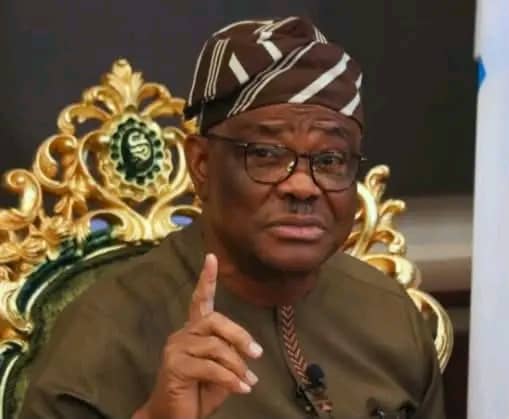
Recall that former governor of Rivers state, and minister of the Federal Capital Territory (FCT), Nyesom Wike had formed what he described as a rainbow coalition in some states to campaign for the re election of President Tinubu in 2027.
The coalition which has swept across Rivers, Katsina, Gombe and Kwara states, has brought members of the opposition Peoples Democratic Party (PDP) and some aggrieved members of the ruling All Progressives Congress (APC) together, with the APC members picking PDP tickets to contest both governorship and national assembly elections, after losing same in the ruling party.
Rejecting the Nyesom Wike-led PDP’s rainbow coalition move to field its aggrieved members against the ruling , the Progressive Governors Forum said it will officially take charge of President Bola Tinubu’s reelection campaign within their respective states.
The APC governors who met Monday night at the Imo State Governor’s Lodge in Abuja, distance itself from any political coalition that could undermine the President’s interests or weaken the party.
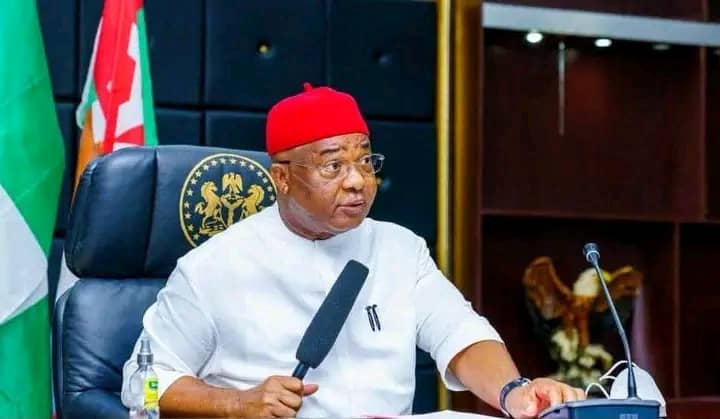
Briefing journalists after the meeting, PGF chairman, Governor Hope Uzodimma of Imo State, said the APC will exclusively back its own candidates.
The Forum therefore urged its supporters to ignore any coalition report and support and vote only candidates who emerged on the APC platform .
“The forum unanimously resolved that its members will not participate in, support, or endorse any alliance or political arrangement capable of undermining the reelection of Mr. President, weakening the APC, or adversely affecting any candidate of the party at all levels.
“In other words, the Forum has no intention to support any candidate at any level that is not an APC candidate, because the election and our candidates are standing election as being sponsored by our party.”
The PGF emphasized that its campaign loyalty remains undivided, adding that “no arrangements that create confusion, divided loyalty, or competing interests within the party will be entertained.”
The governors maintained that they will remain at the forefront of the President’s reelection bid in their various states.
“All levels of the party’s campaign architecture will be aligned to the reelection of Mr. President and the strategic objectives of the APC, while maintaining national coherence,” Uzodimma stated.
The PGF chairman emphasized that the governors’ electoral mandate is strictly tied only to candidates produced by the party’s official organs, warning against competing interests or fragmented loyalties.
In a similar development, the APC Legacy group called on the progressive governors to guard against what it described as external forces that are aimed at destabilising and plot to weaken the ruling party with eyes on the 2031 elections
The group which is made of the legacy members of all the political parties that came together to form the APC in 2014, warned that some political heavy weights, who are not members of the ruling APC are currently using the pretext of coalition support for president Bola Tinubu’s re election to infiltrate and cause confusion in the APC, so as to weaken the party ahead of their 2031 political calculations
The APC Legacy group in a statement issued on Tuesday by it’s coordinator, Fubara Dagogo, called on the ruling party’s leadership to rise in support of the progressive governors, warning that no form of coalition should be accepted to weaken the APC
Dagogo who maintained that the APC has a strong structure to win a second term for President Bola in all the states, noted that “what the external forces are giving now is a Greek gift that could spell doom for the APC after the elections”
The group therefore joined the governors to call on all APC supporters to reject the coalition in their various states, while urging them to vote only candidates by that emerged on the ruling party’s platform
Meanwhile, the Federal Capital Territory (FCT) Minister Nyesom Wike, has declared that he had no agreement with the APC governors to support their candidates, noting that his only concern in his rainbow coalition is to support and deliver the re election bid of President Bola Tinubu, while backing his party candidates at other levels of the election.
Wike, the national leader of the Peoples Democratic Party (PDP), who reiterated his support for the reelection of President Bola Tinubu, said he never promised that the PDP will not field candidates in governorship, National Assembly and States House of Assembly elections.
The Minister in a statement by his Senior Special Assistant on Communication and Social Media, Lere Olayinka, said the Rainbow Coalition does not have anything to do with the All Progressives Congress (APC).
He noted that the coalition is a platform for other political parties that are pleased with the “good works” of the President and are supporting his reelection, stating further that he would not be the one to help governors win elections in their States
He said, “politics is local and those having problems in their states should resolve them instead of using the reelection of the President to whip up sentiments.”
Wike reminded that he never met with the APC before himself and other members of the G5 supported the President in 2023, and maintained that for 2027, his support will be only for the president .
Querying the governors support for President Tinubu, Wike noted, “In Imo State under Governor Hope Uzodinma, how did APC win two senate seats in 2023, in an election held the same day with that of the President and APC had less than 15 percent in the presidential election? Was it rainbow coalition? Were the voters confused?
“Was it rainbow coalition that also made APC to win National Assembly elections in Ebonyi, Abia and Enugu states where the President did not have ten percent of the votes? If in 2023, the voters in Imo, Abia, Enugu and Ebonyi voted APC in the Senatorial election and voted another party in the presidential election, they won’t be confused in 2027 provided we all support the president genuinely this time?”
The Minister urged all stakeholders to put the presidential election first, saying; “after the President must have been reelected, we can all go and face elections in our states.
“What I said and stand for is that I will mobilise support for the reelection of the President. I never promised anyone that PDP will not field candidates to contest governorship, National Assembly and States House of Assembly elections.
“Most importantly, rainbow coalition has nothing to do with the APC. Rather, it is our own way of mobilising support accross political parties for Mr President, who has done well to deserve a second term,” he said.
*** No plans to revisit subsidy removal policy, Presidency insists
By Sam Otuonye (With agency report)
The pump price of Premium Motor Spirit (PMS), popularly known as petrol, is nearing N1,500 per litre in the nation’s capital as rising global crude oil prices and higher logistics costs continue to put pressure on the downstream petroleum market.
The latest development followed an N85 per litre increase in the gantry price of petrol by Dangote Petroleum Refinery, from N1,265 to N1,350, effective September 12, 2026.
DISCLOSURE News survey showed that as of Sunday, most filling stations in Lagos were dispensing petrol between N1,400 and N1,430 per litre, while in Abuja, pump prices ranged from N1,400 to N1,450 per litre.
In the South east, check by our correspondents in Owerri , Awka and Enugu, reviewed that both the NNPCL and MRS, an outlet of Dangote refinery have adjusted their pump prices to N1420, while other independent marketers are selling between 1450 to N1500
This is as the Presidency has maintained that it has no plans to revisit the petrol subsidy removal policy, despite the debate that greeted the campaign pledge by the opposition African Democratic Congress (ADC), and it’s presidential candidate, Atiku Abubarkar, that it would return subsidy, if elected president in the 2027 general election
Special Assistant to the president on Information and Strategy, Bayo Onanuga, said on Sunday that the call by former Vice-President Atiku Abubakar to bring back fuel subsidy will undermine the reforms already undertaken in the petroleum sector.
According to the Presidency, it will also create legal and fiscal complications, and potentially discourage investment in domestic refining, including the Dangote Refinery and other modular refineries.
The adjustment marks another increase in domestic fuel prices, which have risen sharply from around N830 per litre before the Middle East crisis earlier this year to over N1,300 in many parts of the country.
The latest price movement follows a surge in international crude oil prices, with Brent crude climbing above $100 per barrel and reaching $107 per barrel on Thursday.
According to oilprice.com, Brent crude traded at $104.61 per barrel as of Sunday, more than 50% higher than levels recorded before the escalation of tensions in the Middle East.
Prior to the crisis that began on February 28, crude oil traded below $69 per barrel. However, disruptions to global supply chains and concerns over reduced oil flows through the Strait of Hormuz have pushed prices significantly higher, increasing costs across global energy markets.
The rise in crude prices has translated into higher costs for domestic refiners and fuel importers, prompting fresh adjustments to petrol prices across Nigeria.
The latest increase has triggered concerns among consumers, many of whom fear petrol prices could rise further in the coming days.
In July, Dangote Refinery stated that its pricing model was not directly tied to daily fluctuations in international crude oil prices, explaining why retail fuel prices do not immediately decline when global oil benchmarks fall.
The refinery said crude oil is often purchased weeks or months before processing under commercial supply contracts linked primarily to monthly average pricing mechanisms.
According to the company, this procurement structure means changes in international oil prices are not instantly reflected in local fuel prices.
This is as there are heightened fears that prices could hit between N1500 to N1600 per litre in northern cities such as Kano, Kaduna and Jos, depending on product availability, transportation costs and supply routes.
The National Publicity Secretary of the Independent Petroleum Marketers Association of Nigeria (IPMAN), Chinedu Ukadike, said marketers had been forced to review their pump prices following successive adjustments by Dangote Refinery.
According to him, the frequent changes were creating uncertainty for marketers and consumers because the cost of replacing products could change within a short period.
The latest increase represents the fourth upward adjustment to Dangote Refinery’s petrol gantry price since August 21.
Onanuga, who described Atiku’s move as retrogressive, fiscally unsustainable and a product of “desperation to win the presidency,” said that Nigeria’s petroleum landscape had changed fundamentally since President Bola Tinubu announced the removal of petrol subsidy.
Atiku, who had also supported the removal of petrol subsidy during the 2023 campaigns, has. however, made the restoration of petrol subsidy a major part of his 2027 campaign, arguing that Nigerians have not seen sufficient benefits from the subsidy removal.
The former vice president alleged that the funds generated from the subsidy removal had not translated to food on the table of Nigerians as well as impacted on their lives.
On the oil and gas sector, he said that a new intervention should be designed around domestic refining, with support capped, budgeted and tied to verifiable production and consumer benefits.
According to him, every barrel of crude allocated under his proposal will be targeted and tracked to ensure that Nigerians benefit from the intervention.
Atiku said that his proposal was not a return to the opaque subsidy regime of the past, but a controlled mechanism that would support Nigerian refineries while ensuring that the benefits of cheaper crude feedstock were transmitted to consumers.
Main cover
SERAP queries INEC on N126bn alleged diverted electoral funds, threatens court action within 7 days
By Our Reporter
Towards a build up to 2027 general election, the country’s electoral empire,
the Independent National Electoral Commission (INEC) , has come under the scrutiny of a non governmental organisation, Socio-Economic Rights and Accountability Project (SERAP), as the watchdog body has given INEC seven days to “account for over ₦126.46 billion in public funds appropriated for electoral operations but allegedly diverted, lost, mismanaged or otherwise unaccounted for.”
The funds relate to the procurement of ballot boxes, electoral devices and materials, sensitive materials and result sheets, vehicles, accreditation devices, audit and consultancy services, digital archiving and other goods and services required for the conduct and administration of elections.
In the letter dated 12 September 2026 and signed by SERAP deputy director Kolawole Oluwadare, the organisation said: “Electoral resources are public resources. INEC must be able to account for every naira, demonstrate that it was lawfully spent and show that it served the purposes for which it was appropriated.”
According to the 2023 audited report of the Auditor-General of the Federation, published on 7 August 2026, the findings variously covered periods between January and December 2022 and, in some cases, extended to 31 December 2023.
SERAP urged INEC to “account for the over ₦126 billion, including the amounts paid, the beneficiaries of the payments, the contracts and procurement processes, the contractors and suppliers involved, and evidence of delivery, utilisation and the current status of the goods, services and electoral assets concerned.”
SERAP also urged Professor Joash Amupitan and INEC “to refer the alleged diversion, unlawful expenditure, procurement violations and other financial misconduct documented by the Auditor-General to the Economic and Financial Crimes Commission (EFCC) and the Independent Corrupt Practices and Other Related Offences Commission (ICPC) for investigation, prosecution and recovery.”
SERAP urged Professor Amupitan and INEC “to identify the public officials, contractors, companies, suppliers and consultants responsible and take all necessary steps to recover any of the over ₦126 billion found to have been unlawfully or irregularly paid, lost, diverted, or paid for goods and services not supplied or properly utilised.”
SERAP said, “We would be grateful if the recommended measures are taken within 7 days of the receipt and/or publication of this letter. If we have not heard from you by then, SERAP shall take all appropriate legal actions to compel you and INEC to comply with our request in the public interest.”
The letter, read in part: “These findings are particularly disturbing given the constitutional importance of INEC and the fact that the expenditure concerns resources appropriated for the administration of Nigeria’s electoral system.”
“These findings suggest a grave violation of the public trust and the provisions of the Nigerian Constitution 1999 (as amended), national anticorruption laws, and the country’s obligations under the UN Convention against Corruption.”
“According to the Auditor-General, INEC ‘irregularly paid’ over ₦112 billion [₦112,155,597,845.00] ‘for ballot boxes, electoral devices, items and materials without competitive bidding or a BPP Certificate of No Objection.’”
“INEC also ‘paid over ₦1 billion [₦1,058,925,000.00] for Toyota Prado TXL 2021 Model without advertisement, competitive bidding, bid evaluation or a BPP Certificate of No Objection.’ The Auditor-General fears that the money ‘may have been lost’ and that the contracts ‘may have been inflated.’”
“INEC ‘paid over ₦3 billion [₦3,136,806,050.00] to four contractors for ballot guides, sensitive materials and result sheets before the contracts were awarded, with no evidence of payment.’ The Auditor-General is concerned that the money ‘may have been diverted.’ He wants the money recovered and remitted to the treasury.”
“INEC also ‘paid over ₦9 billion [₦9,245,965,502.60] for 22 contracts for similar goods and services’, with the contracts ‘split to circumvent procurement procedures and awarded on the same day.’ The Auditor-General said the money ‘may have been lost’ and that ‘the payment may have been made for items not supplied.’”
“INEC ‘paid over ₦129 million [₦129,375,000.00] to 19 accounting firms for financial audit services without evidence of utilisation or requests and expenditure by the consultants.’ The Auditor-General raised concerns that the money ‘may have been diverted.’ He wants the money recovered and remitted to the treasury.”
“INEC also ‘paid over ₦504 million [₦504,492,641.00] for accreditation devices without due procurement process. The ‘APG had expired before the security licence key was delivered and the software was valid for only four months, raising questions about economy and value for money.’ The Auditor-General also raised concerns that the money ‘may have been diverted.’”
“INEC ‘paid over ₦235 million [₦235,103,000.00] to unqualified contractors for sleeping mats and digital archiving.’ The Auditor-General identified ‘serious concerns regarding the eligibility and capacity of the contractors’, and raised concerns that the money ‘may have been lost.’ He wants the money recovered.”
“INEC should provide documentary and physical evidence that the over ₦112 billion identified as ‘irregularly paid’ was actually used to procure the electoral materials concerned and account for the present location and status of those materials.”
“Nigerians have a right to know every public act, everything that is done in the public interest, by their public institutions including INEC.”
“Democracy requires an informed citizenry. That principle is directly relevant to public expenditure by an electoral management body: citizens are entitled to know how resources entrusted to INEC for the conduct of elections have been used.”
“INEC should also ensure that no electoral equipment, material or other public asset covered by the Auditor-General’s findings is disposed of, transferred, destroyed, written off or otherwise dealt with in a manner that could frustrate accountability or recovery pending completion of the reconciliation and any resulting investigation.”
“Any referral to the EFCC and ICPC should expressly cover the contractors, companies, suppliers and consultants who irregularly received public funds, as well as any INEC officials or other public officials who authorised, processed, facilitated or benefited from the transactions.”
“The recommended investigations should determine, among other things: whether the contracted goods and services were actually supplied; whether payments corresponded with goods and services actually delivered; and whether contracts were deliberately split to circumvent procurement requirements.”
“Where investigations establish that public funds were unlawfully received or expended, INEC should cooperate fully with the EFCC, ICPC, Auditor-General, Attorney-General of the Federation and other competent authorities to secure recovery and remittance of the funds to the appropriate public account.”
“Recovery should extend to all amounts established to have been unlawfully or irregularly paid, together with any other recoverable public loss established through the investigations.”
“SERAP notes that Section 15(5) of the Nigerian Constitution requires public institutions including INEC to abolish all corrupt practices and abuse of power. Section 13 of the Nigerian Constitution imposes clear responsibility on INEC to conform to, observe and apply the provisions of Chapter 2 of the constitution.”
“Nigeria’s obligations under the UN Convention against Corruption requires INEC to adopt preventive anti-corruption policies and transparent public procurement and public financial management.”
“Article 25 of the International Covenant on Civil and Political Rights and Article 13 of the African Charter on Human and Peoples’ Rights to which Nigeria is a state party protect citizens’ rights to participate in public affairs.”
-

 Politics1 week ago
You have demonstrated diligence, loyalty, statesmanship in leadership, Ekechi salutes Shetimma at 60
-

 Politics1 month ago
2027: Advertising experts raise concerns over irregular regulation of sector
-
FCT News1 month ago
2027: Hasana-Moneme pledges skills, empowerment, credit access for FCT women
-
General News1 month ago
2027: Dame Princess Esom-Nwafor Orizu confirmed as APC flagbearer for Nnewi North /South /Ekwusigo Federal Constituency as INEC releases names of candidates
-
Uncategorized2 months ago
Rescue of Oyo schoolchilden: Tinubu commends security agencies, says action breakthrough in fight against criminality
-
General News3 weeks ago
Chi-Jenco CEO, Jude Orji loses mother
-
Uncategorized2 months ago
PCC Anambra Commissioner pays courtesy visit to FRSC sector commander
-
Uncategorized2 months ago
INEC flags off Mega Continuous Voter Registration Centre, enrols 31,835 new voters