
General News
2027: S’Court ruling throws Chinda, Pantami, Adamu, Obasanjo, others into uncertainty


By Chidera Orji with agency report
The Supreme Court’s affirmation of key provisions of the Electoral Act 2026 has triggered fresh questions over the eligibility of some politicians who changed political parties before securing tickets for the 2027 elections.
The ruling, delivered on Thursday, September 24, upheld the validity of sections 77 and 84 of the amended Electoral Act, provisions dealing principally with political party membership registers and the nomination of candidates through direct primaries or consensus.
The decision followed an appeal by the Independent National Electoral Commission (INEC) against an earlier judgement of the Court of Appeal, which had struck down parts of the provisions challenged by the Zenith Labour Party (ZLP).
The dispute originated at the Federal High Court, where ZLP had argued that sections 77(5), 77(6), 77(7) and 84(2) of the Electoral Act were inconsistent with the 1999 Constitution and amounted to interference in the internal affairs of political parties.
Justice Mohammed Umar of the Federal High Court dismissed the suit on May 5, 2026.
ZLP subsequently appealed to the Court of Appeal, Abuja Division, in suit number CA/ABJ/CV/750/2026. The appellate court, in its July 16 judgement, partly allowed the appeal and invalidated provisions relating to party membership registers and primaries.
INEC then proceeded to the Supreme Court, asking the apex court to reverse the decision.
A seven-member panel headed by Justice Adamu Jauro heard arguments from the parties before reserving judgement.
In its ruling on Thursday, however, the Supreme Court overturned the Court of Appeal decision and restored the judgement of the Federal High Court. It also awarded N2 million in costs against ZLP.
In two related matters involving the Social Democratic Party and the Youth Party, the apex court also dismissed the appeals against INEC. While the SDP matter was dismissed on its merit, the Youth Party’s appeal was struck out after the court upheld INEC’s preliminary objection.
The court held that the Youth Party’s appeal was incompetent because it was filed one day outside the stipulated period.
The ruling has since generated different interpretations across the political landscape, particularly over the status of politicians who left one political party after participating in its primary and subsequently secured nomination in another party.
Among those whose cases have attracted attention are former Inspector-General of Police Mohammed Adamu in Nasarawa, Professor Isa Pantami in Gombe, Kingsley Chinda in Rivers, Senator Shehu Buba Umar in Bauchi, Mohammed Nami in Niger and Senator Saliu Mustapha in Kwara.
Political actors in several states have already begun interpreting the judgement in relation to individual candidates, while legal practitioners have cautioned that the eventual effect may depend on the facts surrounding each case.
The governorship candidate of the Peoples Redemption Party in Bauchi State, Senator Shehu Buba Umar, has rejected suggestions that the Supreme Court decision could prevent him from participating in the 2027 election.
In a statement issued through his special adviser on media and communication, Comrade Sabo Mohammed, Buba said he had complied with the relevant electoral requirements.
Reacting to reports circulating on social media, the senator said: “My attention has been drawn to misleading publications, particularly on the social media regarding the judgement delivered by the Supreme Court on Thursday, September 24, 2026.”
Buba argued that the legal position established by the Supreme Court became applicable from September 24, while electoral activities concluded before that date were undertaken under the rules then in force.
He maintained that party membership registration, primaries and nomination processes already completed in accordance with the prevailing law should not subsequently be invalidated on a retrospective basis.
According to him, the principle of non-retroactivity remains important in determining how the judgement affects candidates and political parties that acted in accordance with the law before the ruling.
He insisted that he had met all the statutory conditions for his candidacy and therefore saw no reason for his governorship ambition to be questioned.
“Our ambition to clinch the governorship of Bauchi State remains firmly on course. By the special grace of the Almighty Allah (SWT), there is no going back,” he said
Buba also expressed confidence that INEC would provide further clarification on the practical implications of the judgement.
He urged his supporters and party members to remain calm, adding that his legal team was examining the judgement and would advise on its implications as the electoral process progresses.
He also pointed to INEC’s 2027 timetable, arguing that the electoral process had commenced before the September 24 ruling.
Nasarawa: Adamu supporters reject disqualification claims
The Supreme Court judgement has also divided political reactions in Nasarawa State, where supporters of former IGP Mohammed Abubakar Adamu and those backing APC governorship candidate Ahmed Aliyu Wadada have offered contrasting interpretations.
While Wadada’s supporters celebrated on social media, apparently on the assumption that Adamu’s earlier participation in the APC primary and subsequent movement to the SDP could affect his candidacy, Adamu’s camp dismissed the interpretation.
In a statement issued in Lafia, the director of digital media and strategic communications of the IGP Mohammed Abubakar Adamu Campaign Organisation, High Chief Otaru Douglas, said there was no reason for the candidate’s supporters to panic.
Douglas accused some APC elements of deliberately misrepresenting the judgement.
“For the avoidance of doubt, we wish to state categorically that the Supreme Court in SC/CR/495/2026 merely restored and validated the constitutionality of sections 77(5), (6), (7) and 84(2) of the Electoral Act, 2026 after the Court of Appeal had declared them unconstitutional,” he said.
He explained that section 77(5) deals with the membership register to be submitted to INEC before a party primary, while sections 77(6) and 77(7) prescribe the consequences of relying on an alternative register or failing to submit the register within the prescribed period.
He added that section 84(2) provides for direct primaries or consensus.
“The judgement is a general affirmation of INEC’s regulatory powers over party membership registers. It is not a judgement against the Social Democratic Party, nor against IGP Mohammed Abubakar Adamu (retd),” he added.
Douglas also disputed claims that the former police chief had been disqualified, arguing that no court had nullified the SDP membership register, the direct primary that produced Adamu or directed INEC to remove his name.
“The Certified True Copy of the judgement has not even been released, yet they are already manufacturing victory,” Douglas said.
He maintained that the SDP complied substantially with the Electoral Act and that its membership register was submitted in accordance with the law.
“Our nomination process followed section 84(2) strictly by direct primary monitored by INEC. To this end, the candidacy of IGP Adamu, CFR, is valid, lawful and remains on the ballot,” he said.
He urged supporters and party officials to remain focused and avoid distractions.
Kwara: PDP, ADC dismiss concerns over candidates
In Kwara State, the names of Senator Saliu Mustapha, Kolo Jiya and Saheed Popoola have featured prominently in discussions over the possible implications of the Supreme Court ruling.
The PDP state publicity secretary, Olusegun Olushola Adewara, said the party was not a party to the Supreme Court litigation and was not challenging INEC’s published list of candidates.
According to him, INEC had already published the PDP candidate list for public scrutiny.
Adewara said the authority to nominate candidates belonged to political parties, provided they complied with constitutional and electoral requirements.
He specifically dismissed concerns about Mustapha’s candidacy, explaining that the senator did not participate in the party’s earlier primary but became the candidate after the withdrawal of the initial nominee, Otukoko.
The PDP spokesman said new members who wished to participate in the party’s primaries were required to obtain waivers from the relevant party organs, adding that the requirement was met in the cases of Mustapha and Kolo Jiya.
He said the same procedure applied to two members of the Kwara State House of Assembly who defected to the PDP and subsequently obtained waivers before taking part in the party’s primaries.
Adewara argued that the waivers effectively enabled the beneficiaries to participate in the primaries as members of the party.
“Have you seen anybody from Kwara Central who participated in the senatorial primary challenging Saliu Mustapha in court?” he asked.
He described claims that Mustapha’s candidacy had been invalidated as political propaganda in the absence of a legal challenge from a participant in the primary.
The state chairman of the ADC, Babatunde Mohammed, similarly said the judgement would not affect the party’s candidates because, according to him, none of the new members who joined the party participated in its primaries.
Rivers: Questions raised over Chinda, Abiante
In Rivers State, attention has shifted to APC governorship candidate Kingsley Chinda and NDC senatorial candidate Awaji-Inombek Dagomie Abiante.
Chinda won the APC governorship primary on May 21, 2026, following Governor Siminalayi Fubara’s withdrawal from the contest.
Questions have now arisen over whether Chinda was already registered as an APC member or included in the party’s membership register before the primary.
His resignation from the PDP was formally announced on the floor of the National Assembly on June 2, 2026.
The development has prompted opposition supporters in the state to celebrate the Supreme Court decision, with some arguing that Chinda could be affected by the provisions restored by the apex court.
Abiante’s case has also attracted attention. The lawmaker, who represents Andoni-Opobo/Nkoro Federal Constituency in the House of Representatives, had earlier obtained an APC expression-of-interest form to contest the House of Representatives primary.
He was subsequently disqualified from participating in the APC primary before joining the NDC, where he secured the senatorial ticket for Rivers South-East.
Abiante had previously been associated with Governor Fubara and was among those who supported the governor’s earlier bid to seek re-election.
Adamawa: Abbo, Haske cases draw attention
In Adamawa, the state Labour Party chairman, Theman Jonah Kalpenge, said the Supreme Court ruling did not create a problem for the party’s governorship candidate, Senator Ishaku Abbo.
Speaking by telephone, Kalpenge said Abbo registered with the Labour Party in April 2026, before the party’s May 30 governorship primary.
The chairman therefore maintained that Abbo met the relevant requirements.
Abbo had previously been associated with the APC and ADC before eventually joining the Labour Party, where he secured its governorship ticket.
Questions have also been raised about the candidacy of Allied People’s Movement governorship candidate Abdulrahaman Bashir Haske.
Haske joined the APC in 2025 and participated in its May 2026 primary but did not secure the ticket. Following his disagreement with the process, he resigned from the party on August 20, 2026.
He joined the APM later in August, after the party’s previous candidate, Bello Babajo, stepped aside. Haske subsequently emerged as the party’s candidate through affirmation.
Babajo declined to comment when contacted, while a media consultant to Haske, identified as Mukhtar, also declined to discuss the matter.
Gombe: PDP studying implications of ruling
The PDP in Gombe State has said Professor Isa Ali Pantami remains eligible to contest the party’s governorship primary scheduled for September 29.
The party’s state publicity secretary, Abdulkadir Ahmed Dukku, said Pantami, Khamisu Ahmed Mailantarki and Usman Aliyu Garry had all been cleared to participate in the rescheduled exercise.
The development followed a Federal High Court judgement delivered in Gombe on September 24, which nullified the party’s earlier governorship primary conducted on May 26 and ordered a fresh exercise within one month.
Dukku said the party accepted the judgement and welcomed the aspect that recognised Pantami’s membership and entry into the PDP and his participation in the May primary.
“The judgement is presently receiving the attention of the party leadership and contestants. While the legal implications and directives contained in the judgement are being studied, we urge all members, supporters and stakeholders of our great party in Gombe State to remain calm, peaceful and united,” Dukku said.
He called on party members to avoid speculation and inflammatory comments while the leadership studies the legal implications of the ruling.
Ogun: Obasanjo’s camp says candidacy unaffected
In Ogun State, the Supreme Court decision has also generated questions about the candidacy of PDP Ogun Central senatorial candidate, Senator Iyabo Obasanjo.
Obasanjo left the APC on May 31, 2026, after losing the party’s governorship ticket to Senator Solomon Adeola.
She subsequently returned to the PDP on June 15 and was presented as the party’s candidate for Ogun Central two days later.
Her media aide, Dr Odun Agbalajobi, however, said the Supreme Court ruling did not affect her candidacy.
He noted that Obasanjo was not a party to the case decided by the Supreme Court and that the judgement did not specifically name her or issue an order barring her from contesting.
“It is therefore both mischievous and intellectually dishonest to transform a judgment in a dispute between INEC and a political party into a purported judicial pronouncement against a particular candidate who was neither a party to the suit nor the subject of the judgment,” he said.
Agbalajobi said a distinction should be made between the Supreme Court’s interpretation of general electoral provisions and an express judicial determination that a particular candidate was ineligible.
He maintained that no such determination had been made against Obasanjo in the September 24 ruling.
Yobe parties say candidates unaffected
Political parties in Yobe State have also played down concerns over the Supreme Court decision.
The PDP, ADC and APC said the ruling would not affect their candidates for the 2027 governorship and National Assembly elections.
A senior PDP leader, who spoke on condition of anonymity, said the party had two factions in the state, describing them as the Wike and Tanimu Turaki factions.
“In Yobe, the PDP is divided into two factions: the Wike faction and the Tanimu Turaki faction. At the moment, all the candidates produced by the Wike faction are already members of the party.
“As things stand, the electoral commission and the court recognised the Wike faction. This means that the PDP faction led by Tanimu Turaki has become mere spectators. They have not left the party but they do not have recognition from INEC or the court,” he said.
The Yobe ADC chairman, Umar Kalli Alhaji, also said the party’s candidates would not be affected by the judgement.
Lawyers, analysts offer varying interpretations
Legal and civic voices have urged political parties to study the full implications of the Supreme Court decision rather than assume that it automatically settles every question surrounding individual candidates.
The chairman of the Nigerian Bar Association, Kaduna Branch, Baba Lawal Aliyu, said the ruling had constitutional and electoral implications as parties prepared for the 2027 elections.
According to him, parties would need to pay close attention to the requirements governing membership registers, congresses, primaries and candidate nomination.
He warned that failure to comply with the relevant provisions could generate pre-election disputes, depending on the facts of individual cases.
Aliyu, however, said the judgement did not mean that all future electoral disputes had been settled. Rather, he said subsequent cases could centre on whether particular parties and candidates complied with the requirements of the Electoral Act.
He also stressed the importance of the detailed reasoning of the Supreme Court in determining the scope of the judgement.
The national publicity secretary of the Arewa Consultative Forum, Prof Muhammad Tukur Baba, said the judgement did not come as a surprise to him.
He said affected political parties and candidates would have to examine the ruling carefully and determine the legal options available to them.
Similarly, Islamic scholar and former Kaduna State government adviser, Sheikh Abdullahi Maraya, described the judgement as significant to the country’s electoral process.
Maraya said it reinforced INEC’s role in administering the relevant provisions of the Electoral Act and highlighted the need for political parties to comply with statutory requirements.
He also pointed to section 84(2), which recognises direct primaries or consensus as nomination methods under the Act.
Activist Samuel Yusuf cautioned against assuming that the ruling automatically disqualified politicians who had moved between political parties.
“Surrounding individual candidates, including politicians who move from one political party to another, will ultimately depend on the particular facts of each case and the applicable provisions of the law.”
“The judgement does not, by itself, establish that every politician who changes political parties will be ineligible to contest an election. Any such question would have to be considered in accordance with the electoral act, the circumstances of the individual case and any relevant judicial interpretation.
“The same applies to disputes arising from party primaries, congresses and membership registers. While the Supreme Court has settled the constitutional challenge to the relevant provisions, disagreements over their implementation could still result in further litigation.”
“For INEC, the ruling provides judicial confirmation of the legal basis for enforcing the provisions in question. For political parties, it places renewed emphasis on compliance with the statutory requirements governing their internal processes,’ he said.
(DAILY TRUST)

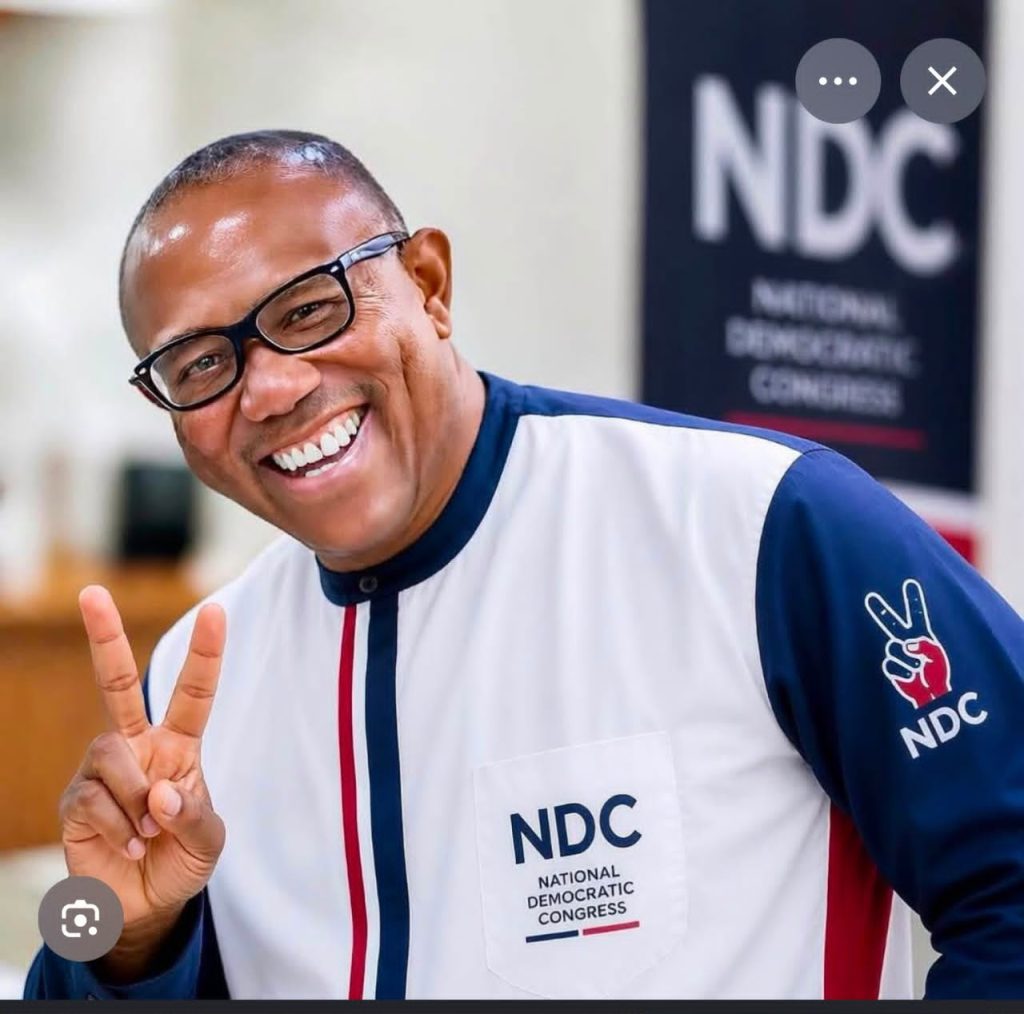
Professor of Political Economy, Pat Utomi, has said he would withdraw his support for Peter Obi’s 2027 presidential bid if the former Anambra State governor agrees to contest as a vice-presidential candidate.
Utomi, a prominent supporter of Obi’s presidential ambition, said his backing was specifically for the former governor to pursue the presidency and not accept the position of running mate to another presidential candidate.
He restated his position in a statement posted on X on Friday, as political realignments and preparations for the 2027 general elections intensify.
“I have said this before, and I believe it is important to remind Nigerians of my position as we approach 2027. Peter Obi has my support for the presidency,” he said.
Utomi added, “But my position is clear, I am not supporting the idea of Peter Obi becoming somebody else’s Vice President.
“The day Peter Obi accepts a Vice Presidential position, I will walk away from his corner. I have said this plainly, and I stand by it.”
According to the professor, his position was based on his perception of the leadership direction Nigeria requires rather than on individual political personalities.
Utomi also advocated a national conversation on the age of politicians seeking executive office, proposing that aspirants for the presidency and governorship should not be above 70 years.
“The Nigerian presidency should not become a retirement home for politicians,” he said.
“I believe there should be a serious national conversation about limiting presidential and gubernatorial candidates to those aged 70 or below.
“Nigeria needs leadership that is focused on the future, not simply another cycle of political succession.
“These are principles I have stated publicly, and Nigerians should judge them for themselves.”
Obi, who contested the 2023 presidential election on the platform of the Labour Party, is now the presidential candidate of the Nigeria Democratic Congress for the 2027 election.
By Ijeoma Nwajiobi, Nnewi
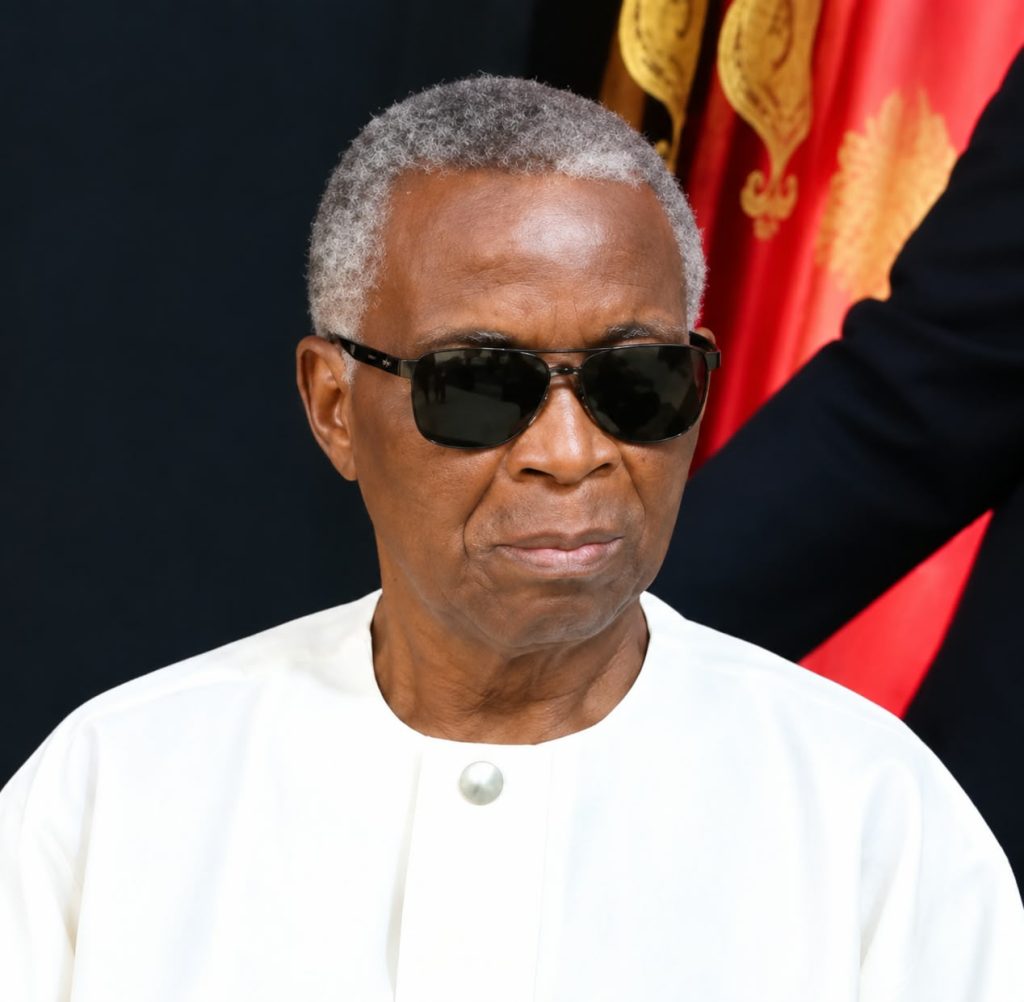
As Joseph Okwuabudike Ojukwu, MFR, clocks 100 years on September 26, 2026, his life stands as a remarkable record of medicine, public service, family devotion, business responsibility and quiet, enduring leadership.
Born on September 26, 1926, at Akamili, Umudim, Nnewi, Joseph is the eldest child and son of the late Sir Louis Philip Odumegwu Ojukwu of Umudim, Nnewi, and Ogbenyeanu Janet Malize of Ukpor.
His early years were shaped partly by Lagos, where the family later resided at 3 Okoya Street, Lagos. He received his early education on Lagos Island before proceeding to King’s College, Lagos, one of the country’s foremost secondary schools.
At King’s College, Joseph distinguished himself academically and in leadership. He was in Class Six and served as Head Boy in the year his younger brother, Emeka, and their cousin, Emmanuel, joined the school in Class One.
Among those who entered the school alongside them were Alex Ekwueme and others who later become a prominent Nigerian.
From King’s College, Joseph proceeded to Cambridge University and subsequently Guy’s Hospital, London, where he qualified as a medical doctor. He later specialised in surgery, obtaining a Master of Surgery degree after becoming a Fellow of the Royal College of Surgeons of England (FRCS).
His professional career took him through some of Nigeria’s important medical institutions. He worked for a period at the University College Hospital (UCH), Ibadan, before becoming a Consultant Surgeon at the General Hospital, Lagos.
With the outbreak of the civil disturbances, the Ojukwu family moved to the East. Joseph continued his medical service, working at the Specialist Hospital, Enugu; Queen Elizabeth Hospital, Umuahia; and Emekuku Catholic Hospital.
Following the civil war, the Enugu Specialist Hospital became the University of Nigeria Teaching Hospital (UNTH), where Joseph continued his distinguished medical career.
It was during his years of service in the medical profession that he became affectionately known as “Pa Ojukwu.”
The name reflected not only his seniority but also the respect and affection he earned from colleagues, patients and those who encountered him.
He was highly regarded for his competence, devotion, selflessness and humility. He was also regarded as totally incorruptible, maintaining a reputation for professional integrity throughout his career. He was honoured with “Chimelumdibia Nnewi” 20 years ago.
A Clinical Professor of Surgery, Joseph eventually retired from active service in 1987. His contribution to medicine and public service had already earned him national recognition. In 1983, he was conferred with the national honour of Member of the Order of the Federal Republic (MFR) by the Federal Government under President Shehu Shagari.
Family and Marriage
Beyond medicine, Joseph Ojukwu’s life has been deeply rooted in family.
In December 1957, he married Maria Ukamaka Aghaji at St. Michael’s Church, Umudim, Nnewi. The wedding was officiated by the late Bishop Anyogu, a friend of Joseph’s father, Sir Louis Philip Odumegwu Ojukwu.
The marriage was blessed with six children: Ogonna, a lawyer; Ike, an obstetrician and gynaecologist; Chukwudi, a surgeon; Ukonwa, a doctor of optometry; Nnanna, a civil engineer; and Chizoba, an accountant.
The family has since grown to include many grandchildren and great-grandchildren.
Maria, who was also called Ifeoma, was described as a totally devoted, protective and wonderful wife. Sadly, she died in 2006, only a year before the couple would have celebrated their golden wedding anniversary.
For Joseph, family remained central to his life. He has been remembered as a simple, humble, honest, hardworking and loving husband and father.
His younger half-brother, Hyacinth, remained throughout his life a loving, loyal and totally devoted brother.
Joseph’s mother, after separating from his father, remarried and had two children, Priscilla and Hyacinth. Priscilla sadly died in her teenage years, while Hyacinth later became a businessman.
A Life Beyond Medicine
Although medicine defined much of his professional life, Joseph Ojukwu’s responsibilities extended beyond the hospital.
He is the eldest child and son of the late Sir Louis Philip Odumegwu Ojukwu and was the only member of the immediate family appointed as an Executor of his father’s will. He remains the sole surviving Executor of the estate.
His association with Ojukwu Transport Limited also stretches back decades. He has been a Director of the company since 1952 and currently serves as its Chairman.
The responsibility places him within the continuing history of one of the prominent business legacies associated with his father.
Yet, despite his professional accomplishments, national honour and family responsibilities, Joseph has remained known for his simplicity and humility.
He enjoys working to help his patients, gardening and peace. These interests reflect a personality that has generally been associated with quiet service rather than public display.
Faith, Resilience and Legacy
Joseph Okwuabudike Ojukwu is a devoted Catholic whose faith has remained an important part of his life.
In his later years, he has had challenges with glaucoma. Despite this, his intellect remains sharp, a quality that has continued to define the centenarian who spent decades in medicine, surgery, business and family life.
His story is therefore not simply that of a medical doctor who rose to become a Consultant Surgeon and Clinical Professor of Surgery. It is also the story of a man who carried significant family responsibilities, maintained a long association with his father’s business legacy, served as Executor of a major family estate, raised six children with his late wife and remained connected to his community.
At 100, Joseph Okwuabudike Ojukwu’s life brings together several chapters of Nigeria’s history — from colonial-era education and the formative years of King’s College, through medical training in Britain and service in hospitals across Nigeria, the disruption of the civil war, the development of post-war medical institutions, and decades of professional and family service.
His centenary is consequently more than a birthday milestone. It is a celebration of a century marked by medicine, integrity, family, faith, service and responsibility.
Joseph Okwuabudike Ojukwu has left a trail defined less by noise than by service.
At 100, the surgeon affectionately called “Pa Ojukwu” remains a living link between generations, a physician, family man, businessman, Catholic, community figure and custodian of a significant family legacy.
General News
Prof Iyorwuese Hagher to chair Verbatim Magazine Ethics and Integrity Awards, Lecture Sept 29
By Nkem Okereh
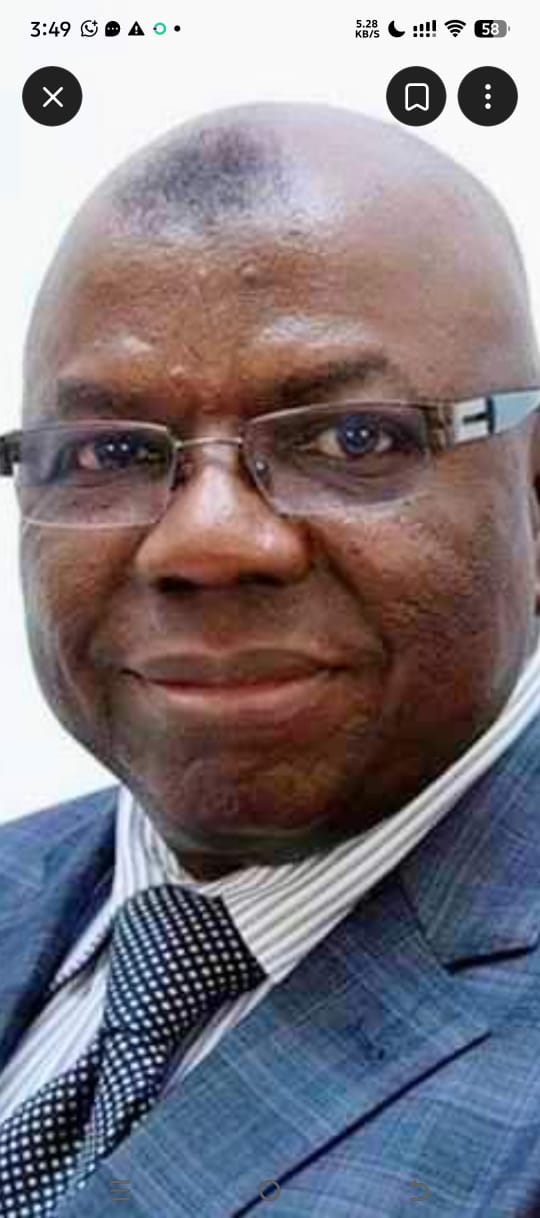
The management of Verbatim news magazine, an Abuja based publication by former editors of the iconic Newswatch magazine has announced a distinguished Nigerian scholar, statesman, diplomat and author, Professor Iyorwuese Harry Hagher, OON, as Chairman of maiden edition of ‘Ethics and Integrity’ Award event being planned by it, in partnership with the Independent Corrupt Practices and Other Related Offences Commission (ICPC) to hold Tuesday, September 29, 2026 in Abuja .
The magazine said in a press statement issued by the Editor-in-Chief, Tobs Agbaegbu that the award program is meant to honour and celebrate the first set of top 100 federal Ministries, Departments and Agencies (MDAs) in Nigeria listed in the report of the Independent Corrupt Practices and Other Related Offences Commission (ICPC) Ethics and Integrity Compliance Scorecard (EICS) 2025.
Giving greater insight into the event, Agbaegbu stated that it will also feature a Public Lecture on Ethics, Integrity and National Development, ‘’bringing together senior government officials, heads of MDAs, members of the diplomatic community, academics, civil-society representatives, business leaders and the media.
He also announced that the lecture will be delivered by the Chairman of the ICPC , Dr. Musa Adamu Aliyu,SAN, adding that ‘’the event is part of Verbatim’s broader developmental journalism initiative aimed at documenting institutional performance, leadership and governance while encouraging public discourse around ethical standards and national development.
On the choice of the chairman for the event, he explained that Professor Hagher is ‘’a unique personality who will bring to the occasion, a distinguished career spanning academia, public administration, politics, diplomacy, literature and leadership development’’.
He explained that Hagher is a Professor of Theatre and Drama for Development, who studied at Ahmadu Bello University, Zaria, where he obtained his undergraduate and postgraduate degrees, including a Ph.D in Drama. ‘’He subsequently, taught and researched at Nigerian universities, rising to the rank of Professor and becoming particularly recognised for his scholarship on Kwagh-hir, the indigenous Tiv theatre tradition, and Theatre for Development, Agbaegbu said.
Hagher’s public-service career, reportedly also, include service as a Senator of the Federal Republic of Nigeria and participation in the 1994–95 Constitutional Conference. He subsequently served as Minister of State for Power and Steel and Minister of State for Health.
Hagher later ,represented Nigeria as Ambassador to Mexico, with concurrent accreditation to Panama, Costa Rica and Guatemala, and subsequently as Nigeria’s High Commissioner to Canada.
His contribution to higher education and leadership development has included service as Pro-Chancellor of Afe Babalola University, Ado-Ekiti, as well as leadership roles in initiatives devoted to leadership education and African development.
An accomplished author, Professor Hagher is also known to have written extensively on leadership, governance, corruption, citizenship, conflict, culture and national development. His works include Beyond Hate and Violence, The Kwagh-hir Theatre, Corruption in Africa: Fifteen Plays, Nigeria after the Nightmare, Leadership and Governance in Nigeria and ‘’Leading Africa out of Chaos’’, among others. He is a recipient of the national honour of Officer of the Order of the Niger (OON) and has received other academic, literary and professional distinctions.
-
General News5 days ago
JOHESU demands: MHWUN puts FG on notice over fresh action
-

 Politics3 weeks ago
You have demonstrated diligence, loyalty, statesmanship in leadership, Ekechi salutes Shetimma at 60
-
 Politics1 week ago
2027: ASAF backs APC governors, rejects rainbow coalition
-

 Politics1 month ago
2027: Advertising experts raise concerns over irregular regulation of sector
-
FCT News1 month ago
2027: Hasana-Moneme pledges skills, empowerment, credit access for FCT women
-
General News2 months ago
2027: Dame Princess Esom-Nwafor Orizu confirmed as APC flagbearer for Nnewi North /South /Ekwusigo Federal Constituency as INEC releases names of candidates
-
Uncategorized3 months ago
Rescue of Oyo schoolchilden: Tinubu commends security agencies, says action breakthrough in fight against criminality
-
General News1 month ago
Chi-Jenco CEO, Jude Orji loses mother