
General News
State Police : Soludo seeks review of revenue allocation policy, broader federalism

***Anambra gov, Senator Bamidele raise funding concerns
*** Govs Mbah, Lawal, Abiodun hail move, assure on state assemblies support
***Sen. Oshiomhole, Reps’ Dep. Speaker allay fears of abuse as Sen. Akpoti – Uduaghan, Ukeje caution
By Ezeocha Nzeh
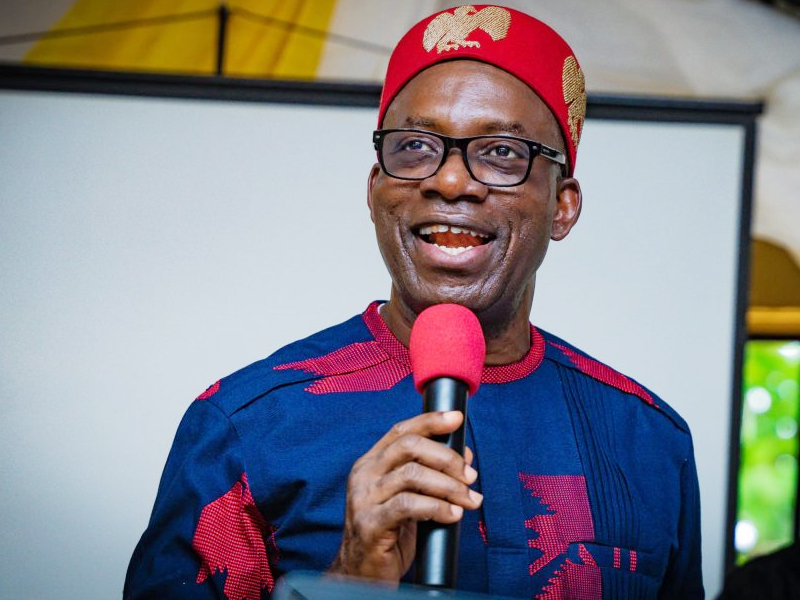
Anambra State Governor, Charles Chukwuma Soludo has raised concerns over the capacity of state governments to adequately fund the proposed state police, which is expected to take effect soon.
Governor Soludo who raised the concerns, when he spoke at the ARISE News Town Hall on State Police in Abuja on Thursday, noted that Nigeria has moved beyond debating to establish state police, adding that the focus should now be on designing an effective framework while pursuing broader constitutional reforms to strengthen the country’s federal security and justice system.
The former Governor of the Central Bank of Nigeria (CBN), who spoke virtually from Awka, his state capital, described the proposed creation of state police as part of a wider journey towards a more functional and effective federal system, even as he called for broader reforms to revenue allocation and the judiciary to guarantee affective implementation of state policing.
He commended the National Assembly for its swift response to passing the state police bills and advancing the constitutional amendment that backed up the president’s signing of the bill to establish it, noting that the national conversation has already settled the question of whether state police should exist.
“The issue is no longer whether or not to have state police. I think we have gone beyond that. The issue now is how.
“I will not spend time talking about what we did in Anambra to clear eight local government areas that were under siege, dismantle 62 criminal camps or end the sit-at-home disruptions. Those successes required coordination and collaboration with federal and private security agencies.
“There are ongoing efforts involving the National Security Adviser, the Attorney General, the Chief of Staff to the President and governors to work out the details. There are practical issues, including the types of arms and ammunition state police should use. You cannot send officers carrying inferior weapons to confront criminals armed with AK-47 rifles and General Purpose Machine Guns.”
The governor, however, emphasised state police should not be considered in isolation, stressing the urgent need for a broader restructuring of Nigeria’s security and governance architecture.
He explained that while significant progress had been made through constitutional devolution of powers —including electricity market reforms, local government autonomy and state policing—critical reforms remain outstanding.
“I am afraid this whole issue of state police should not be seen in isolation. It must be viewed within the context of what I call the unfinished business of building a sustainable federal security and justice system.”
“There are still many elephants in the room. Yes, we have seen devolution in electricity markets, local government autonomy and now state police. But responsibilities are being transferred from the Exclusive Legislative List to the Concurrent List without corresponding changes to the revenue allocation formula.
“The federal government still retains about 53 per cent of federation revenue, while states share only about 26 per cent. If we truly want sustainable federalism, then we must revisit the revenue allocation formula. The federal government should retain no more than 40 per cent of federation revenue, with the balance devolved to the states
“The second unfinished business is the federal judicial system. We currently operate what is essentially a unitary judicial structure.
“If somebody steals a pot of soup in a village in Anambra and the matter goes to court, the appeal can end up at the Supreme Court of Nigeria. Land is exclusively a state matter under the Land Use Act, yet land disputes in Anambra—which account for nearly 70 per cent of litigation and even violence because of our limited landmass—can take 30 or 40 years before reaching final judgment.”
The governor argued that such cases should terminate within state judicial institutions.
“I do not understand why issues relating to land should go beyond the state. In the United States, from where we copied our federal system, every state has its own Supreme Court
“As states begin establishing their own correctional centres, imagine convicting someone only for the appeal process to remain in the federal courts for another 30 or 40 years over a village land dispute. That does not make sense.
“As part of this conversation, we need a broader discussion about building a more sustainable federal security and justice system. That includes the devolution of resources and a fundamental restructuring of our judicial architecture.”
“Let this conversation move towards building a more sustainable federal structure. That is the unfinished business before the National Assembly and the President, who has consistently demonstrated his commitment to advancing true federalism,” Soludo stated
In his own submissions, Senate Majority Leader Opeyemi Bamidele warned that inadequate funding could expose the newly proposed security outfit to political interference, as well as criminal infiltration and undue influence from private interests.
Bamidele who called for financial independence for the agency, said that would be the only way to determine the success of state policing, stressing that the institution must not be left at the mercy of state governors.
He further explained that the constitutional amendment before the National Assembly seeks to move policing from the Exclusive Legislative List to the Concurrent Legislative List, allowing states to establish police services without making it compulsory for every state to do so immediately.
“If the state police is not well funded, it may as well be a highway to nowhere,” he said.
“It’s not every state that will immediately… say, ‘We’re launching our state police.’ All we are trying to achieve is to move this duty from the Exclusive Legislative List to the Concurrent Legislative List
“It’s not only state actors or politicians that can abuse this. Business class, some other organisations, even criminals can abuse it because it is a case of he who pays the piper dictating the tune,” he warned.
To prevent such interference, Bamidele proposed legal provisions guaranteeing an independent source of funding for state police, including setting aside a fixed percentage of every state’s annual budget for policing.
“It might mean that part of the legal provision will be that a certain percentage of the state budget will have to be reserved for the police. The mode of accessing this funding should also be clearly spelt out,” he said.
Other speakers at the Town Hall, including governors Peter Mba (Enugu state), Dauda Lawal (Zamfara state), Dapo Abiodun (Ogun state), as well as senator Adams Oshiomhole (Edo North) and the Deputy Speaker of the House of Representatives, RT Hon. Benjamin Kalu, expressed optimism that the state police will function effectively to address the increasing security challenges in the states, even as they assured that state assemblies will pass the bill together, allaying fears of abuse by state governments
Meanwhile the senator representing Kogi central senatorial district, Natasha Akpoti -Uduaghan, as well as former lawmaker and chieftain of the African Democratic Congress (ADC) Nnenna Elendu -Ukeje called for caution on the rush to establish state police.
The former Member of the House of Representatives warned that Nigeria risks building state police on a weak foundation, insisting the country must first rebuild and strengthen the Nigeria Police Force before creating 36 new state policing institutions.
While senator Uduaghan expressed deep fears that the state police could be negatively used by the controlling political actors against their opponents, Hon. Ukeje said the growing pressure to establish state police reflected Nigerians’ frustration with worsening insecurity, even as she cautioned against mistaking urgency for preparedness, insisting that while she supports devolving policing powers, the country must first put the right institutions in place.
Ukeje noted that the current centralised policing system is still struggling to cope, emphasised that the country must first set the necessary groundwork before embarking on such a far-reaching reform.
“If we do not have a strong national police force, it will be difficult to build 36 effective state police forces on the foundation of a weak national police
“As a result, the police itself has effectively been ‘de-policed’. In many places, large numbers of police officers have been killed alongside military personnel. They have not been adequately replaced. In the South-East, where many of us come from, numerous police stations have been burnt down. Those stations have not been rebuilt,” Ukeje added.
“I support devolution. However, I believe the immediate move towards state police must follow a clearly defined process,” the ex-lawmaker said.

By Sam Otuonye
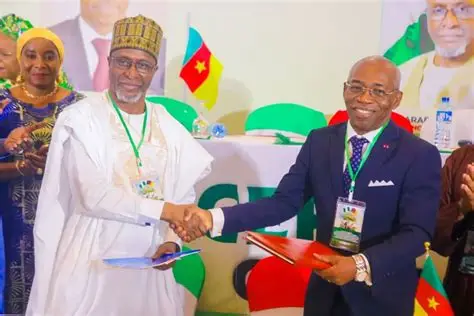
Environmental journalists in Nigeria and Cameroon have expressed commitment to strengthening cross-border collaboration on climate change reporting, biodiversity conservation and community resilience, following a partnership proposal by the Cameroon Biodiversity Journalists Association.
The proposed collaboration is aimed at promoting joint investigative reporting, sharing environmental data, building journalists’ capacity and supporting the protection of vulnerable rainforest communities across the two neighbouring countries.
The initiative followed a congratulatory letter dated October 10, 2026, from Robert Abunaw, a founding journalist with CTV, United Nations-certified Climate Action Strategist, member of the ONACC Climate Risk and Surveillance Group, Pulitzer Congo Basin Rainforest Journalism Fund grantee and author of 300 Climate Concepts for Rainforest Journalists in English and French.
In the letter addressed to the Chairman of the Environmental Media Correspondents Association of Nigeria (EMCAN), Abunaw congratulated the association’s leadership and called for stronger professional cooperation between Nigerian and Cameroonian environmental journalists.
He noted that the two countries shared rainforests, rivers and climate-related challenges that required coordinated responses and a common voice in advocating for affected communities.
According to him, climate change does not respect national boundaries, stressing that environmental challenges affecting Cameroon’s Manyu Division and Nigeria’s Cross River communities demonstrate the need for joint action.
Abunaw expressed the Cameroonian journalists’ readiness to co-produce environmental stories, exchange field data and organise joint training programmes under a framework of professional solidarity.
He also called for the implementation of the Nigeria-Cameroon Biodiversity Conservation Memorandum of Understanding signed in Abuja in 2024, insisting that the agreement should translate into practical initiatives that benefit communities on both sides of the border.
He identified the Cameroon-based South West Development Authority (SOWEDA), the National Observatory on Climate Change (ONACC) and community radio stations in Cameroon’s South West Region as potential partners in advancing the initiative.
Among the proposed areas of collaboration are joint reporting on transboundary protected areas, particularly the Korup National Park in Cameroon and Cross River National Park in Nigeria.
Others include community sensitisation on European Union Deforestation Regulation (EUDR) compliance for cocoa and palm oil farmers, cross-border reporting on habitat destruction and endangered-species trafficking, as well as a joint disaster preparedness and response reporting plan.
Abunaw said the proposed disaster reporting framework would align with the African Union-United Nations Office for Disaster Risk Reduction (AU-UNDRR) Media Saving Lives Initiative.
He further presented his publication, 300 Climate Concepts for Rainforest Journalists, as a practical resource to support environmental journalists in implementing the proposed partnership and improving public understanding of climate issues.
Emphasising the responsibility of the media in promoting climate justice, Abunaw said environmental journalists must uphold truth, accuracy, public interest and solutions journalism in reporting issues affecting vulnerable communities.
He urged journalists to help communities understand climate adaptation, adaptation financing and carbon finance while protecting them against what he described as climate colonialism.
He added that communities should not merely inherit the consequences of climate change but should also benefit from knowledge, resilience, adaptation financing and climate justice.
The Cameroonian journalist proposed a formal partnership meeting, either virtually or in Calabar, Cross River State, or Buea, Cameroon, to develop a joint action plan for 2026–2027.
In her response dated October 12, 2026, EMCAN Chairman, Ilyn Ellakeche Adah, expressed appreciation for Abunaw’s congratulatory message and his commitment to strengthening cooperation between environmental journalists in both countries.
Adah said she shared his belief that environmental challenges required stronger cross-border collaboration, knowledge sharing and impactful reporting.
She noted that, as chairman of EMCAN, she looked forward to exploring practical ways to translate the shared vision into meaningful action, particularly in climate reporting, biodiversity conservation, community resilience and capacity building.
The EMCAN chairman also expressed optimism about further engagements that would lead to a productive partnership benefiting journalists and the communities they serve.
The proposed collaboration is expected to provide a platform for environmental journalists from Nigeria and Cameroon to strengthen public awareness, improve cross-border information sharing and contribute to efforts aimed at protecting the Congo Basin rainforest ecosystem.
Abunaw copied the Consul General of Nigeria in Buea on his letter, underscoring the diplomatic and regional significance of the proposed media partnership.
The initiative comes amid growing calls for stronger cooperation among media professionals, policymakers and environmental organisations to address biodiversity loss, climate risks and the vulnerability of communities dependent on forest resources.
seeks review of Bayelsa Command’s location
Tella Onah
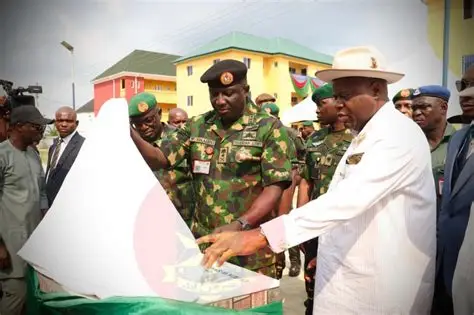
Governor of Bayelsa State, Senator Douye Diri, has reaffirmed his administration’s commitment to support the Nigerian Army and other security agencies to sustain the prevailing peace and protect critical national assets in the state.
Governor Diri stated this on Monday in Government House, Yenagoa, when he received the General Officer Commanding (GOC), Nigerian Army 6 Division, Major General Everest Okoro and other senior military officers who paid him a courtesy visit after their official posting to the state.
Other military officers that visited the governor included the Flag Officer Commanding, Central Naval Command, Rear Admiral Suleiman Ibrahim, Commander, Joint Task Force, Operation Delta Safe (OPDS), Rear Admiral Olugbenga Oladipo, and the Air Officer Commanding (AOC) Mobility Command of the Nigerian Air Force (NAF), Air Vice Marshal Michael Onyebashi.
The governor applauded the military for their collaboration with the state government, noting that the synergy had contributed to the existing peace and stability in Bayelsa.
His words: “We appreciate you and commend the synergy you have established with other security agencies. The presence of personnel from various paramilitary and security agencies, alongside the military, demonstrates the importance of collaboration. By working together, you can provide sound advice to both the Federal Government and state governments on security matters.”
The Bayelsa governor, however, appealed to the military authorities to reconsider Bayelsa State’s alignment from the 6th Division, headquartered in Port Harcourt, to the 83 Division, which now has Delta and Bayelsa headquartered in Benin, Edo State.
He stressed that the state’s proximity to Port Harcourt would make coordination and logistics easier.
He welcomed the proposed establishment of additional Army formations in Oporoma, (Southern Ijaw Local Government Area), Ekeremor (Ekeremor LGA) and Nembe (Nembe LGA) as well as an artillery regiment and a Forward Operating Base in Sampou (Kolokuma/Opokuma LGA), describing the development as a boost to security across the state’s three senatorial districts.
While addressing the FOC CNC, Rear Admiral Ibrahim, the Bayelsa governor noted that the presence of the Navy in Brass would not only enhance security in the state but also in the country given the strategic importance of Bayelsa in oil and gas and maritime activities.
According to Diri, Bayelsa is one of the safest states in Nigeria, with no reported cases of sea piracy in several security council meetings, a feat attributed largely to the collaborative efforts of the Nigerian Navy.
Responding to the FOC’s requests, Diri directed the Ministry of Lands and Survey to provide land in Brass for the construction of a naval jetty, to enable relocation of five warships to Bayelsa, as the move would assist in protecting offshore resources and ensure prompt response to security threats.
Also, the governor directed the same ministry to immediately make land available for the construction of the Nigerian Navy Referral Hospital at Elebele.
While reacting to remarks of the Commander, OPDS, Rear Admiral Oladipo, he described the JTF as a stabilising task force that has helped to achieve lasting security and increased oil production in the Niger Delta region.
“The history of the Joint Task Force is well known to us. For us in Bayelsa, it was a stabilising task force that came in when security and oil production were under threat. Today, the story is different. Oil production, which was declining, has started increasing, and you are doing well by working with the people and the government.
“Bayelsa is the nerve centre of the oil and gas industry, where oil was first struck in commercial quantity and made Nigeria an oil-producing country. It is no coincidence that the JTF headquarters is located here.”
Also, responding to the NAF AOC Mobility Command, AVM Michael Onyebashi, Diri promised to look into the command’s requests for more operational vehicles, furnishing of its primary schools among others with a view to addressing them.
In separate remarks, Major Gen. Everest Okoro thanked the governor for supporting the Army, particularly the 16 Brigade, and attributed its operational successes to cooperation among the military, other security agencies, the state government and local communities.
The GOC pledged to sustain the existing partnership with the government, traditional institutions, community leaders, and other stakeholders to maintain peace and protect critical national assets.
Also speaking, the Flag Officer Commanding, Central Naval Command, Rear Admiral Suleiman Ibrahim, commended the governor for the monumental development achieved under his administration.
The Naval Chief, who disclosed that he had 11 warships under his command, said the ships were currently stationed in Delta and Rivers states because Bayelsa does not have a port to host them.
Also, the JTF Commander, Rear Admiral Olugbenga Oladipo, attributed increased oil production in the Niger Delta to improved security, noting that Nigeria exceeded its OPEC quota for the first time in over five years.
He also revealed that the command’s mediation centre resolved over 300 cases in the preceding month, urging oil operators and host communities to seek peaceful resolutions rather than disrupt production.
Oladipo projected that national oil production could surpass three million barrels per day by next year.
Our Reporter
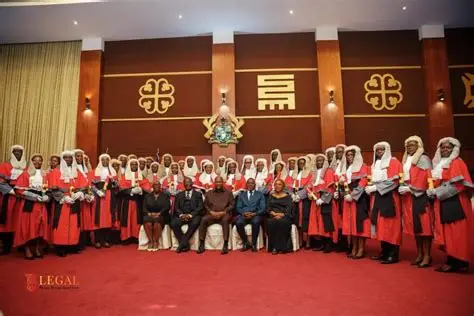
Delta State Governor, Rt. Hon. Sheriff Oborevwori, has charged judges in the state to dispense justice without fear or favour, assuring them of his administration’s commitment to judicial independence, improved welfare and efficient justice delivery.
Oborevwori gave the charge on Tuesday when he received judges of the state judiciary led by the Chief Judge, Justice Theresa Diai, at Government House, Asaba, as part of activities marking the 2026/2027 legal year.
He urged the judges to remain impartial, stressing that; “nobody is above the law, and we will not allow anybody to take the law into his or her hands. I encourage you to do your work without fear or favour. Do the right thing; it is not about the government or any individual,” he said.
The governor urged the judges to handle cases involving kidnapping, armed robbery and murder with the seriousness they deserved, noting that effective justice delivery was critical to sustaining peace and security in the state.
On judicial welfare, Oborevwori said his administration was constructing five judges’ quarters in Warri and another five in Asaba, assuring that the projects would be completed by the end of the first quarter of 2027.
He also pledged continued support for the training of judges and the provision of modern court equipment, including stenographic machines for the verbatim recording of court proceedings.
The governor further approved requests for improved security and additional solar power installations in courts across the state to protect judicial facilities and ensure the effective operation of digital court equipment.
Earlier, Justice Diai commended the governor for improvements in judicial training, information and communications technology, and court infrastructure, including the renovation of High Courts, magistrate courts and customary courts.
She disclosed that 20 judges had been sponsored for overseas training, while equipment for electronic filing and virtual hearings had been deployed to the High Courts.
However, the Chief Judge appealed for adequate security at court facilities and additional solar power installations in judicial divisions where existing units were insufficient.
Justice Diai expressed appreciation for the administration’s support and called for sustained collaboration to strengthen the judiciary and improve justice delivery in Delta State.
-
General News3 weeks ago
JOHESU demands: MHWUN puts FG on notice over fresh action
-
 Politics4 weeks ago
2027: ASAF backs APC governors, rejects rainbow coalition
-

 Politics1 month ago
You have demonstrated diligence, loyalty, statesmanship in leadership, Ekechi salutes Shetimma at 60
-
 General News5 days ago
Rivers 2027: We are not part of Rainbow Coalition – APC Legacy Group slams Wike, Fubara meeting
-

 Politics2 months ago
2027: Advertising experts raise concerns over irregular regulation of sector
-
FCT News2 months ago
2027: Hasana-Moneme pledges skills, empowerment, credit access for FCT women
-
General News2 months ago
2027: Dame Princess Esom-Nwafor Orizu confirmed as APC flagbearer for Nnewi North /South /Ekwusigo Federal Constituency as INEC releases names of candidates
-
Uncategorized3 months ago
Rescue of Oyo schoolchilden: Tinubu commends security agencies, says action breakthrough in fight against criminality