
General News
IPMAN kicks as petrol importation soars


**”Warns importation could affect price stability
*** Again, marketers hike petrol pump price
By Nkem Okereh
The Independent Petroleum Marketers Association of Nigeria (IPMAN) has expressed concerns about the reported increase in the importation of petrol into the country.
IPMAN warned that the uncontrolled rise in issuance of petroleum product import licences could worsen price instability, increase pressure on the naira and push petrol prices higher.
National Publicity Secretary of IPMAN, Chinedu Ukadike, who raised the alarm on Sunday, expressed the association’s concern, noting that imported petrol was entering the Nigerian market at prices above locally refined products, thereby undermining efforts to stabilise the downstream sector.
This is even as marketer have hiked the pump price of petrol across the country, as they now sell between N1200 to N1300 per litre, as against the earlier N1800, citing the rise in crude oil prices and adjustments in depot prices by Dangote Refinery and other suppliers, which it blamed on the renewed pressure on oil, following the return of hostilities between the United States of America (USA) and Iran that brought back uncertainty on the Strait of Hormuz.
It would also be recalled that the Nigerian Midstream and Downstream Petroleum Regulatory Authority, NMDPRA, in its June report, said the importation of Premium Motor Spirit, PMS, jumped by 207 per cent to 18.1 million litres per day in June 2026 from 5.6 million litres per day in May as daily petrol consumption surged by 7 per cent to 50.6 ml/d.
NMDPRA data showed that while fuel imports surged significantly, petrol production at Dangote Refinery declined by 22 per cent to 32.5 million litres per day in June from 41.5 ml/d in May.
This means that the country imported more PMS in June than in May. This comes as NMDPRA issued import licences to petroleum product marketers in the period in view.
Ukadike said independent marketers had reviewed developments in the downstream sector, including the import licence regime, price fluctuations and the increasing use of foreign exchange for petroleum transactions.
The IPMAN spokesperson called on the Federal Government, through the Nigerian Midstream and Downstream Petroleum Regulatory Authority (NMDPRA), to urgently address the challenges affecting pricing and supply stability.
He noted that the recent approval of import licences, which was expected to serve as a competitive check on domestic refinery prices, had instead introduced more uncertainty into the market, adding that some companies granted import licences were offering petrol at about N1,350 per litre, a price he described as higher than the rate at which Dangote Refinery supplies marketers.
“What is the essence of issuing this price? This will create a lot of tension in society,” he said, warning that continued volatility was making business planning difficult for independent marketers.
He argued that imported petrol has a landing cost estimated to be about 20 per cent higher than locally refined products from Dangote Refinery, adding that reliance on costly imports was putting additional pressure on Nigeria’s foreign exchange reserves.

By Our Reporter
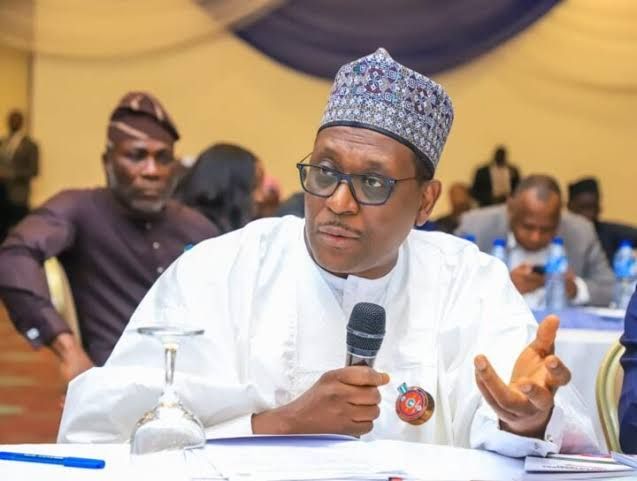
Ali Pate, coordinating minister of health and social welfare, says Nigerians should remain vigilant, shun panic, and stop spreading misinformation about Ebola virus disease.
Speaking on Wednesday after meeting with Femi Gbajabiamila, chief of staff to the president in Abuja, Pate said citizens should rely on verified public health information from trusted sources rather than circulating false rumours.
The minister said the federal government is collaborating with Uganda to manage the situation.
“All I can tell you is that we are collaborating with our sister African nation of Uganda,” Pate said.
“What is important is that we have found this one case. We are doing contact tracing, and we are putting containment measures to ensure that it doesn’t go into our population.”
He urged Nigerians to remain calm and communicate responsibly, adding that the situation should be taken seriously without causing fear.
“Nigerians should be reassured. We must be vigilant, but not panic, and people should respect public health information from trusted sources, and not spread misinformation and false rumours,” Pate said.
The minister said Nigeria has the public health institutions and expertise needed to respond to the situation.
Pate added that the Nigeria Centre for Disease Control and Prevention (NCDC) had activated its incident management system (IMS), with response teams working round the clock and the relevant task force coordinating containment efforts.
“They are working 24/7, and the task force is also active. So, we have things in place that give us confidence that Nigeria can weather this public health crisis,” he said.
He said the government would continue to monitor developments and provide updates as verified information became available.
“If the situation changes, we’ll come out and inform Nigerians,” he said.
Pate reiterated that the immediate priority was to contain the imported case and prevent its spread within the population.
The meeting between Pate and Gbajabiamila came nearly 24 hours after the federal government announced a confirmed case of Ebola disease in the Federal Capital Territory (FCT).
On Tuesday, Pate said 44 close contacts had been identified for tracing to prevent further transmission.
He added that the patient, a woman who recently arrived in Nigeria on an international flight from Uganda, had been admitted to a private hospital in the FCT, where she received care for several days before the diagnosis was confirmed.
By Our Reporter
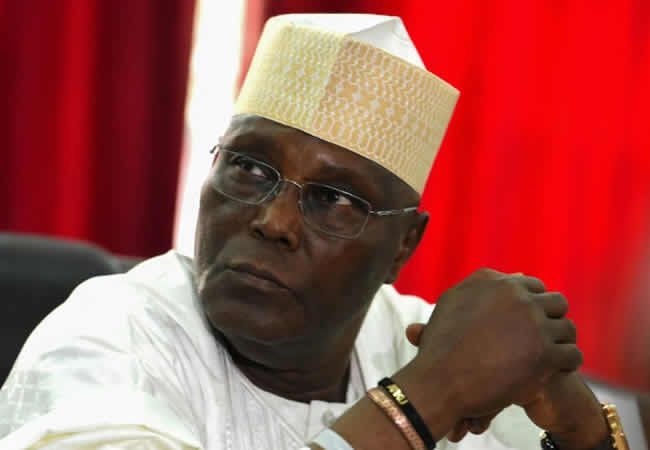
Former Vice-President Atiku Abubakar has asked President Bola Tinubu to account for the N10 billion approved for Ebola preparedness in June.
The African Democratic Congress (ADC) presidential candidate made the demand in a statement issued on Wednesday by Phrank Shaibu, his director of strategic communication.
Atiku’s remarks followed an announcement by Ali Pate, coordinating minister of health and social welfare, that the federal government had confirmed an Ebola case in Abuja and identified 44 close contacts for tracing to prevent further transmission.
Atiku said the confirmed Ebola case in Abuja had raised questions about the government’s preparedness and response.
“Ebola is a grave public health threat. Nigerians deserve urgent action, competent leadership and the truth,” he said.
“Instead, the first confirmed case in Abuja has exposed unanswered questions about preparedness, surveillance and the protection of health workers. Tinubu must account for the N10 billion he said would be released immediately in June.”
Atiku asked the president to publish the amount disbursed, the dates of payment, details of contract awarded, the recipients and items delivered.
The former vice-president said Tinubu must explain if the money had not been released.
“Tinubu must explain why he announced emergency funding that never reached the people responsible for protecting Nigerians. A press statement cannot replace an audit,” he said.
Atiku questioned the timeline of the reported case, saying the patient arrived in Nigeria on October 5, developed symptoms on October 7 and sought treatment at a private hospital on October 11.
He said the government did not publicly confirm the case until October 20, nine days after the patient sought treatment.
Atiku alleged that 44 close contacts were not monitored during that period and that private health workers who handled the case lacked adequate protective equipment.
“This is a failure of preparedness with potentially grave consequences,” he said.
Atiku called on the government to disclose the steps taken at every stage of the response, including travel history and exposure screening, follow-up after the patient developed symptoms, and when the 44 contacts were first reached and monitored.
He also questioned why frontline health workers were allegedly left without adequate protection.
“Nigerians deserve answers, and those responsible for these failures must be held accountable,” he said.
Atiku further faulted the role of political appointees in the response, noting that Tinubu had announced a presidential task force chaired by Femi Gbajabiamila, his chief of staff, in June.
He said medical experts should lead the response, with the authority and resources to act.
“The NCDC, epidemiologists, doctors and public health professionals must be in charge, with the authority and resources to act. Political titles cannot trace contacts, equip hospitals or save lives,” he said.
The former vice-president warned that the government’s handling of the outbreak could deepen public anxiety and disrupt movement, livelihoods and economic activity.
He attributed the country’s economic hardship to Tinubu’s policies, saying Nigerians should not bear the cost of both economic difficulties and an inadequate emergency response.
“The people must not pay twice for the same failure: first through hardship, then through a bungled emergency response. Both caused by Bola,” he said.
On June 9, Tinubu ordered the immediate release of N10 billion as emergency intervention funding to strengthen Nigeria’s preparedness against Ebola and other emerging public health threats.
The president’s directive followed the discovery of Ebola in the Democratic Republic of Congo (DRC) and Uganda, both of which were affected by outbreaks at the time.
In a statement, Bayo Onanuga, special adviser to the president on information and strategy, said Tinubu also approved the establishment of a presidential task force (PTF) on Ebola virus disease preparedness and emerging public health threats.
Onanuga said the fund would strengthen the operational preparedness of the Nigeria Centre for Disease Control and Prevention (NCDC) and support critical national public health emergency response activities.
TheCable
General News
NSCDC Director of Legal Services visits Delta Command, charges personnel on global, professional conduct
By Chidera Orji
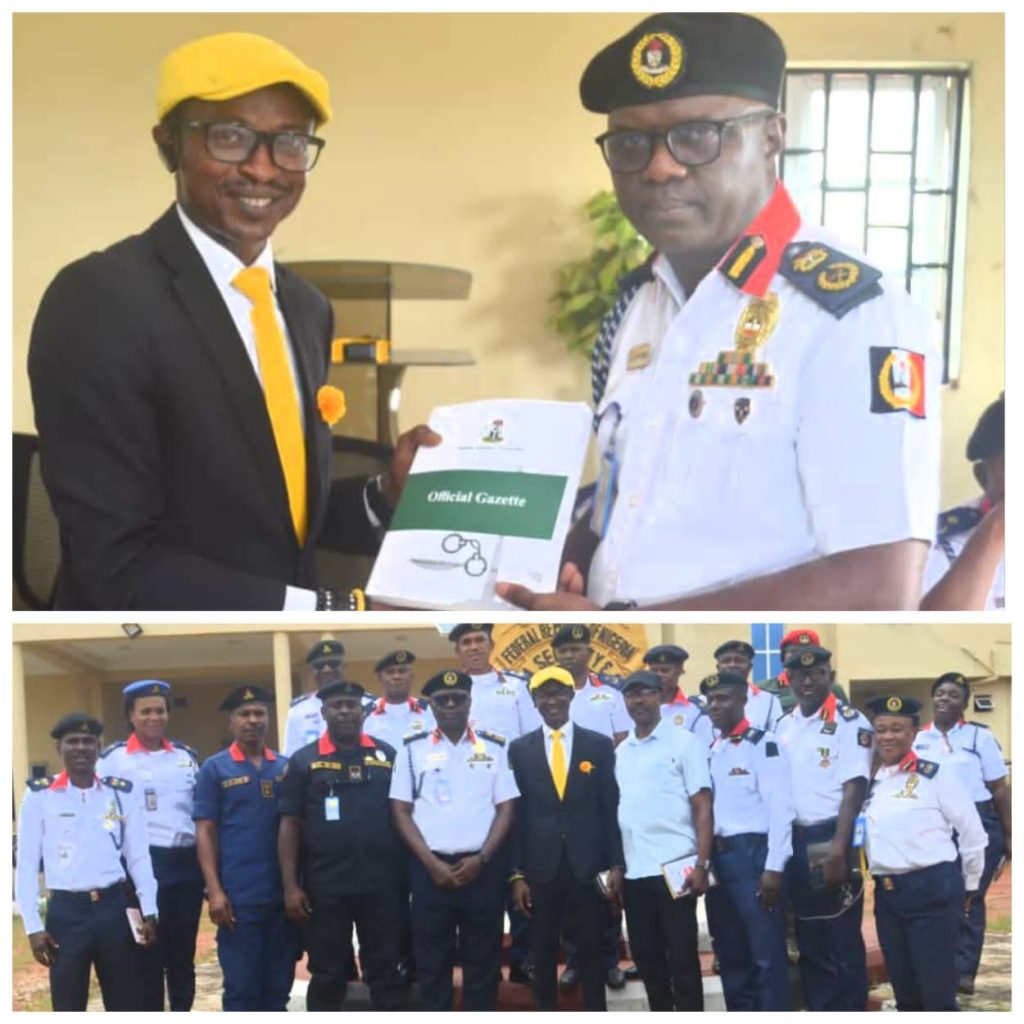
In a continuous effort by the Commandant General of Nigeria Security and Civil Defense Corps(NSCDC), to drive for excellence in the Corps, the Director of Legal Services (DLS), Barrister A.K. Alilu, paid a working visit to the Delta State Command of NSCDC, to interact with HODs, HOUs, Area Commanders, Divisional Officers, Tactical Commanders and Beat Supervisors on the need to uphold professionalism and ensure that all operational activities are carried out in accordance with the law.
The visit, according to a press statement by DSC Anthony Uchenn CDPRO of the command, became necessary to improve personnel’s understanding of the legal framework guiding the discharge of their duties, particularly in the areas of complaints, arrest, investigation, detention, evidence gathering and prosecution.
During his interaction with officers, Barr Alilu laid emphasis on the importance of due process in handling cases and ensuring that every action taken by personnel is within the ambit of the law.
He made reference to life experiences illustrating proper procedures for making arrests, conducting investigations, submission of evidence and handling of suspects in line with enabling laws, stressing that personnel must know their limits in law and avoid actions that could attract negative publicity for them or the Corps.
The interactive session during which personnel sought clarification on various legal and operational issues relating to arrests, investigations and prosecution was all engaging and it provided an opportunity for officers to gain further insight into the legal implications of their actions while on duty.
The State Commandant, Chinedu F. Igbo, who welcomed Barr. Alilu to the Command, expressed gratitude for the lecture. He commended the DLS for driving home the understanding of the legal framework of NSCDC operations as it would also equip officers with the required knowledge to discharge their duties effectively and professionally.
The Commandant also expressed profound gratitude to the Commandant General, Prof. Ahmed Abubakar Audi, mni, OFR, for his commitment to the growth and development of the Nigeria Security and Civil Defence Corps.
-
 General News2 weeks ago
Rivers 2027: We are not part of Rainbow Coalition – APC Legacy Group slams Wike, Fubara meeting
-
General News1 month ago
JOHESU demands: MHWUN puts FG on notice over fresh action
-
 Politics1 month ago
2027: ASAF backs APC governors, rejects rainbow coalition
-

 Politics2 months ago
You have demonstrated diligence, loyalty, statesmanship in leadership, Ekechi salutes Shetimma at 60
-

 Politics2 months ago
2027: Advertising experts raise concerns over irregular regulation of sector
-
FCT News2 months ago
2027: Hasana-Moneme pledges skills, empowerment, credit access for FCT women
-
General News3 months ago
2027: Dame Princess Esom-Nwafor Orizu confirmed as APC flagbearer for Nnewi North /South /Ekwusigo Federal Constituency as INEC releases names of candidates
-
Uncategorized3 months ago
Rescue of Oyo schoolchilden: Tinubu commends security agencies, says action breakthrough in fight against criminality