
Back Page Columnist
ADC: Verdicts Before Votes


Lemmy Ughegbe, Ph.D
A democracy is in trouble when the fate of candidates is settled more by judges than by voters.
Elections exist so that citizens can choose their leaders and hold them to account. Yet as Nigeria approaches the 2027 general elections, the courtroom again threatens to matter as much as the polling booth in deciding who appears on the ballot.
On 5 November 2026, the Federal High Court nullified the leadership of the African Democratic Congress (ADC) under former Senate President David Mark and invalidated decisions taken by that leadership. Among them was the nomination of former Vice-President Atiku Abubakar as the party’s presidential candidate.
The questions this raises go well beyond one man’s ambitions or one party’s internal troubles.
Justice Peter Lifu, ruling on a suit filed by former ADC Deputy National Chairman Nafiu Bala Gombe, held that the process through which the Mark-led leadership emerged violated the party’s constitution and relevant legal provisions. The party’s nominations for the coming elections are now in jeopardy.
The ADC has rejected the judgment, filed an appeal and applied for a stay of execution. The Independent National Electoral Commission (INEC) says it will study the certified judgment before deciding its response. The result is uncertainty at a sensitive point in the electoral calendar.
Political parties are not above the law because they command large followings or present themselves as alternatives to the ruling establishment. Their constitutions are binding instruments, not decorative documents to be set aside whenever powerful politicians need accommodating. If the ADC breached its own rules in constituting its leadership, the courts were right to examine the complaint.
Internal democracy would be meaningless if party leaders could ignore established procedures and then invoke the sanctity of electoral competition to escape scrutiny. The right to contest cannot be separated from the duty to obey the rules of nomination.
Yet the legitimacy of judicial intervention does not end the inquiry into its consequences.
When a leadership dispute yields a judgment capable of voiding nominations across several elective offices, the fallout extends well beyond the litigants. Aspirants who spent time and money on primaries, supporters who mobilised and voters who expected a real choice may all pay for decisions taken within party hierarchies.
That raises a hard question. Should every procedural defect in party leadership invalidate every later political action, whatever the interests affected? The answer must come from the law and the court’s specific findings. But electoral justice should not become so focused on correcting irregularities that it loses sight of the democratic interests at stake.
There is also the familiar habit of reading every adverse judgment as political conspiracy. The ADC has alleged that the ruling is an attempt to weaken the opposition before the presidential election. In a country where trust in institutions is fragile, such concerns cannot be waved away. But suspicion is not evidence. Allegations of judicial manipulation require proof, not repetition.
Those who welcome the judgment because it may hurt a formidable opposition candidate should be equally careful. A decision that removes an opponent today may set a precedent that becomes uncomfortable tomorrow. The rule of law loses credibility when its defenders change their convictions according to whose interests are affected.
INEC’s position is especially delicate. It is neither an appellate court nor a judge of political popularity. Its duty is to conduct elections in line with the Constitution, electoral law and binding court orders. It must resist pressure from competing factions and remember that filing an appeal does not, by itself, suspend a court’s decision.
Nor should it act hastily while proceedings remain unresolved. Its decisions must be transparent, legally defensible and consistent with its treatment of other parties.
The judiciary carries an equally heavy burden. A judgment delivered close to an election may cause damage that even a successful appeal cannot undo once deadlines pass. Speedy appeals, clear orders and consistent principles are essential to electoral justice.
Nigeria has travelled this road before. The lesson is not that courts should withdraw from electoral matters. It is that parties must strengthen their internal democracy, while the justice system must resolve disputes before they threaten an entire electoral timetable.
For the ADC, this should be a moment for introspection, not outrage alone. A party that wants Nigerians to see it as a credible alternative must show that its processes are governed by rules, not the convenience of influential newcomers. Political renewal cannot be built on procedural shortcuts.
For the ruling party and its supporters, the right response is restraint. Democracy is strengthened by credible competition, not by the legal misfortunes of opponents. A government confident in its record should welcome the chance to defend it before voters against the strongest lawful opposition available.
This is not really about Atiku Abubakar, David Mark or Nafiu Bala Gombe. It is about legality and democratic choice, and Nigeria needs both. Elections without lawful procedures invite manipulation. Legal processes that keep narrowing voters’ choices weaken faith in representative government.
The courts must uphold the law without fear or favour. Parties must respect their constitutions. INEC must show independence and fidelity to judicial authority. And Nigerians must insist that elections remain contests conducted within the law, not contests settled in court.
The judiciary must remain the guardian of electoral justice. It must not become the arena where political competition is concluded before voters have spoken.
Lemmy Ughegbe, Ph.D, FIMC, CMC
Email: lemmyughegbeofficial@gmail.com
WhatsApp ONLY: +2348069716645

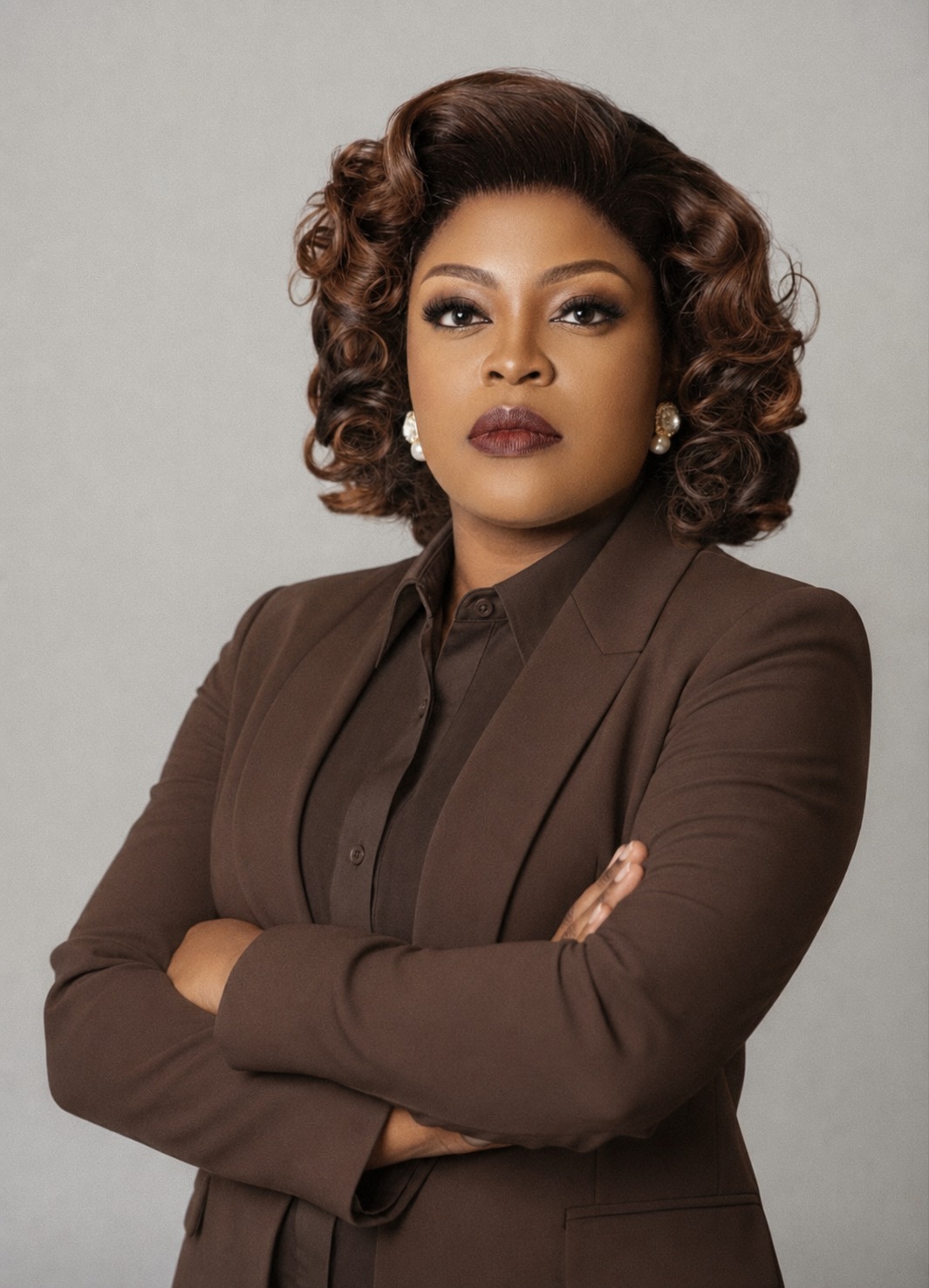
By Adaora Onyechere Sydney-Jack
The conversation around women’s political representation in Nigeria has reached a defining moment. For years, we have spoken about inclusion, equal opportunities, gender balance and the need to give women a stronger voice in governance. We have held conferences, issued statements, made recommendations and appealed to political leaders to recognise the importance of women’s participation in decision-making.
Yet, despite these conversations, Nigerian women continue to occupy an unacceptably small proportion of elective political positions.
This is why the renewed consideration of the Reserved Seats for Women Bill by the National Assembly is significant. The recent disclosure by the Leader of the Senate, Senator Opeyemi Bamidele, that the National Assembly Committee on the Review of the 1999 Constitution is considering a proposal to create 74 additional legislative seats for women at the federal level represents an important development in our collective struggle for a more inclusive democracy.
For us, however, this must be more than another political announcement. It must not become another expression of goodwill that generates headlines today and disappears from the legislative agenda tomorrow. The Reserved Seats for Women Bill must move beyond rhetoric and become a concrete constitutional commitment to genuine representation.
We are not asking for sympathy. We are demanding fairness, participation and the opportunity to contribute meaningfully to the governance of our country.
The proposed additional seats, comprising 37 in the Senate and 37 in the House of Representatives, alongside reserved positions in the State Houses of Assembly, offer an opportunity to begin correcting a structural imbalance that has persisted for decades.
The significance of this proposal is not simply the number of women who may eventually occupy these positions. It is the recognition that a democracy cannot claim to represent everyone when a substantial segment of its population remains largely absent from the institutions where decisions are made.
Nigeria’s political history has demonstrated that women possess the competence, experience, intellectual capacity and leadership qualities required to occupy positions of authority. Women are leading institutions, managing businesses, advancing education, contributing to national development and sustaining communities across the country.
Yet, when it comes to elective political positions, the barriers remain considerable.
The question we must ask is not whether Nigerian women are qualified to lead. The question is why a political system with so many capable women continues to make their entry into elective office so difficult.
The challenge is structural. It includes the high cost of political participation, limited access to campaign financing, party gatekeeping, entrenched political interests, gender stereotypes, intimidation and the unequal opportunities available to women seeking party tickets and electoral support.
We cannot continue to ask women to compete in a political environment where the conditions of competition are fundamentally unequal and then use the outcome as evidence that women are not sufficiently interested in politics.
This is precisely why the Reserved Seats for Women Bill matters. It is not about excluding men or diminishing their contributions to democracy. It is about expanding democratic opportunities and recognising that political representation must reflect the diversity of the people being governed.
One of the most important things we must understand is that representation is not merely about having women in the room. It is about ensuring that they have the authority, opportunity and institutional space to influence decisions.
The world is shifting towards a deeper understanding of the power of representation. Women are increasingly being recognised not just as voices within advocacy for gender inclusion but as policy shifters, lawmakers, negotiators and leaders capable of influencing the direction of national development.
When women occupy legislative positions, they bring different experiences and perspectives to discussions on healthcare, education, employment, security, economic opportunities, social protection, childcare and the protection of vulnerable citizens.
This does not suggest that women automatically represent the interests of every woman or that men cannot champion gender equality. Rather, it recognises that democracy is strengthened when people with different experiences have meaningful opportunities to participate in shaping public policy.
A woman in parliament should not simply be a symbol of inclusion. She should be able to influence legislation, scrutinise public expenditure, participate in committee work, question government policies and contribute to decisions that affect millions of Nigerians.
That is the kind of representation we are advocating.
The world is increasingly appreciating that inclusion is not a favour extended to disadvantaged groups. It is an essential requirement for democratic legitimacy, better governance and sustainable development.
The world is changing, and Nigeria must not be left behind. Developments beyond our shores provide compelling evidence that the political landscape is changing and that women, particularly women of colour, are increasingly breaking barriers that once appeared insurmountable.
The November 3, 2026 midterm elections in the United States offer some remarkable examples of this shift.
In Georgia, Keisha Lance Bottoms made history as the first Black woman elected governor in the United States. Her victory also makes her the first woman to govern Georgia. This is a significant milestone for Black women across the world who continue to challenge traditional limitations on political leadership.
In New Mexico, Deb Haaland became the first Native American woman elected governor of a US state. A member of the Laguna Pueblo community, Haaland had previously made history as one of the first Native American women elected to the US Congress and later as the first Native American to serve as US Secretary of the Interior.
Texas also witnessed a historic breakthrough with the election of Gina Hinojosa as the state’s first Latina governor. Her victory demonstrates the expanding political space for women from minority communities in a state with a significant Hispanic population.
In New York, Adrienne Adams emerged as the first Black woman elected lieutenant governor, serving on the gubernatorial ticket with Kathy Hochul. Her achievement is another important milestone in the struggle for greater diversity in American political leadership.
The breakthroughs did not end at the gubernatorial level. In Minnesota, Peggy Flanagan became the first Native American woman elected to the United States Senate, while Claire Valdez made history in New York as the first Native American woman elected to Congress from the state.
These victories are not simply individual accomplishments. They represent a wider transformation in the understanding of political representation and who should have access to positions of authority.
Of course, the United States has not resolved its own challenges of gender and racial inequality. But these developments demonstrate that political institutions can evolve when barriers are challenged, political opportunities are expanded and citizens are willing to embrace more inclusive leadership.
For me, the most important lesson is that representation must go beyond the symbolic presence of women in political spaces. It must translate into the power to influence legislation, shape public policy, determine national priorities and contribute to decisions that affect the lives of citizens.
The experiences of Black, Latina and Native American women in the United States also remind us that women are not a homogeneous group. Their experiences differ, and political inclusion must recognise the different barriers women face because of their backgrounds, identities and socioeconomic circumstances.
Nigeria must draw lessons from these developments. We cannot continue to operate a political system that excludes a significant proportion of our population from meaningful decision-making and expect to build a truly representative democracy.
The question should no longer be whether women are capable of occupying these positions. The question should be how quickly our institutions can remove the structural barriers that prevent them from doing so.
The world is moving, and Nigeria must not be left behind. Democracy is about collaboration, not competition.
I have always maintained that democracy should be about collaboration, inclusion and shared responsibility, not a contest in which one group must lose for another to gain.
The argument that creating reserved seats for women will disadvantage men misunderstands the purpose of the proposal. The intention is not to take existing constituencies away from male representatives. It is to create additional opportunities for women to participate in the legislative process.
We must begin to move away from the mentality that political power is an exclusive possession that must be protected against the participation of others.
A stronger democracy is one that recognises the contributions of all its citizens and creates institutions that accommodate their aspirations.
Women are not asking to replace men. We are asking to work alongside men as equal partners in building a country that works for everyone.
Indeed, the success of this initiative will require collaboration across political parties, institutions, civil society organisations, traditional structures, the media and the private sector.
It will also require men who understand that gender inclusion is not a threat to their leadership but an opportunity to build a more representative and effective political system.
We must acknowledge the efforts of those who have continued to shape the conversation and advance the cause of women’s political representation.
I particularly commend the 10th National Assembly, the Speaker of the House of Representatives, Rt. Hon. Tajudeen Abbas, and the Deputy Speaker, Rt. Hon. Benjamin Kalu, for their contributions to advancing the discussion around the Reserved Seats for Women Bill.
I also acknowledge the Office of the First Lady, Senator Oluremi Tinubu, for consistently using her platform to promote women’s inclusion and encourage legislative action on the issue.
Her advocacy has helped sustain national attention on the importance of creating opportunities for women in political leadership.
I equally commend President Bola Ahmed Tinubu for his public commitment to supporting the initiative. His willingness to lend presidential support to the campaign is significant, particularly at a time when the country requires decisive political leadership to address longstanding inequalities.
I consider this commitment an important demonstration of fatherly leadership, because advancing women’s representation requires political leaders who are prepared to listen, build consensus and support reforms that benefit the wider society.
We are encouraged by the President’s position and the indications that the National Assembly is giving serious consideration to the proposal.
However, our appreciation must not be mistaken for a declaration that the work is complete.
The real test of commitment will be the successful completion of the constitutional amendment process. The proposal must receive the necessary legislative approvals before it can become law.
For us, the hope is that this will take shape before the next general election. The President has spoken, and the National Assembly is leaning towards the proposal. These are encouraging signs that must now translate into decisive action.
The media also has an important role to play in ensuring that the debate is properly understood.
Women’s political participation should not be treated as a soft issue or a subject that becomes relevant only during International Women’s Day celebrations. It is a fundamental democratic question that deserves sustained attention.
Journalists must interrogate the barriers facing women, examine the positions of political parties, track the progress of the constitutional amendment and hold public officials accountable for their commitments.
Political parties must also look inward. They must address the structures and practices that make it difficult for women to secure nominations, access campaign resources and participate in internal decision-making.
Reserved seats should complement, not replace, wider reforms that make the political environment more accessible to women.
We must also ensure that the process of filling these seats is transparent, credible and accountable. The objective is not to create another avenue for political patronage or to reserve positions for a privileged few. It is to create meaningful opportunities for competent women from different backgrounds to serve.
Ultimately, the success of the bill must be measured not just by the number of seats created but by the quality of representation and the contribution of women to national development.
The Reserved Seats for Women Bill represents more than a legislative proposal. It is a test of our commitment to democratic inclusion and our willingness to confront structural inequalities that have limited women’s participation in governance.
For too long, Nigerian women have been encouraged to participate in politics without sufficient attention being paid to the barriers confronting them. We have been told to organise, mobilise, contest and demonstrate our competence. We have done so, but the outcomes continue to reveal the limitations of a political system that has not adequately addressed unequal access.
We must therefore seize this moment.
We appreciate the 10th National Assembly, the leadership of the House of Representatives, the Office of the First Lady and President Bola Ahmed Tinubu for helping to shape the narrative and sustain the push for this important reform.
We remain hopeful that their commitments will translate into the necessary constitutional action before the next general election.
Our message is simple: the Reserved Seats for Women Bill must not remain a political slogan. It must become a practical instrument for expanding democracy, strengthening representation and giving women the opportunity to participate fully in shaping Nigeria’s future.
We are not asking for a place at the table merely to be counted. We want to participate in the conversations, influence the decisions and help shape the policies that determine the direction of our country.
That is what true representation means. And that is why this moment must go beyond rhetoric.
Adaora Onyechere Sydney-Jack
Inclusive Public Policy, Tri-Sector Strategic Communications Expert.
Broadcast Journalist
Author of The best seller Politics, Pussy and Power.
Founder WEWE Network Afrique and former Head of the Gender and Cluster Committee African Union Ecosoc Nigeria.
adaoraonyechere1@gmail.com
www.wewenetworkafrique.org
Back Page Columnist
BACK PAGE COLUMNIST: THE NARRATIVE MATTERS: WHEN RELIEF BECOMES A POLITICAL MESSAGE
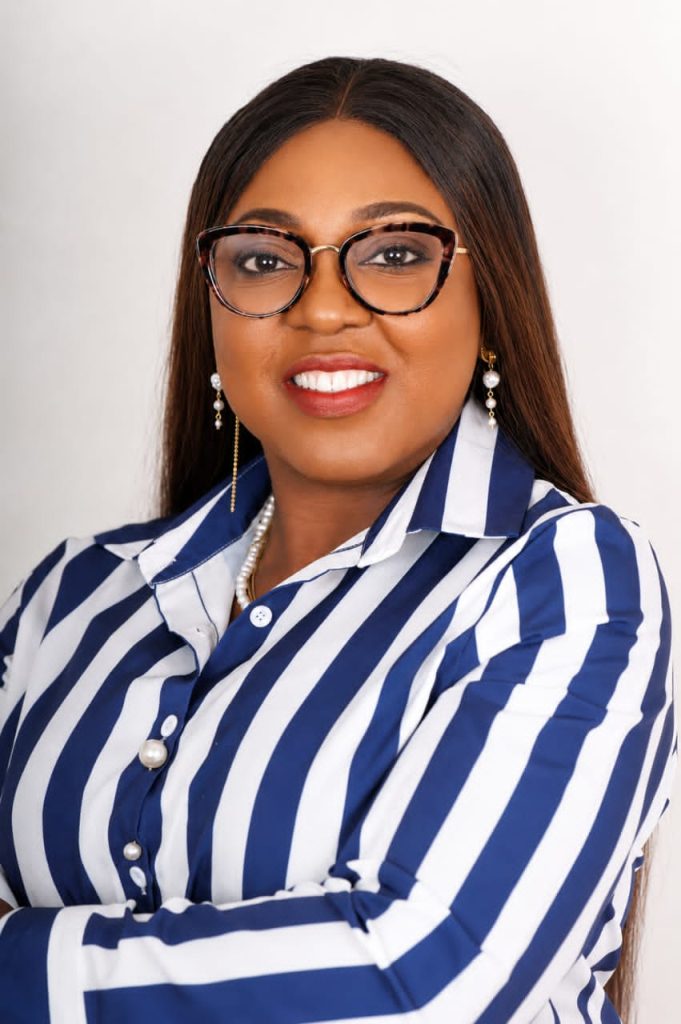
The ₦70,000 Question and the Credibility of Government Intervention
By Dr. Omolaraeni Olaosebikan
Seventy thousand naira. Six months. One announcement, and a country already burdened by economic uncertainty is once again being asked to believe that relief is on the way.
For many Nigerian workers, the Federal Government’s newly announced monthly transport allowance may provide welcome breathing space. For others, it raises a familiar question: how long can temporary financial interventions compensate for an economy in which the cost of simply getting to work consumes an uncomfortable portion of household income?
The announcement followed discussions between the Federal Government and organised labour in late October, with a proposed ₦70,000 monthly transport intervention for federal public servants over six months. On paper, the measure responds to genuine hardship. But public policy does not exist on paper alone. It lives in the expectations it creates, the people it reaches and the confidence it either strengthens or diminishes. This is where the communication of governance becomes as important as governance itself.
Let us be clear: there is nothing inherently wrong with providing relief to workers struggling under transportation and living costs. Governments have a responsibility to respond when economic adjustments impose immediate pressure on citizens. A worker who spends a substantial share of monthly earnings commuting cannot be expected to celebrate macroeconomic improvements that have yet to translate into personal financial stability. Relief, when properly designed and delivered, can be both humane and economically sensible.
The danger begins when an intervention intended to cushion hardship becomes the centrepiece of political communication rather than one component of a credible economic response.
A government may announce an intervention and legitimately communicate its benefits. But the public will judge it not by the prominence of the announcement, the headlines generated or the enthusiasm of its promoters, but by whether support reaches eligible beneficiaries, arrives when expected and produces meaningful relief. Nigerians have experienced enough policy announcements to understand the distance that can exist between intention and implementation. Every new intervention therefore enters a crowded marketplace of promises, explanations, expectations and memories.
The ₦70,000 transport proposal presents an opportunity to narrow that distance. It also carries the risk of widening it. Who qualifies? When exactly will payments commence? How will beneficiaries verify eligibility? What happens to workers at state and local government levels? And, perhaps most importantly, what happens after six months? These are not hostile questions. They are the basic questions of accountable public communication.
Citizens should not have to depend on speculation or unofficial explanations to understand an intervention that directly affects their livelihoods.
There is also an uncomfortable question of inclusion. Millions of Nigerians outside the federal public service face similar transportation and household pressures. Private-sector employees, informal workers, traders, artisans and young people in precarious employment do not experience inflation differently simply because their salaries do not come from government. While a targeted intervention may be justified by government’s responsibilities as an employer, its communication must acknowledge wider hardship rather than create the impression that relief for one category of workers resolves a national economic challenge.
Different reactions among labour stakeholders also illustrate why engagement cannot end with a negotiated announcement. Securing agreement at a negotiating table is not always the same as building broad confidence in an outcome. Effective leadership must do more than secure signatures. It must explain the rationale, confront disagreements respectfully and demonstrate that legitimate concerns are being heard.
There is another dimension: the relationship between short-term relief and long-term economic dignity. Six months of transport support may ease immediate pressure, but it cannot substitute for sustainable wages, affordable mobility, improved productivity or an economic environment in which workers meet essential needs without recurring emergency assistance. The responsible narrative is not that hardship has been solved. It is that a limited intervention is being introduced while more durable solutions are pursued. Such honesty does not weaken government communication. It strengthens it.
Too often, public institutions communicate policies as though acknowledging limitations would amount to admitting failure. Yet credibility is rarely built through exaggerated certainty. It grows when leaders explain what a policy can achieve, what it cannot, what remains unresolved and how progress will be measured. For this intervention, credible communication should include clear eligibility guidelines, transparent payment timelines, accessible complaints channels, periodic implementation updates and a public explanation of what follows the six-month period.
The media must also resist becoming merely an amplifier of official announcements. Journalism serves the public best when it follows implementation, asks who has been excluded and distinguishes political claims from verifiable outcomes. A policy announcement is news. Whether that policy changes lives is the more important story. For political leaders, the temptation to turn every intervention into evidence of extraordinary generosity should be resisted. Public welfare is not a personal favour; it is part of the responsibility of governance. Citizens may appreciate relief without surrendering their right to question its adequacy, fairness or sustainability.
And for citizens, constructive scrutiny need not become automatic dismissal. A temporary intervention can be useful even when it is insufficient.
The challenge is to demand that it works while continuing to insist on deeper reforms. Ultimately, the ₦70,000 debate is not only about transportation. It is about the relationship Nigeria wants between leadership and the people: one built around periodic announcements and public gratitude, or one grounded in clear commitments, measurable delivery and mutual accountability.
When relief becomes a political message, its credibility depends on whether that message survives contact with everyday reality. A worker does not measure economic progress by the elegance of a press statement. The evidence is in the cost of getting to work, the money remaining after essential expenses and the confidence that tomorrow will not require another emergency intervention. Government must communicate hope, certainly. But hope becomes meaningful when citizens can verify the progress behind it.
// And that is where the narrative matters.
Dr. Omolaraeni Olaosebikan is a strategic communications and public relations professional, Chief Executive Officer of McEnies Global Communications, and the voice behind The Narrative Matters, a thought-leadership platform examining leadership, strategy, communication, and national deve

By Lemmy Ughegbe, Ph.D
When a government asks citizens to endure hardship in the name of reform, every new borrowing proposal carries a responsibility beyond explaining why money is needed. It must show what the money will achieve, how the benefits will be measured and who will be held accountable if the promised transformation fails.
President Bola Tinubu’s request to the National Assembly to approve a supplementary external borrowing plan of $20.52 billion and €1.045 billion has therefore reopened an important national conversation.
The financing, covering 2026 and 2027, is meant to support infrastructure, agriculture, healthcare, education, water supply, security, job creation and financial management reforms. The President says the projects were selected after technical and economic evaluation and will accelerate growth and improve living conditions.
These are worthy objectives. Nigeria’s infrastructure deficit is substantial. The country cannot expand opportunity, improve public services or create sustainable jobs without investment. Roads, electricity, railways, hospitals, irrigation and schools require resources that annual revenues cannot always provide. Borrowing, properly structured and invested, is a legitimate instrument of development.
The question is whether this proposal can withstand the scrutiny its scale demands.
The request is not yet money borrowed or disbursed. It remains before the legislature, and public debate should not confuse a proposed plan with a completed transaction. But that is precisely where the National Assembly’s responsibility begins: before approval, before commitments are made and before Nigerians inherit another obligation that may outlast the administration that incurred it.
The plan covers an enormous range of sectors, but Nigerians need more than a list of broad priorities. They need to know which projects will be financed, where they are, what each will cost, who will implement them, when they will be completed and what measurable benefits they will deliver.
A loan for “infrastructure” may sound reassuring, but infrastructure is not a single project. A road that connects productive communities differs from one whose economic case is uncertain. A power investment that improves reliable supply differs from one that adds capacity without fixing transmission and distribution bottlenecks.
The same applies to health, education and agriculture. A borrowing proposal should identify the facilities, programmes and communities that will benefit, explain how success will be measured and allow the projected benefits to be weighed against the cost of financing. Otherwise, legislative scrutiny becomes an exercise in approving impressive totals while the details are settled elsewhere.
This concern is not abstract. BusinessDay has reported that the proposal lacks a detailed public breakdown of individual projects, including locations, costs, contractors and expected returns. It has also highlighted abandoned loan-funded projects worth an estimated $857 million.
These reports do not prove that every project in the new plan is poorly conceived. But they raise a question the government must answer: what lessons have been learnt from previous borrowing, and what safeguards will prevent more unfinished projects and wasted resources?
The Federal Government insists the proposal is investment, not an added burden. Finance Minister Taiwo Oyedele argues that productive assets strengthen the national balance sheet when their long-term value exceeds their financing costs. That is a legitimate argument, but it must be demonstrated project by project. A government cannot simply declare borrowing productive and expect citizens to accept the conclusion without evidence.
The debt figures reinforce the need for caution. According to the Debt Management Office, Nigeria’s public debt stood at ₦166.79 trillion at the end of June 2026. The new facilities, if approved and fully drawn, would add to that burden, though the eventual impact will depend on the amount actually borrowed, exchange rates and the terms secured.
Nigerians deserve a clear explanation of how these obligations fit within the debt sustainability framework, and how repayment will be managed without squeezing essential services.
The National Assembly now faces a test of its constitutional duty. The President has asked for urgent consideration, but urgency must not replace scrutiny. Lawmakers should examine the project list, financing terms, implementation arrangements, procurement safeguards and repayment implications. They should seek independent technical assessments where necessary and make the substance of their deliberations public.
This is not an argument against borrowing. It is an argument for borrowing with discipline, transparency and measurable purpose. Nigeria’s development needs are real. So is the duty to ensure that future generations are not left servicing loans whose benefits are hard to find.
Accountability also does not end when a loan is approved or a contractor is paid. Nigerians should be able to track disbursements, milestones, cost variations and completion dates. Where projects stall, explanations must be given and corrective action taken. Where officials or contractors are found culpable, consequences must follow.
Ultimately, a borrowing plan cannot be judged by the size of the sum secured, the number of projects announced or the elegance of the presentation. It must be judged by completed roads, electricity that reaches homes and businesses, hospitals that provide effective care, schools that educate children and jobs that let families live with dignity.
Nigeria does not lack development plans. What it lacks is a strong culture of delivery, transparent public finance and consequences for failure.
The government may be right that more financing is needed to close critical infrastructure gaps. But before the National Assembly approves another multibillion-dollar commitment, Nigerians deserve to see exactly what they are being asked to finance.
The question is not merely how much Nigeria can borrow. It is how much value it can deliver from every dollar and euro it borrows.
Dr Lemmy Ughegbe, FIMC, CMC
Email: lemmyughegbeofficial@gmail.com
WhatsApp ONLY: +2348069716645
-
 General News1 month ago
Rivers 2027: We are not part of Rainbow Coalition – APC Legacy Group slams Wike, Fubara meeting
-
General News2 months ago
JOHESU demands: MHWUN puts FG on notice over fresh action
-
 Politics2 months ago
2027: ASAF backs APC governors, rejects rainbow coalition
-

 Politics2 months ago
You have demonstrated diligence, loyalty, statesmanship in leadership, Ekechi salutes Shetimma at 60
-

 Politics3 months ago
2027: Advertising experts raise concerns over irregular regulation of sector
-
FCT News3 months ago
2027: Hasana-Moneme pledges skills, empowerment, credit access for FCT women
-
General News3 months ago
2027: Dame Princess Esom-Nwafor Orizu confirmed as APC flagbearer for Nnewi North /South /Ekwusigo Federal Constituency as INEC releases names of candidates
-
Uncategorized4 months ago
Rescue of Oyo schoolchilden: Tinubu commends security agencies, says action breakthrough in fight against criminality