
Business and Economy
NDCCITMA raises alarm over plans to scuttle planned Niger Delta Investment Summit

By Chidera Orji
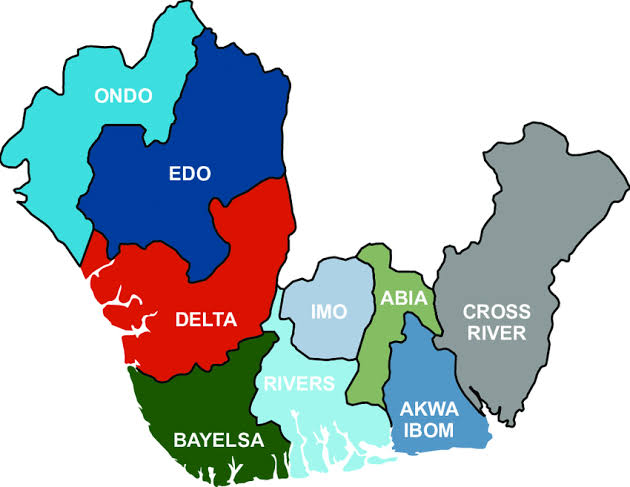
The Niger Delta Chambers of Commerce, Industry, Trade, Mines and Agriculture (NDCCITMA) says it has discovered an alleged plan by Mr. Kenule Nwiya, Chief Executive Officer of Ken-Eva, to destabilise the forthcoming Niger Delta Economic and Investment Summit scheduled to hold in September 2026.
According to a statement issued by the Secretary of the NDCCITMA Board, Chief Solomon Edebiri, and made available to newsmen, the Chambers said it had initially resolved not to join issues with Mr. Nwiya over what it described as frivolous, baseless and misleading claims concerning the alleged indiscriminate use of his trademark.
The Chambers, however, said it has become necessary to set the records straight and draw the attention of the public to the facts surrounding the matter.
For the records, it is pertinent to state that, contrary to an advert placed on AIT and circulating on some media outlets , NDCCITMA did not at any time approach the claimant to seek permission to use the purported trademark name,” the statement said.
The Chambers explained that following the conception of the name and acronym “Niger Delta Economic and Investment Summit,” it proceeded with the necessary registration process.
According to NDCCITMA, its application was received and approved by the relevant department of the Federal Ministry of Trade and Industry on 16 August 2025, while the application purportedly filed by Mr. Nwiya was received on 3 September 2025.
The Chambers therefore questioned the basis of the claimant’s assertions, noting that, to its knowledge, there was no credible evidence of an earlier approval or acceptance of the claimant’s application by the relevant government agency.
NDCCITMA described the allegations as an attempt at blackmail and an affront to the aspirations of the people of the Niger Delta, stressing that the proposed summit was conceived to promote economic development, investment, trade and regional cooperation in the Niger Delta region.
The Chambers further stated that, despite interventions by prominent personalities from the region aimed at resolving the disagreement amicably, Mr. Nwiya had allegedly continued along what it described as a path capable of undermining the summit and weakening the collective aspirations of the people of the Niger Delta.
NDCCITMA consequently urged members of the public, particularly stakeholders in the Niger Delta, to disregard what it described as the claims and assertions of the claimant.
The Chambers also challenged Mr. Nwiya to produce valid documentary evidence establishing an earlier application and approval for the use or registration of the disputed name, predating NDCCITMA’s application and the acceptance document dated 16 August 2025.
The Chambers reaffirmed its commitment to the successful hosting of the 2026 Niger Delta Economic and Investment Summit, describing the event as a collective initiative aimed at advancing the economic interests and development of the Niger Delta region

By Sam Otuonye
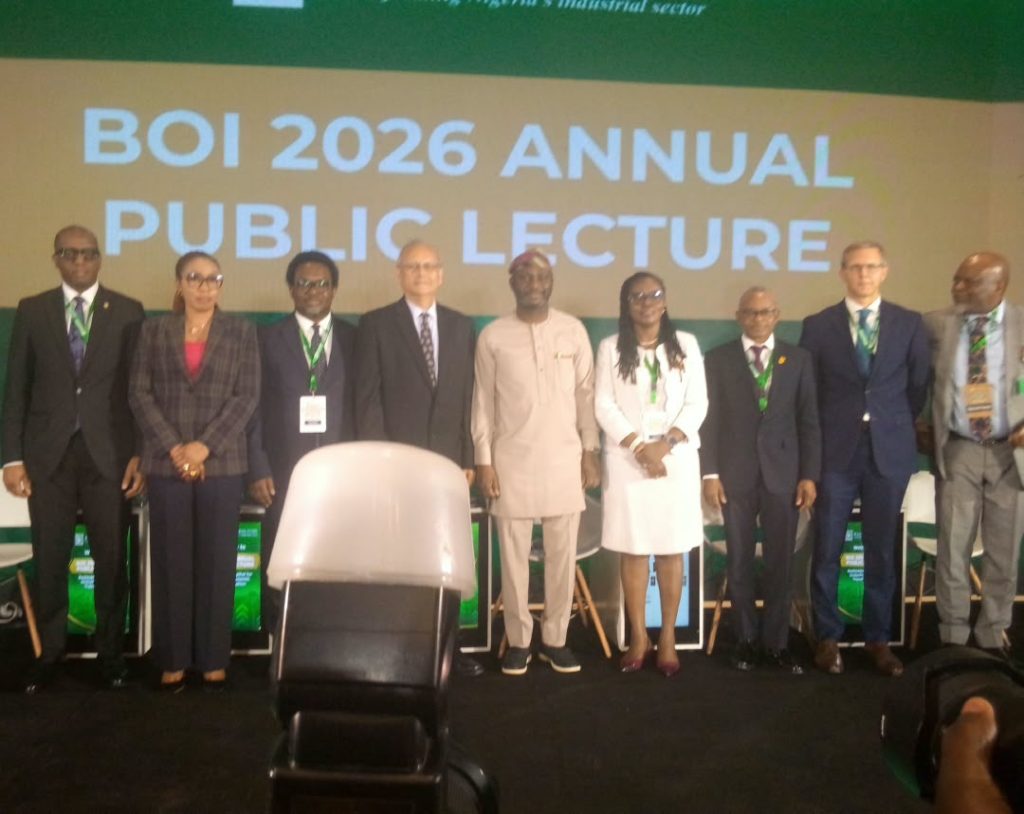
Manufacturers Association of Nigeria (MAN) has praised the Bank of Industry (BOI), for extending credit facilities at minimal interest rates and ease of processing to its members, even as the Managing Director and Chief Executive Officer (MD/CEO) of the bank, Dr Olasupo Olusi highlighted that the bank disbursed N465 billion, supported over 12,000 businesses and impacted 1.68 million jobs in 2025.
Speaking during a panel session at the BOI 2026 Annual Public Lecture in Abuja, on Tuesday September 29, 2026, with the theme: ‘Rethinking Capital for Inclusive Economic Transformation’, MAN okayed the rates at which BOI grants its members loan, even as it urged BOI to bring more members onto the single-digit interest rate loan bracket, and de-risk investment in the sector.
Director, MAN Abuja Liaison Office, Adeyemi Folorunsho, representing the Director-General, Segun Ajayi-Kadir, said: “The current management of BOI has been doing exactly what we want. What we are getting from BOI is fair enough. BOI loans have a good tenure,” he enthused.
Aligning with Folorunsho, Group Managing Director and Chief Executive Officer of Flour Mills of Nigeria, Omoboyede Olusanya, in representation, and MD/CEO InfraCredit, Chinua Azubike, represented by Daniel, a Senior staff member, respectively, commended BOI on their rising profile of supporting businesses, noting that cost of financing is key to improving productivity, inclusiveness, and economic transformation.
On her part, Executive Director, Policy Innovation Centre and a Senior Fellow at the NESG, Dr Osasuyi Dirisu, commended BOI but urged it to do more for the rural and underserved women.
The MD/CEO of BOI, Dr Olusi, in his opening remark, speaking to the theme of the lecture, stated that Nigeria needed capital that can support long-term industrial growth, reach underserved businesses, and attract private investment into the productive sector, noting that BOI has the mandate to spearhead Nigeria’s sustainable and inclusive industrial development.
“This requires us to think carefully about how capital is mobilized, structured and deployed, and the development outcomes it ultimately delivers.
“These issues are central to BOI’s mandate to spearhead Nigeria’s sustainable and inclusive industrial development. In 2025, the bank disbursed N465 billion, supported over 12,000 businesses and impact 1.68 million jobs.
“The scale of the opportunity ahead is significant. We need to mobilise more long-term capital, extend financing to businesses and sectors that remain underserved, use development finance to unlock greater private investment, and ensure that financing translates into measurable economic impact.”
The Keynote speaker, Dr Asad Alam, Adjunct Professor at Georgetown University, Washington, D.C, argued that there is more to capital than just accumulation and investment, noting that efficiency of capital is essential to drive impact and growth.
He stated that as countries grow, total capital productivity becomes more important, highlighting that human capital contribution remains modest but huge potential gives existing gaps with high income countries. He said that greater equity can support potential growth investments in technology and climate action with the potential to spur productivity and structural transformation.
The guest lecturer maintained that for Nigeria to maximize the impact of capital, it must make policies that would foster trade and market openness, innovation, competition, and sustainability.
He said that strong institutions is essential to ensure the enthronement of rule of law, effective State, service delivery, private enterprise, and regulations, adding that inclusiveness must give birth to equitable distribution of public good and job creation.
By Our Reporter
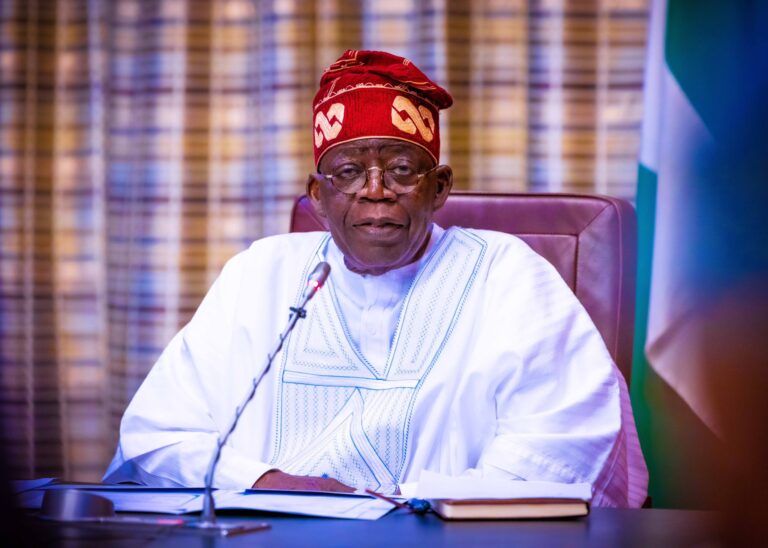
President Bola Tinubu has reaffirmed his commitment to moving Nigeria towards a credit-based economy.
The President gave the assurance in a statement posted on his verified X account on Monday.
Tinubu said the initiative would include the establishment of a loan guarantee scheme aimed at helping small businesses overcome barriers to accessing finance.
He said the scheme would make it easier for small businesses to obtain credit and support their growth.
According to the President, a worker with access to credit could buy what the family needs and pay over time, and a small business can invest today against the income it expects tomorrow.
“When I sought your mandate, I promised to move Nigeria towards a credit-based economy and to establish a loan guarantee scheme that would help small businesses overcome the barriers that keep them from finance.
“That promise was about something practical. We have been building the institutions to make that possible. Through CREDICORP, working Nigerians can access consumer credit.
“Our students can finance their education through NELFUND, while the Bank of Industry and Development Bank of Nigeria continue to lend to businesses.
“The National Credit Guarantee Company takes on one of the hardest barriers to business credit,” he tweeted
The Federal Government has opened discussions with the World Bank for three new loans totalling $1.5bn, even as Nigeria’s public debt climbed to a record N166.79tn at the end of June 2026.
Documents obtained from the World Bank show that the proposed financing comprises three separate $500m facilities for climate resilience, social protection and early childhood development.
The most immediate is a proposed $500m additional financing for the Agro-Climatic Resilience in Semi-Arid Landscapes project, known as ACReSAL. The World Bank has fixed October 29, 2026, as the estimated date for consideration by its board. The borrower is the Federal Republic of Nigeria, while the Federal Ministry of Environment is the implementing agency.
The financing would raise the size of ACReSAL from its previously approved $700m to $1.2bn, entirely financed through the International Development Association, the World Bank’s concessional financing arm.
The document said, “The Government of Nigeria has requested AF of $500m to scale up demonstrated project results and strengthen the institutional, operational and financing arrangements needed to sustain integrated landscape management.”
The additional financing is expected to support landscape restoration, watershed rehabilitation, erosion and flood management, irrigation and drainage, water harvesting and storage, reforestation and other climate-resilient interventions.
Of the additional $500m, $310m is proposed for dryland management, $165m for community climate resilience and $25m for institutional strengthening and project management.
ACReSAL currently operates across 19 northern states and the Federal Capital Territory and is targeted at land degradation, water insecurity, climate vulnerability and declining agricultural productivity.
The World Bank said desertification and land degradation affected an estimated 43 per cent of Nigeria’s land area, while failure to address climate change could reduce gross domestic product by about 2.6 per cent annually by 2030 and as much as 6.7 per cent by 2050.
The second proposed loan is another $500m IDA credit for the Household Prosperity and Empowerment-Social Protection Project.
Unlike the ACReSAL facility, the HOPE-SP project is at an earlier stage of preparation. Its technical design review is expected on October 30, 2026, while the World Bank has tentatively fixed March 16, 2027, as its approval date. The Federal Ministry of Finance is listed as the borrower, while the Federal Ministry of Humanitarian Affairs and Poverty Reduction will implement the programme.
The project has an estimated cost of $500m, comprising a $420m results-based programme and an $80m investment project financing component, with the entire financing expected from IDA.
It is designed to establish regular social assistance for poor and vulnerable households, while gradually shifting financing responsibility towards federal and state budgets.
The World Bank document said the programme would establish “a sustainable social assistance to poor and vulnerable households, financed increasingly from federal and state budgets and delivered through strengthened state and local government systems.”
The proposed programme would finance targeted unconditional and conditional cash transfers, modernise the social registry, integrate the National Identification Number into the social protection information system and strengthen implementation at federal, state and local government levels.
The lender said Nigeria spent only 0.14 per cent of GDP on social safety-net programmes in 2021, compared with a global average of 1.5 per cent and 1.2 per cent among lower-middle-income countries.
The bank also painted a grim picture of household welfare, estimating that the proportion of Nigerians living in poverty had increased from 40 per cent in 2019 to 56 per cent in 2023 and could reach 62.5 per cent in 2026. It attributed the deterioration to several factors, including the pandemic, inflation, natural disasters and conflict, while noting that fuel subsidy removal and exchange-rate reforms worsened living costs in the short term.
The third proposed $500m facility is for the Nigeria Early Childhood Development programme, with an estimated approval date of March 15, 2027, a day before the proposed HOPE-SP approval. Its technical design review is also scheduled for October 30, 2026.
The Federal Ministry of Finance is the borrower, while the Federal Ministry of Budget and Economic Planning is expected to implement the programme.
The project would cover all 36 states and the FCT and seek to improve access to an integrated package of health, nutrition, early learning, childcare, water and sanitation, and other services for children aged zero to five.
It would be financed through $500m IDA credit, consisting of a $400m programme-for-results component and $100m investment project financing component.
The World Bank said the intervention had become necessary because “40 percent of children under five are stunted, fewer than half are developmentally on track, 36 percent of children aged 36 to 59 months attend organised early learning,” with poor rural households carrying much of the burden.
PUNCH
-
General News1 week ago
JOHESU demands: MHWUN puts FG on notice over fresh action
-

 Politics4 weeks ago
You have demonstrated diligence, loyalty, statesmanship in leadership, Ekechi salutes Shetimma at 60
-

 Politics2 weeks ago
2027: ASAF backs APC governors, rejects rainbow coalition
-

 Politics2 months ago
2027: Advertising experts raise concerns over irregular regulation of sector
-
FCT News2 months ago
2027: Hasana-Moneme pledges skills, empowerment, credit access for FCT women
-
General News2 months ago
2027: Dame Princess Esom-Nwafor Orizu confirmed as APC flagbearer for Nnewi North /South /Ekwusigo Federal Constituency as INEC releases names of candidates
-
Uncategorized3 months ago
Rescue of Oyo schoolchilden: Tinubu commends security agencies, says action breakthrough in fight against criminality
-
General News1 month ago
Chi-Jenco CEO, Jude Orji loses mother