
Business and Economy
NDCCITMA raises alarm over plans to scuttle planned Niger Delta Investment Summit

By Chidera Orji
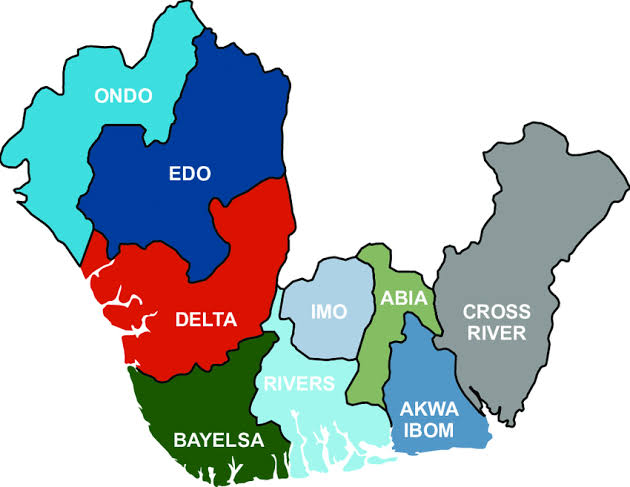
The Niger Delta Chambers of Commerce, Industry, Trade, Mines and Agriculture (NDCCITMA) says it has discovered an alleged plan by Mr. Kenule Nwiya, Chief Executive Officer of Ken-Eva, to destabilise the forthcoming Niger Delta Economic and Investment Summit scheduled to hold in September 2026.
According to a statement issued by the Secretary of the NDCCITMA Board, Chief Solomon Edebiri, and made available to newsmen, the Chambers said it had initially resolved not to join issues with Mr. Nwiya over what it described as frivolous, baseless and misleading claims concerning the alleged indiscriminate use of his trademark.
The Chambers, however, said it has become necessary to set the records straight and draw the attention of the public to the facts surrounding the matter.
For the records, it is pertinent to state that, contrary to an advert placed on AIT and circulating on some media outlets , NDCCITMA did not at any time approach the claimant to seek permission to use the purported trademark name,” the statement said.
The Chambers explained that following the conception of the name and acronym “Niger Delta Economic and Investment Summit,” it proceeded with the necessary registration process.
According to NDCCITMA, its application was received and approved by the relevant department of the Federal Ministry of Trade and Industry on 16 August 2025, while the application purportedly filed by Mr. Nwiya was received on 3 September 2025.
The Chambers therefore questioned the basis of the claimant’s assertions, noting that, to its knowledge, there was no credible evidence of an earlier approval or acceptance of the claimant’s application by the relevant government agency.
NDCCITMA described the allegations as an attempt at blackmail and an affront to the aspirations of the people of the Niger Delta, stressing that the proposed summit was conceived to promote economic development, investment, trade and regional cooperation in the Niger Delta region.
The Chambers further stated that, despite interventions by prominent personalities from the region aimed at resolving the disagreement amicably, Mr. Nwiya had allegedly continued along what it described as a path capable of undermining the summit and weakening the collective aspirations of the people of the Niger Delta.
NDCCITMA consequently urged members of the public, particularly stakeholders in the Niger Delta, to disregard what it described as the claims and assertions of the claimant.
The Chambers also challenged Mr. Nwiya to produce valid documentary evidence establishing an earlier application and approval for the use or registration of the disputed name, predating NDCCITMA’s application and the acceptance document dated 16 August 2025.
The Chambers reaffirmed its commitment to the successful hosting of the 2026 Niger Delta Economic and Investment Summit, describing the event as a collective initiative aimed at advancing the economic interests and development of the Niger Delta region


By Ikenna Okoli
Globacom on Wednesday drew the curtain on the 2026 Ofala Festival with a Royal Banquet in honour of the Obi of Onitsha, Igwe Alfred Nnaemeka Achebe, Agbogidi.
The elegant event, which was attended by the monarch, cabinet chiefs, Glo trade partners and high net-worth customers, marked the grand finale of the festival sponsored by the telecommunications and digital solutions company

Mike Ehumadu, Globacom’s Divisional Head, South East, said that, by hosting the event, the company underscored the enduring value of partnerships between corporate organizations and traditional institutions in sustaining the country’s cultural legacy.
He congratulated Igwe Achebe, the Ofala Festival organizing committee and the people of Onitsha on the successful celebration of this year’s event, and restated the company’s commitment to initiatives that celebrate Nigeria’s cultural diversity, strengthen community bonds and project the nation’s rich heritage to the world.
The evening was a rich blend of culture, music and comedy, with guests treated to performances by Aniweta Mazeli, Boy o Boy and the Groove Band, while comedian MC Ezegetive brought laughter and excitement to the gathering. Their stagecraft complemented the grandeur of the occasion, and created memorable moments for the royal household, community leaders and other guests.
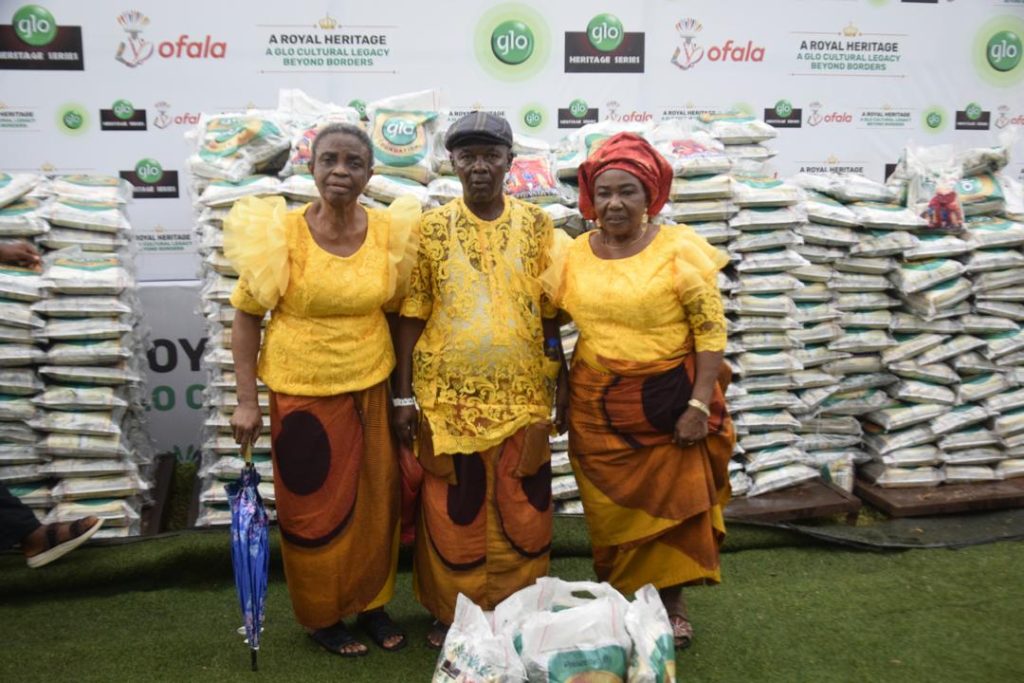
Globacom also used the occasion to celebrate the competitive spirit, discipline and community pride demonstrated by the various Onitsha age grades during the festival by rewarding those who won the different competitions with cash prizes and trophies. It also presented hundreds of bags of special Basmati rice to all the members of the different age grade associations.
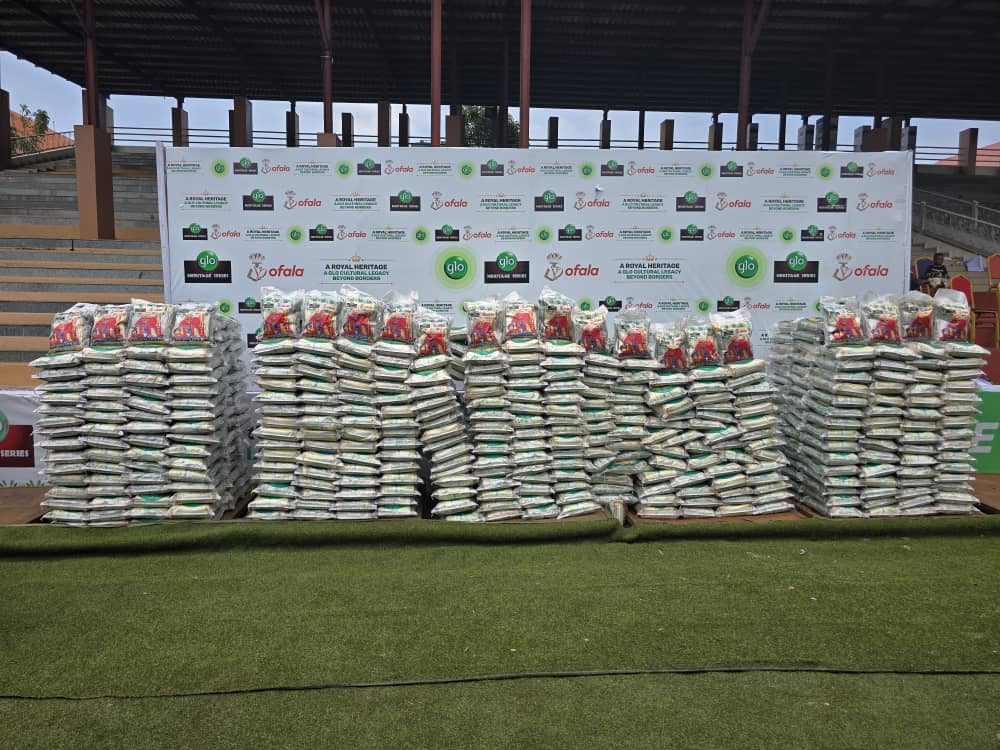
The company’s continued association with the Ofala celebration demonstrates how private-sector investment can help traditional institutions preserve heritage, while expanding the social and economic values of cultural events.

The Nigerian National Petroleum Company Limited, NNPCL, has increased its premium motor spirit, PMS, pump price following the announcement of a discounted fuel price.
Checks on Friday showed that NNPCL increased its petrol price to N1,405 per litre from N1,370 per litre.
Several fuel pump attendants, who spoke to an online medium Daily Post, on condition of anonymity, said the latest price increase was announced on Thursday but implemented on Friday.
This means that NNPCL’s petrol price increased by N35 per litre, although the state-owned oil company has not explained the reason for the adjustment.
The latest development means that petrol prices at the company’s filling stations have risen again despite the controversy surrounding the announced fuel discount.
On Thursday, the Minister of Finance, Taiwo Oyedele, announced a proposed fixed petrol gantry price of N1,375 per litre ahead of the January 16, 2027, presidential election.
By Our Reporter with agency report
The International Monetary Fund (IMF) has advised Nigeria against restoring broad petrol subsidy, recommending targeted support for vulnerable households to cushion the impact of rising energy costs.
IMF said blanket petrol subsidies were expensive, often benefited higher-income consumers disproportionately and could worsen fiscal pressures amid rising borrowing costs.
Rodrigo Valdés, director of the IMF’s fiscal affairs department, spoke during a press briefing on the fund’s fiscal monitor at the 2026 annual meetings of the IMF and World Bank in Bangkok, Thailand, on Wednesday.
His comments followed a question on how the fund could recommend allowing energy prices to reflect scarcity when higher fuel prices in Nigeria could raise transport costs, worsen inflation and deepen poverty, particularly when the government was facing calls to restore petrol subsidy ahead of an election year.
“Protecting people is not the same as protecting the price of fuels,” Valdés said.
He said fuel subsidies or measures preventing prices from adjusting fully to an energy shock had cost countries between 1 percent and 1.5 percent of gross domestic product (GDP) in 2026.
“It’s first fiscally very costly, and second, if you look at the pattern of consumption, it’s easy to see that that subsidy is readily regressive in many places,” he said.
Valdés said governments should instead use social safety nets and household data to identify people who need assistance.
“There are better tools to deal with this,” he said.
The federal government recently announced a 30-day petrol discount at Nigerian National Petroleum Company (NNPC) Limited retail stations, with priority for public transport operators, to cushion the impact of rising fuel prices.
Taiwo Oyedele, minister of finance, said NNPC retail would sell petrol at cost by foregoing its retail profit margin, describing the measure as temporary relief rather than a return to petrol subsidy.
The government also proposed negotiating a ceiling of N1,350 per litre on petrol’s ex-gantry or landing cost, subject to monthly reviews
IMF URGES FG TO REDIRECT SUBSIDY GAINS TOWARDS VULNERABLE PEOPLE
The IMF also recommended targeted interventions to cushion the effect of higher fuel prices on transportation costs.
Davide Furceri, a division chief in the fund’s fiscal affairs department, said governments could redirect some of the resources spent on blanket subsidies towards vulnerable consumers.
“For example, you mentioned transportation costs. Yeah, gasoline could go up, and perhaps bus fees may be subsidised in a way that is a much better policy at the end of the day than just a blanket subsidy for everybody,” Furceri said.
He also suggested alternatives such as school feeding programmes, geographical targeting and assistance for vulnerable farmers.
READ ALSO: Atiku accuses Tinubu of copying his fuel subsidy proposal
Furceri acknowledged that some countries lacked household registries and digital payment systems needed to deliver targeted support effectively.
However, he said governments could adopt alternative approaches in the short term while developing stronger systems.
He recommended that assistance should be limited, targeted and temporary.
Valdés explained that fuel subsidies could worsen global energy pressures by preventing demand from adjusting when supplies were constrained.
“When you subsidise, you don’t allow, at the end of the day, demand to adjust,” he said.
“And reality is that we have less fuels in the world economy. That means that someone else has to adjust more, and the market produces a higher price for that.”
The IMF official said subsidies were not only costly and regressive but could also have spillover effects on the global economy.
TheCable
-
 General News2 weeks ago
Rivers 2027: We are not part of Rainbow Coalition – APC Legacy Group slams Wike, Fubara meeting
-
General News1 month ago
JOHESU demands: MHWUN puts FG on notice over fresh action
-
 Politics1 month ago
2027: ASAF backs APC governors, rejects rainbow coalition
-

 Politics2 months ago
You have demonstrated diligence, loyalty, statesmanship in leadership, Ekechi salutes Shetimma at 60
-

 Politics2 months ago
2027: Advertising experts raise concerns over irregular regulation of sector
-
FCT News2 months ago
2027: Hasana-Moneme pledges skills, empowerment, credit access for FCT women
-
General News3 months ago
2027: Dame Princess Esom-Nwafor Orizu confirmed as APC flagbearer for Nnewi North /South /Ekwusigo Federal Constituency as INEC releases names of candidates
-
Uncategorized4 months ago
Rescue of Oyo schoolchilden: Tinubu commends security agencies, says action breakthrough in fight against criminality