
Health and Life-Style
Doctor warns youths against consumption of energy drinks, alcohol, says they damage liver, kidney


By our reporter
A Senior Registrar, Community Medicine and Primary Care, Federal Medical Centre, FMC, Abeokuta, Dr Okoro Sulaiman, has warned Nigerians, especially youths, against the consumption of alcohol, energy and carbonated drinks, saying they damage vital organs.
Dr Sulaiman explained that the chemical constituents in the drinks, including caffeine and alcohol, damage the liver, kidneys and other vital organs.
He faulted the belief that a small quantity of alcohol is healthy, insisting that no level of alcohol is safe and total abstinence remains best.
The doctor, who spoke at Abule Ojere,at a programme organised by the Cherubim and Seraphim Church Unification Campus Fellowship, Moshood Abiola Polytechnic, MAPOLY, also advised residents to reduce their salt intake, over-fried foods and beverages, and replace beef, the most common red meat, with healthier options like snail, fish, chicken and goat meat.
He asked the elderly to embrace daily intake of fruits, vegetables, water and yogurt for better health and start a regular exercise routine, noting that lifestyle modification accounts for a large percentage of disease prevention.
“Alcohol itself is actually unhealthy for the system. The chemical content in these things- the alcohol, the caffeine, and some other constituents in these drinks is unhealthy for the system.
“So it’s important that people realise this early, before it damages them. My take is that no level of alcohol is actually healthy. The best is to avoid them totally, and it’s the same for energy drinks.”
Okoro, however, lamented poor drug compliance among Nigerians, stressing that conditions like hypertension and diabetes are not curable but only manageable with consistent medication.
Also speaking, Dr Dosunmu Adesegun, a Medical Officer with the Ogun State Primary Health Care Board, said diet contributes about 50 per cent to the management of ailments, while drugs contribute only 10 to 15 per cent.
He called for regular checkups, stressing that early detection is key.
“Now, the thing about it is what people don’t really tell us is the fact that our diet constitutes about 50% of management of almost any ailment. Now, a lifestyle modification, which includes stress management, exercises, adequate sleep and rest, is about 35-40%.
“Our drugs, which many doctors, pharmacists, lay emphasis on, are just 10-15%. So, the way we live our lives, yes, is the key to us living healthy lives.“
He also cautioned residents against patronising quack tattoo artists, warning that improperly sterilised instruments could transmit infections from person to person like every other sharp object.
Chairperson of Abule -ijeun kukute, Abeokuta, Mrs Mary Gbamigboye, appreciated the church and medical team for the gesture, while appealing to government to address bad roads, lack of clean water and high rent in the student area.
Earlier in his remarks, the Chairman Graduate Forum of the fellowship, Bakare Adewale, explained that the aim is to give back to the host community, maintaining that health is importance and the initiative is necessary following the current economic hardship.


By Our Reporter
Ali Pate, coordinating minister of health and social welfare, says Nigerians should remain vigilant, shun panic, and stop spreading misinformation about Ebola virus disease.
Speaking on Wednesday after meeting with Femi Gbajabiamila, chief of staff to the president in Abuja, Pate said citizens should rely on verified public health information from trusted sources rather than circulating false rumours.
The minister said the federal government is collaborating with Uganda to manage the situation.
“All I can tell you is that we are collaborating with our sister African nation of Uganda,” Pate said.
“What is important is that we have found this one case. We are doing contact tracing, and we are putting containment measures to ensure that it doesn’t go into our population.”
He urged Nigerians to remain calm and communicate responsibly, adding that the situation should be taken seriously without causing fear.
“Nigerians should be reassured. We must be vigilant, but not panic, and people should respect public health information from trusted sources, and not spread misinformation and false rumours,” Pate said.
The minister said Nigeria has the public health institutions and expertise needed to respond to the situation.
Pate added that the Nigeria Centre for Disease Control and Prevention (NCDC) had activated its incident management system (IMS), with response teams working round the clock and the relevant task force coordinating containment efforts.
“They are working 24/7, and the task force is also active. So, we have things in place that give us confidence that Nigeria can weather this public health crisis,” he said.
He said the government would continue to monitor developments and provide updates as verified information became available.
“If the situation changes, we’ll come out and inform Nigerians,” he said.
Pate reiterated that the immediate priority was to contain the imported case and prevent its spread within the population.
The meeting between Pate and Gbajabiamila came nearly 24 hours after the federal government announced a confirmed case of Ebola disease in the Federal Capital Territory (FCT).
On Tuesday, Pate said 44 close contacts had been identified for tracing to prevent further transmission.
He added that the patient, a woman who recently arrived in Nigeria on an international flight from Uganda, had been admitted to a private hospital in the FCT, where she received care for several days before the diagnosis was confirmed.
General News
2026 World Sight Day: Anambra Optometrists take free eye care to Achina, target 500 residents
..Warn against self-medication, chemists
By Uzo Ugwunze
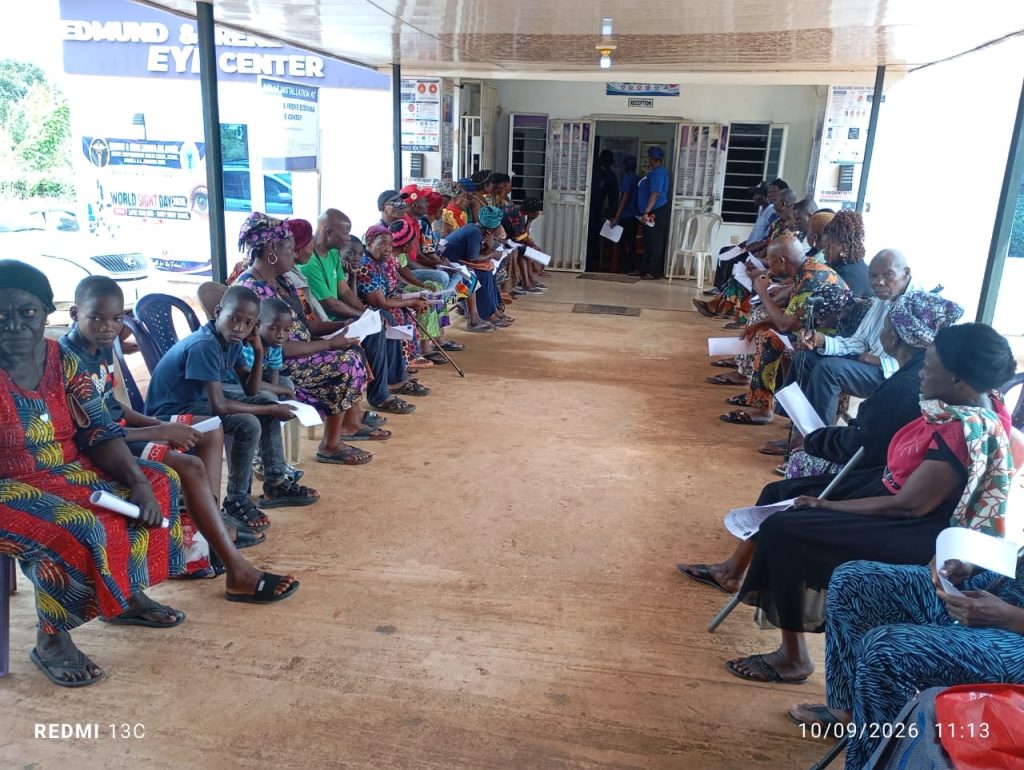
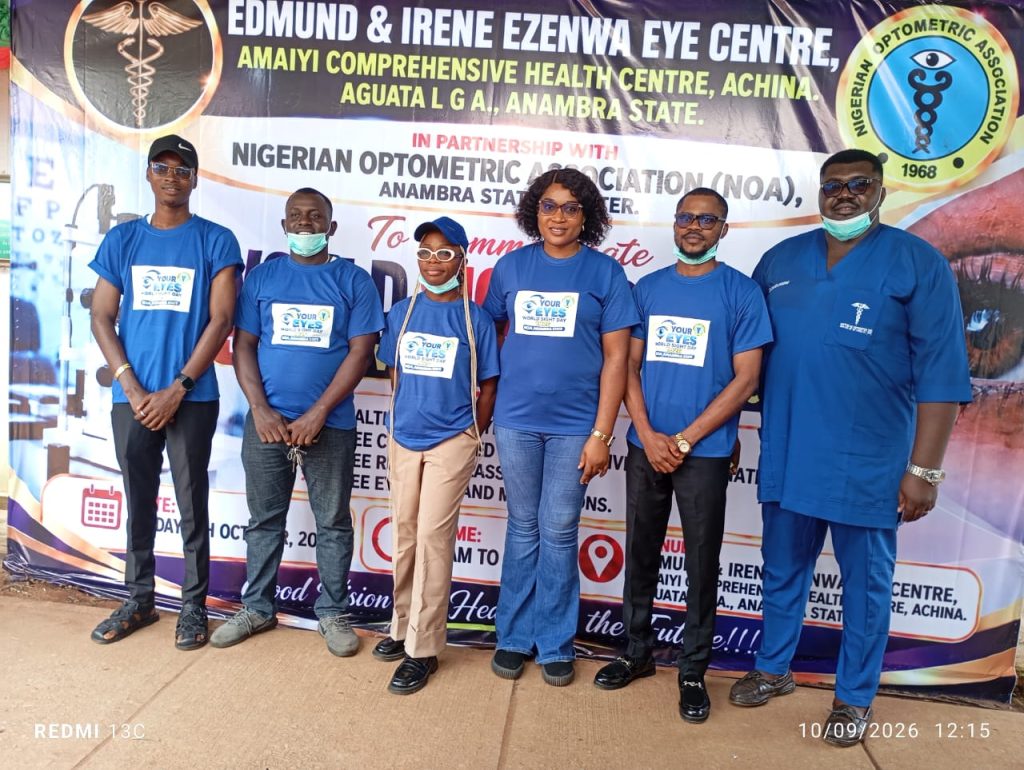
The Nigerian Optometric Association (NOA), Anambra State Chapter, has taken its World Sight Day 2026 campaign to Achina community in Aguata LGA, offering free eye screening, treatment, medication and spectacles to residents in a renewed drive to prevent avoidable blindness.
The outreach, held on September 9, 2026 under this year’s global theme, “Love Your Eyes. Every Story Counts,” was led by the Chairman of the Anambra State Chapter, Dr. Chiamaka Mba who said that the initiative was deliberately taken to the hinterland to reach underserved populations who have limited access to professional eye care. “We came all the way to Achina because we want to reach the interior villages. Most people in urban areas have access, but those in the interior face restrictions’.
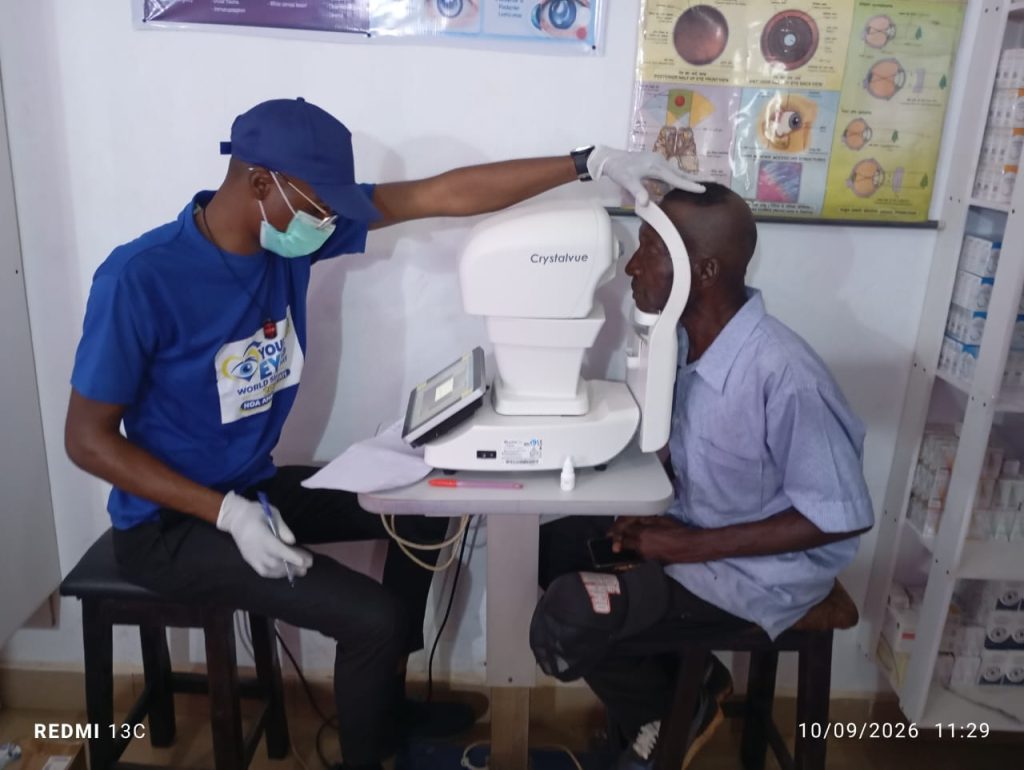
Dr. Mba explained that activities for the celebration started earlier in the week with radio and television sensitization, where members educated the public on healthy eye habits and dangers of harmful practices. The Chapter also staged a Walk for Sight on Thursday, before moving its full clinical team to Achina for the grand finale of free services.
At the venue, residents received comprehensive checks including blood pressure, intraocular pressure and visual acuity tests. With a team of eight optometrists on ground, the Association set a target of attending to about 500 beneficiaries. She said adult beneficiaries who need near vision support were given reading glasses, while children were assessed for special provision and referral.
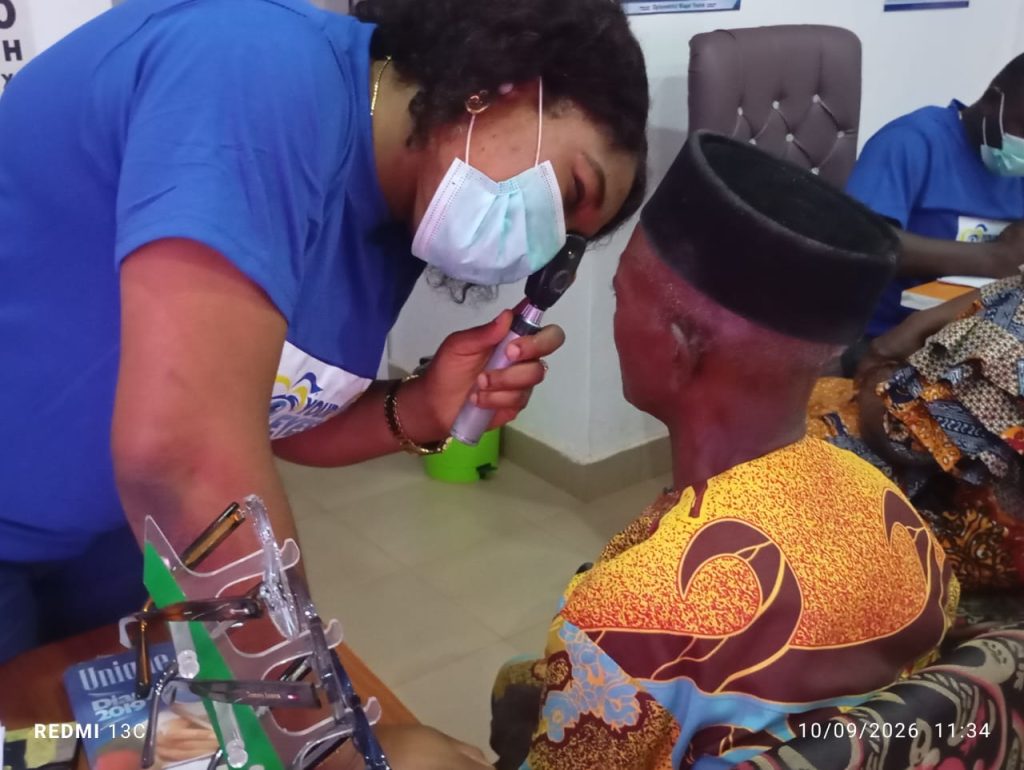
“The Association is also providing a full referral and follow-up pathway for cases beyond the outreach. Patients who require further investigation and specialized care are being referred to designated eye centres for continued management. Those diagnosed with cataract and other surgical conditions are being registered and booked for surgery on designated surgical days, as cataract operations are not performed during field outreaches.
Dr. Mba used the opportunity to warn against dangerous traditional practices, including instilling urine, breast milk and fermented cassava water into the eyes. She explained that the eye has a normal flora that protects it, and introducing such substances disrupts that defence and can cause combined viral, fungal and bacterial infections that may lead to permanent blindness.
She stressed that the first point of call for any eye problem should be a registered eye clinic and not chemists or quacks, noting that optometrists undergo up to eight years of training to qualify. She urged patients to strictly adhere to prescribed drugs and never stop medication midway without doctor’s advice, as incomplete treatment worsens eye conditions.
She further advised on preventive care and regular examination. According to her, children should have eye checks before they start school, teenagers and young adults up to 27 years should check every two years, adults from 30 to 50 years should check once yearly, while those 50 years and above should check twice yearly because of higher risk from hypertension, diabetes and age-related diseases. Those with family history of glaucoma should check even more frequently as advised by their doctor.
Addressing cost concerns, Dr. Mba said that eye care is not expensive compared to the cost of blindness, and urged Ndi Anambra to use general hospitals where optometrists are now posted across the state. She added that with phones, laptops and prolonged sunlight exposure, residents should seek professional advice on protective spectacles, know their family medical history, and embrace the campaign message to love their eyes by protecting and regularly examining them.

The National Association of Resident Doctors (NARD) has issued a two-week ultimatum to the federal government to resolve outstanding welfare and professional issues affecting its members.
At its 46th annual general meeting on Sunday in Calabar, Cross Rivers state, NARDS warned that failure to resolve outstanding issues could trigger industrial action.
According to the resolutions read by Ogar Emmanuel Idoko, its national president, NARD expressed concern over the slow pace of implementation of agreements reached between the association and the federal government.
The association said that prolonged delays had become unacceptable.
They demanded immediate action on outstanding issues relating to remuneration, career progression, professional allowances, excessive workload, manpower shortages and the general welfare of resident doctors.
It called for “the immediate implementation of agreements reached with the federal government, particularly those relating to improved conditions of service and professional development”.
“The government concluded the review of existing remuneration and professional salary structures for doctors, saying the current framework no longer adequately reflected prevailing economic realities,” the resolution reads.
The association demanded appropriate compensation for excess workload arising from manpower shortages in hospitals.
It noted that resident doctors are increasingly carrying additional responsibilities.
NARD called for standardised templates for compensation for excess workload and reliable data to justify payments to doctors performing duties beyond their normal responsibilities.
It expressed concern over attacks on health workers and called for the full implementation of policies and anti-assault measures designed to protect doctors and other medical personnel in hospitals.
It further raised concern over the continuing migration of doctors and other health professionals from Nigeria..
The association urged the federal ministry of health and social welfare to urgently address the factors responsible for the continued migration of medical professionals.
The association called on state governments to prioritise the welfare of doctors and other health workers employed by their respective institutions and ensure the implementation of relevant welfare policies.
-

 General News2 weeks ago
Rivers 2027: We are not part of Rainbow Coalition – APC Legacy Group slams Wike, Fubara meeting
-
General News1 month ago
JOHESU demands: MHWUN puts FG on notice over fresh action
-

 Politics1 month ago
2027: ASAF backs APC governors, rejects rainbow coalition
-

 Politics2 months ago
You have demonstrated diligence, loyalty, statesmanship in leadership, Ekechi salutes Shetimma at 60
-

 Politics2 months ago
2027: Advertising experts raise concerns over irregular regulation of sector
-
FCT News2 months ago
2027: Hasana-Moneme pledges skills, empowerment, credit access for FCT women
-
General News3 months ago
2027: Dame Princess Esom-Nwafor Orizu confirmed as APC flagbearer for Nnewi North /South /Ekwusigo Federal Constituency as INEC releases names of candidates
-
Uncategorized3 months ago
Rescue of Oyo schoolchilden: Tinubu commends security agencies, says action breakthrough in fight against criminality