
Back Page Columnist
Strait of Hormuz: If you daboh me, i tarka you – the power of geography


By Sam Otuonye
There are moments in history when a simple sentence captures the spirit of an entire political struggle. In Nigeria, one such sentence was: “If you Tarka me, I Dabo you.” Today, as the United States and Iran wrestle over the Strait of Hormuz, that old Nigerian political expression has acquired a new international meaning: ‘if you hit me, I will hit you back.’
But history teaches that such a contest can become dangerous when the people involved are not ordinary individuals but powerful governments, armies and nations.
The present confrontation between United States President Donald Trump and Iran is, in many ways, a classic case of action and retaliation. Washington wants Iran to yield. Tehran wants Washington to pay a price for every pressure put on it. And in the middle of the struggle is a narrow stretch of water through which a huge part of the world’s energy supply passes.
The Nigerian story goes back to1974, during the military administration of General Yakubu Gowon.
There was a Joseph Sarwuan Tarka, a prominent politician from the Middle Belt, a powerful member of Gowon’s government who had served as Federal Commissioner for Transport and later Federal Commissioner for Communications. He was one of the most influential political figures from what was then Benue-Plateau State.
Then came a Godwin Daboh, a businessman and fellow Tiv from Benue. In 1974, Daboh publicly accused Tarka of corruption and impropriety. He went as far as swearing an affidavit containing allegations against the powerful Federal Commissioner. The controversy became a major national political story.
Tarka fought back.
The confrontation became so bitter that it produced the famous political expression: “If you Tarka me, I will Dabo you.” In simple language, it meant: ‘if you attack me, I will retaliate.’
Under mounting public and political pressure, Tarka resigned from the federal cabinet in August 1974. The controversy did not end there. It became one of the memorable political battles of that era and eventually entered Nigeria’s political vocabulary as a metaphor for retaliation.
Tarka returned to politics during the Second Republic. He was elected Senator for Benue East in 1979 and became Chairman of the Senate Committee on Finance and Appropriation.
The Strait of Hormuz is not merely another waterway. It is a narrow maritime passage between Iran and Oman, linking the Persian Gulf with the Gulf of Oman and the Arabian Sea. At its narrowest point, it is only about 20 miles wide. Yet through this narrow passage moves an extraordinary volume of the world’s energy supplies.
This explains why Hormuz is everybody’s business. If the Strait is seriously blocked, the consequences do not stop in Tehran, Washington or the Gulf. They travel to Beijing, New Delhi, Tokyo, Seoul, London, Lagos and every economy that depends on affordable energy.
Oil prices rise. Transport becomes expensive. Electricity costs rise. Food becomes more expensive. Inflation returns. Businesses suffer. Poor countries suffer even more.
That is why Hormuz is sometimes described as the world’s energy artery.
President Trump has demonstrated a willingness to use military power against Iran. But the present crisis shows the limits of military power.
The United States and Iran have been involved in a prolonged conflict since the U.S.-Israeli strikes on Iran began on February 28, 2026. The fighting has centred not only on Iran’s nuclear and military capabilities but increasingly on control of the Strait of Hormuz.
Washington can destroy military installations. It can attack infrastructure. It can impose sanctions. It can deploy warships. But destroying Iran is a different matter.
Iran can retaliate against American interests and Gulf infrastructure. It can threaten shipping. It can disrupt energy supplies. And because Hormuz is so important to the world economy, every additional military escalation carries a global economic price.This is the dilemma now confronting Trump.
This is where the phrase “If you Tarka me, I Dabo you” becomes relevant.
Iran has effectively demonstrated that it has a weapon that cannot easily be bombed away: Geography.
The Strait lies beside Iranian territory. Iran does not need to defeat the United States in a conventional war to impose enormous economic costs. It only needs to make the movement of ships sufficiently difficult, dangerous or expensive.
Trump therefore faces an uncomfortable choice. He can continue escalating and risk a wider war, higher energy prices and greater pressure on the global economy.
Or he can negotiate, even if negotiation requires concessions that may look politically uncomfortable.
Diplomacy often means accepting something less than everything one wants in order to prevent something worse.
That appears to be the calculation behind the current discussions. It is expected that a deal between Iran and Oman would soon ensure commercial shipping to proceed, with U.S. measures tied to Iran’s compliance.
Trump may therefore be discovering the oldest lesson in international politics: military superiority does not automatically produce political victory.
The strongest man in the room may still need the cooperation of the man controlling the doorway.
Nigeria should understand this lesson.
For Nigeria, the Hormuz crisis should not be treated as a distant Middle Eastern quarrel.
Nigeria is an oil-producing country, but Nigerians remain heavily exposed to international energy prices. Any prolonged disruption in Hormuz can affect crude prices, shipping costs, foreign exchange, inflation, petroleum products and government revenue.
The crisis should therefore remind that oil security is also national security.
Nigeria must develop strategic fuel reserves, improve domestic refining, strengthen alternative energy sources and reduce its vulnerability to shocks in international oil markets.
When two individuals fight, they hurt each other. But when two governments fight, millions of innocent people pay the bill.
That is why the world should hope that Washington and Tehran do not allow “If you Tarka me, I Dabo you” to become the governing principle of international diplomacy.
Because in the Strait of Hormuz, there is no room for a fight in which everybody wins.
There is only room for restraint, negotiation and a settlement that keeps the world’s energy artery open.
Sam Otuonye, anipr
Journalist/Public Affairs Analyst, writes through samotuonye22@gmail.com



When what organisations say collides with what people experience, reputation is decided by experience.
By Dr. Omolaraeni Olaosebikan
There comes a point in every reputation problem when better communication is no longer the answer. It is an uncomfortable admission for those of us who have spent our careers helping organisations communicate. We understand the power of language. We know that silence creates vacuums, that poor communication can turn manageable problems into crises, and that even good decisions can lose public confidence when they are badly explained. But there is another truth organisations sometimes discover rather late: communication can clarify reality; it cannot indefinitely compete with it.

This distinction matters because organisations have become extraordinarily sophisticated at telling their stories.
Governments have communication teams. Companies have corporate affairs departments. Leaders have media advisers. Brands have agencies, influencers, content calendars and carefully constructed campaigns. We have more channels through which to communicate than ever before, yet trust remains remarkably difficult to secure. Perhaps the problem is not always that organisations are communicating too little. Sometimes, what they communicate and what people experience are telling two different stories.
Consider the ordinary customer. A company tells her that she is at the heart of everything it does. The advertising is beautiful. The campaign speaks about care, convenience and exceptional service. Then something goes wrong. She calls customer service and waits endlessly. Her complaint moves from one person to another. Nobody takes ownership. Eventually, the company she has been told is obsessed with her experience begins to feel remarkably indifferent to it. Which message will she believe: the campaign or the experience?
The answer seems obvious, yet organisations repeatedly spend considerable resources trying to solve an experience problem with a communications solution. When perception deteriorates, the instinct is often to increase visibility: more media, more advertising, another campaign, another press release, perhaps an influencer or two. Sometimes that is precisely what is required. But before prescribing more communication, there is a harder question worth asking: is the reputation problem actually being created by what people are hearing, or by what they are experiencing?
Reputation is often treated as something managed primarily by communications professionals. In reality, communications may manage the articulation of reputation, but the organisation itself produces the evidence from which reputation is formed. The chief executive contributes to it. So does the receptionist. Product quality contributes. Pricing contributes. Human resources contributes. The technician who arrives at a customer’s home contributes. The employee who responds to an email contributes. Long before the communications department writes the story, hundreds of seemingly ordinary decisions have already begun writing it.
Reputation is not what an organisation says about itself. It is the conclusion people reach after comparing what it says with what they experience.
The same principle applies beyond business.
Governments can announce programmes, policies and achievements, but citizens ultimately interpret those messages through their own lives. Leaders can speak convincingly about accountability, sacrifice or inclusion, but the language becomes credible only when behaviour provides supporting evidence. Institutions can declare values on walls, websites and annual reports, but employees learn the organisation’s real values by watching which behaviours are rewarded, tolerated or punished.
This does not make communication less important. It makes strategic communication considerably more important. Good communication provides context. It explains difficult decisions. It corrects misinformation. It helps people understand complexity. It gives visibility to actions that might otherwise go unnoticed and, crucially, it allows organisations to listen. The mistake is believing that communication possesses some magical ability to create permanent trust independently of organisational conduct.
Trust is accumulated through consistency. One good advertisement cannot manufacture it. One bad encounter may not destroy it either. People build judgments gradually, through repeated encounters between promise and performance. Every time those two align, credibility earns another small deposit. Every time they diverge, something is withdrawn. Eventually, an organisation discovers that reputation is the balance left in that account.
This is particularly significant in today’s information environment. The organisation is no longer the sole narrator of its own story. Employees speak. Customers post. Screenshots travel. Reviews remain searchable. A single experience can move from a private interaction to a public conversation in minutes. Corporate communication therefore operates in an environment where institutional claims can be compared almost instantly with human evidence.
Instead of beginning with, “How do we make people see us differently?”, perhaps the conversation should begin with, “Why are people seeing us this way?” Those questions may sound similar. They are not. The first assumes perception is the problem and communication must correct it. The second allows for a more difficult possibility: that perception may contain information the organisation needs to hear. Sometimes the public has misunderstood. Sometimes a good organisation has simply failed to explain itself well. But sometimes the market, employees, customers or citizens are accurately describing an experience that leadership would rather communicate away.
That is where strategic communication should increasingly sit—not at the end of the organisational process, polishing decisions already made, but close enough to leadership to bring stakeholder reality into the room before decisions become reputational problems.
The communicator of the future cannot simply be the organisation’s loudspeaker. He or she must also be one of its most disciplined listeners.
When this happens, communication stops being cosmetic and becomes diagnostic. Reputation stops being something organisations attempt to manufacture and becomes something they consciously earn. Perhaps that is the reputation question more boardrooms should ask before approving the next campaign: if we stopped telling people who we are, what would their experience tell them?
Because eventually, every organisation reaches the point where the story it tells must meet the story people live. When those two stories reinforce each other, trust becomes possible. When they repeatedly contradict each other, even the finest communication eventually stops working. And that is why the narrative matters.
Dr. Omolaraeni Olaosebikan
Strategic Communications & Reputation Management Expert | Founder, The Narrative Matters®
By Lemmy Ughegbe, Ph.D
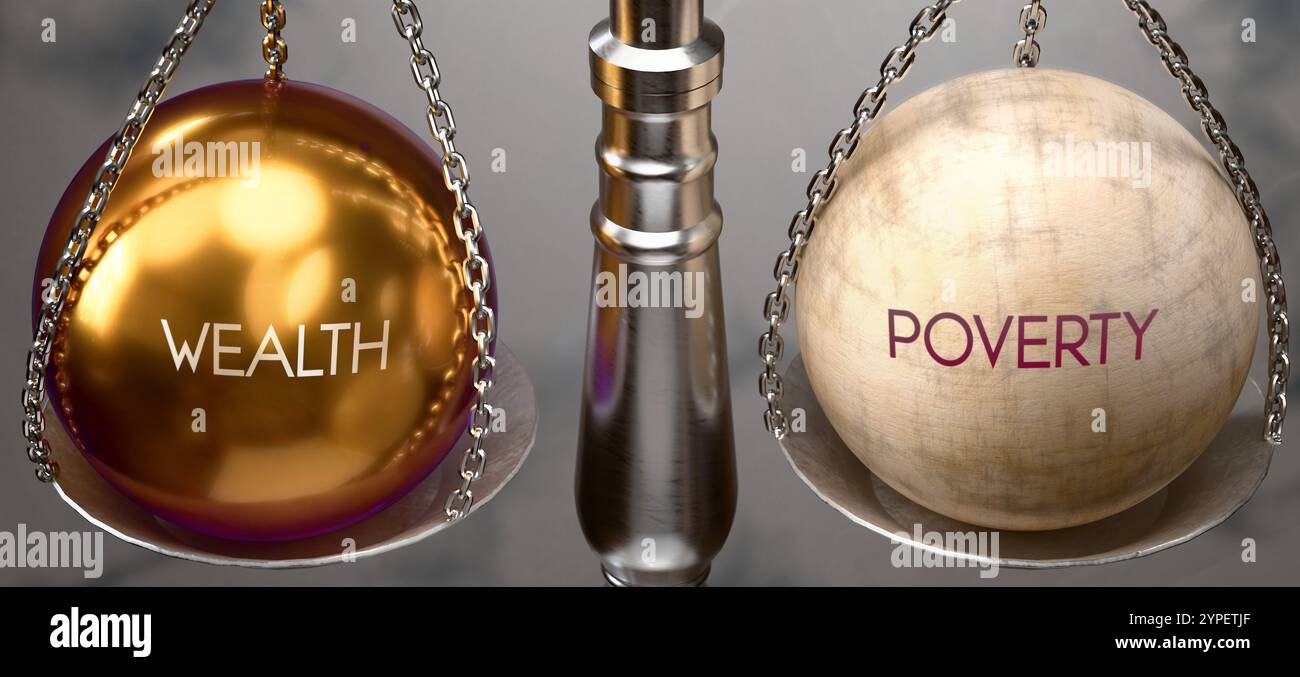
Nigeria is a poor country sitting on extraordinary wealth.
Beneath the feet of millions of Nigerians struggling to afford food, healthcare, education and decent shelter lie mineral resources the Federal Government estimates to be worth about $700 billion. Gold, lithium and other critical minerals increasingly coveted by industries powering the twenty first century are buried beneath a country still searching for the prosperity its natural endowments have repeatedly promised.
That contradiction should haunt us as Nigeria signs a new critical minerals framework with the United States.
The agreement, signed in New York by the Minister of Solid Minerals Development, Dele Alake, and United States Deputy Secretary of State Christopher Landau, seeks to encourage American investment across Nigeria’s mining value chain, including exploration, mineral development and processing, infrastructure and technical capacity.
There is much to welcome. Particularly encouraging is Alake’s declaration that Nigeria does not intend to remain merely a source of raw materials from which other countries create value. Government says the ambition is to strengthen local processing, develop skills, create jobs and expand opportunities for Nigerian businesses.
Those are the right objectives. But Nigeria has been wealthy beneath the ground before.
For more than six decades, oil promised transformation. Hundreds of billions of dollars flowed from the Niger Delta into government accounts, yet many communities sitting above that wealth remained poor, environmentally damaged and inadequately developed. Nigeria exported crude oil while importing refined petroleum products for years, surrendering much of the value that should have been created at home.
We cannot afford to reproduce that history with solid minerals.
The global race for critical minerals presents Nigeria with an unusual opportunity. Lithium, rare earths and other strategic minerals are increasingly important to batteries, electric vehicles, renewable energy, electronics and defence industries. Competition for secure mineral supply chains gives countries possessing these resources bargaining power.
Nigeria must use that leverage wisely.
The question should not simply be how much foreign investment we can attract, but how much Nigerian value every dollar of that investment creates. How much processing will take place here? How many Nigerians will acquire technical skills? How much technology will be transferred? And what will communities living above these resources have to show when the minerals beneath them are gone?
These questions are urgent because the reality of mining in Nigeria remains far removed from the glittering figures announced at investment conferences. Illegal and informal mining remain widespread. Smuggling deprives government of revenue. Environmental degradation threatens communities, while poverty drives vulnerable Nigerians into hazardous artisanal operations.
The recent tragedy involving suspected illegal miners in Niger State makes the contradiction especially difficult to ignore. Reports indicate that many of those arrested were teenagers.
Whatever eventually emerges from investigations into their deaths in custody, another question precedes their arrest: why were children and teenagers working around dangerous mining operations in the first place?
There is something fundamentally wrong when minerals beneath a community can be worth billions of dollars while children above them are poor enough to risk their lives digging for fragments of that wealth.
Government appears conscious of some of these problems. Alake has proposed a Mine Emergency and Community Development Fund as well as an African safety facility intended to help formalise artisanal mining, encourage cooperatives and improve safety.
Formalisation is important because simply criminalising artisanal miners will not solve the problem. Many are poor Nigerians operating at the lowest and most dangerous end of a lucrative value chain from which more powerful actors often derive greater rewards. They need regulation, training, cooperatives, access to legitimate markets and basic safety standards. Criminal networks exploiting them and illegally exporting Nigeria’s resources require a different response.
There must also be transparency. If Nigeria’s mineral wealth is entering a new era, citizens should be able to follow the money from licence to mine, from mine to processor, from processor to export and from revenue to government accounts.
Mining licences cannot become political patronage. Communities cannot discover that rights over the land beneath their homes have been allocated without meaningful consultation. Environmental obligations cannot exist merely on paper, and agreements with investors must contain enforceable provisions for rehabilitation when mining ends.
Most importantly, host communities must not become spectators to wealth extracted from beneath their feet.
Nigeria should have learnt this lesson from the Niger Delta. Communities that see enormous wealth leaving their land while poverty, pollution and unemployment remain behind will eventually question the legitimacy of the system. Community development must therefore be built into the economics of mining from the beginning, not introduced years later as compensation for accumulated grievances.
The Nigeria US framework can be an important opportunity. American capital, technology and expertise can help Nigeria develop a modern mining industry. Nigeria needs investment, and there is nothing inherently wrong with foreign companies earning legitimate returns on capital and risk.
But partnership must mean more than extraction.
The old model in which Africa digs, ships and watches others manufacture must end. A tonne of mineral ore leaving Nigeria represents one value. What that mineral becomes after processing, refining and manufacturing represents something considerably greater. The difference is where industries, technology, skills and prosperity are built.
That is the wealth Nigeria has too often exported.
Alake has acknowledged that signing an agreement is the easy part and implementation the harder task. That may prove to be the most important observation surrounding this framework. Nigeria has never lacked ambitious agreements or declarations of intent. Our graveyard of economic promises is already overcrowded.
What matters is what remains in Nigeria after the speeches in New York are forgotten.
The minerals beneath Nigeria ultimately belong to Nigerians. Success will not be measured merely by billions of dollars in investment attracted or tonnes of ore exported, but by the value created above the ground.
If this new mineral economy produces Nigerian industries, skilled jobs, safer mining, thriving businesses and prosperous host communities, the country may finally turn geological fortune into human development.
But if we export the ore, export the value and leave behind poverty, dangerous pits and damaged communities, we will merely have exchanged one resource curse for another.
Nigeria already knows what it means to possess enormous wealth beneath widespread poverty.
We should not have to learn that lesson twice.
Lemmy Ughegbe, Ph.D, FIMC, CMC
Email: lemmyughegbeofficial@gmail.com
WhatsApp ONLY: +2348069716645

By Dr. Omolaraeni Olaosebikan
There is a particular kind of satisfaction that comes with paying less. In an economy where households are watching every naira, the cheaper option can feel not merely attractive but responsible. A refrigerator, television, washing machine or air conditioner appears to perform the same basic function as the more expensive alternative, so the arithmetic seems obvious: why pay more? But the arithmetic of purchase price is not always the arithmetic of value. Sometimes what looks like a saving at the point of purchase simply postpones the real cost.
That distinction matters increasingly in Nigeria, where pressure on household income has understandably made price one of the strongest influences on consumer choice. Yet the cheapest product on the shelf is not necessarily the least expensive product to own. The better question is what that product will cost over its useful life: how efficiently it consumes energy, how frequently it requires repair, whether replacement parts and competent service are available, how long its critical components are designed to last, what protection sits behind the warranty, and how quickly the owner may have to return to the market to buy another one. This is the difference between price and total cost of ownership.
We have a familiar expression for getting this calculation wrong: being kobo wise and naira foolish. It captures a behaviour that becomes especially tempting during difficult economic periods. When money is tight, immediate affordability naturally dominates attention. But repeated replacement can turn an apparently prudent decision into an expensive cycle. A product bought cheaply and replaced several times may ultimately cost more than a better-engineered alternative that remains useful for much longer. The hidden bill is not only the replacement price. It can include repairs, wasted energy, lost time, disrupted routines and the inconvenience of a product failing when it is most needed.
This is where innovation needs to be understood differently. Consumers are often presented with innovation as spectacle: another feature, another screen, another piece of technology and another reason for a higher price. That framing does innovation a disservice.
Useful innovation should solve a problem.
In a market such as Nigeria, that might mean better energy management, technology designed to cope with demanding operating conditions, smarter preservation of food, more efficient washing, easier maintenance, stronger component protection or products adapted to the way people actually live. Innovation earns its premium when it reduces friction, waste or long-term cost. Technology that merely decorates a specification sheet is not enough.
Durability, too, deserves to return to the centre of the consumer conversation. For years, the language of consumption has increasingly celebrated novelty: what is new, fashionable, cheaper or immediately available. Yet some of the strongest brands in any category are built on a much older promise — that what you buy today will still justify the decision years from now. That promise cannot rest on advertising alone. It has to be supported by engineering, warranties that mean something, accessible after-sales service, spare parts, competent technicians and a company prepared to remain accountable after the transaction has been completed.
The after-sales question is particularly important because the true relationship between a consumer and a durable-goods brand often begins after payment. The product may perform perfectly for years, but when something does go wrong, the consumer discovers whether the brand’s promise has infrastructure behind it. Is there somewhere to call? Can the fault be diagnosed? Are genuine parts obtainable? Is the warranty understandable? Can the product be repaired rather than prematurely discarded? These are not peripheral customer-service questions. They are part of the economic value of the product itself.
This also explains why two products that appear comparable on a shop floor may not really be comparable. One price may include years of research, energy-saving technology, stronger components, product testing, a service network and longer warranty support. Another may simply offer a lower entry price. Neither price alone tells the consumer enough. The task, therefore, is not to persuade people that expensive automatically means better. It does not.
A high price can be poor value just as easily as a low price can be excellent value.
The more intelligent principle is that every premium should be able to explain itself in benefits the consumer can actually experience.
What Nigeria needs, perhaps, is greater value literacy. We speak frequently about financial literacy, but consumers also need the confidence to interrogate value: not “Which one is cheapest today?” but “Which one is likely to serve me best for the money I will spend over time?” That means comparing energy consumption, warranty terms, repairability, service availability, expected durability and the usefulness of the technology being offered. It also places a responsibility on manufacturers and retailers. If a product costs more because it is genuinely engineered to deliver more, brands should communicate that difference clearly, specifically and credibly rather than hiding behind lifestyle advertising and technical jargon.
There is a wider sustainability argument here as well. A culture of frequent replacement creates waste. Products designed for longer useful lives, supported by repair ecosystems and used efficiently can reduce the pressure to discard and repurchase. The economic interest of the household and the environmental interest of society can therefore meet in the same place: buying fewer things badly and more things intelligently.
Perhaps the smarter question, then, is not simply, “How much does this cost me today?” but “What value will this still be giving me tomorrow?” In an economy where every naira matters, consumers have every reason to be price-conscious.
But price consciousness should not become value blindness.
The cheapest choice can sometimes prove remarkably expensive when replacement, repairs, energy use, lost time and poor after-sales support are eventually counted. A bargain is only a bargain if it continues to deliver value after the excitement of paying less has disappeared. Because ultimately, real affordability is not about paying the least at the point of purchase; it is about getting enduring value from what we choose to pay for. And that is why the narrative matters.
Dr. Omolaraeni Olaosebikan
Strategic Communications & Reputation Management Expert | Founder, The Narrative Matters®
-
General News1 week ago
JOHESU demands: MHWUN puts FG on notice over fresh action
-

 Politics4 weeks ago
You have demonstrated diligence, loyalty, statesmanship in leadership, Ekechi salutes Shetimma at 60
-
 Politics2 weeks ago
2027: ASAF backs APC governors, rejects rainbow coalition
-

 Politics2 months ago
2027: Advertising experts raise concerns over irregular regulation of sector
-
FCT News2 months ago
2027: Hasana-Moneme pledges skills, empowerment, credit access for FCT women
-
General News2 months ago
2027: Dame Princess Esom-Nwafor Orizu confirmed as APC flagbearer for Nnewi North /South /Ekwusigo Federal Constituency as INEC releases names of candidates
-
Uncategorized3 months ago
Rescue of Oyo schoolchilden: Tinubu commends security agencies, says action breakthrough in fight against criminality
-
General News1 month ago
Chi-Jenco CEO, Jude Orji loses mother