
General News
Tinubu orders development of 5-year defence operation plan

By Our Reporter
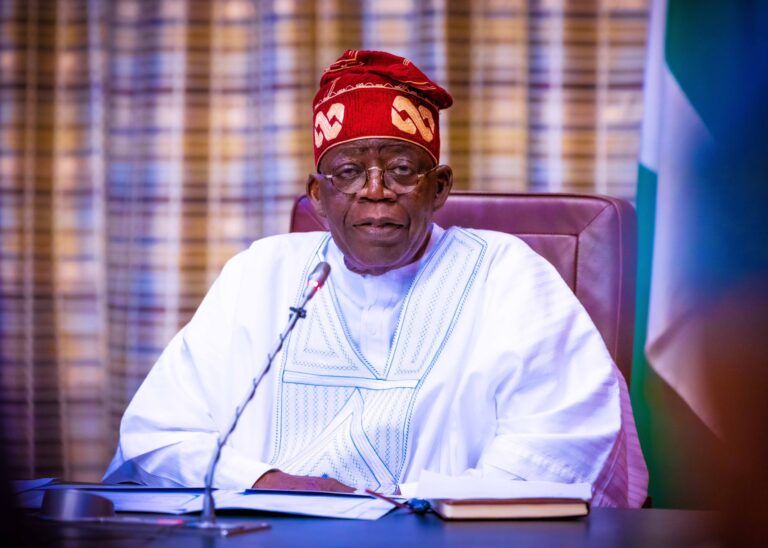
President Bola Tinubu has ordered the immediate development of a comprehensive National Threat Assessment and a rolling five-year Strategic Defence Operations Plan to strengthen Nigeria’s response to emerging security challenges.
The directive, according to a statement issued on Wednesday in Abuja by the Presidential Spokesperson, Bayo Onanuga, is aimed at improving coordination among the country’s defence, intelligence and security agencies and ensuring that national security operations are guided by clear, unified priorities.
Tinubu gave the order during a Federal Executive Council (FEC) meeting at the State House, Abuja, where he stressed the need for a coherent national framework to identify security threats, set operational objectives and determine the capabilities required to tackle them.
An 11-member committee has been constituted to prepare the strategic plan, with the President’s Special Adviser on Homeland Security, Maj.-Gen. Adeyinka Famadewa, serving as coordinator and providing secretariat support.
Other members of the committee include the National Security Adviser, Nuhu Ribadu; Minister of Defence, Gen. Christopher Musa; Minister of State for Defence, Bello Muhammad Matawalle; Chief of Defence Staff, Gen. Olufemi Oluyede; and Chief of Army Staff, Lt.-Gen. Waidi Shaibu.
Also on the committee are the Chief of Air Staff, Air Marshal Sunday Kelvin Aneke; Chief of Naval Staff, Vice Adm. Idi Abbas; Director-General of the Department of State Services, Tosin Ajayi; and Director-General of the National Intelligence Agency, Amb. Muhammed Muhammed.
The President said recent security successes, including the rescue of pupils and teachers abducted in Oriire Local Government Area of Oyo State, demonstrated the importance of intelligence sharing and effective inter-agency collaboration.
“The operation demonstrated what can be achieved when our agencies work together with a clear objective and the necessary intelligence. We must build on such successes by strengthening coordination and ensuring that all our security capabilities are directed towards clearly defined national objectives,” Tinubu said.
He noted that security and operational requirements had often been addressed individually without adequate reference to a common national threat assessment or a unified medium-term strategy.
According to him, such an approach could undermine coordination, weaken long-term planning and affect the efficient deployment of resources across the country’s various security theatres.
Tinubu directed that the National Threat Assessment should clearly identify the major threats confronting Nigeria, determine their level of urgency and establish specific operational objectives for addressing them.
He said the five-year Strategic Defence Operations Plan would convert the assessment into actionable priorities, outlining the forces and capabilities required in different theatres, existing gaps, equipment and support needs, as well as timelines for implementation.
The committee was also authorised to consult or co-opt representatives of other ministries, departments and agencies where necessary.
Tinubu directed the committee to begin work immediately and submit the completed National Threat Assessment and Strategic Defence Operations Plan within 90 days for his consideration and approval.
“Once approved, the plan will serve as the principal framework for coordinating military and defence operations over the medium term,” the President said.
“It will also provide the basis for a corresponding multi-year defence expenditure and procurement plan, ensuring that resources are directed towards agreed operational priorities and critical national security requirements.”
The President further directed the Secretary to the Government of the Federation and the Office of the National Security Adviser to take immediate steps to implement the directives.
(NAN)


By Our Reporter
The Nigerian National Petroleum Company Limited (NNPC Ltd.) has commenced a nationwide promotional campaign offering customers a ₦66 discount on fuel purchases made through its NNPC Fuel App.
The promotion, which began on October 1, will run until October 7 at NNPC filling stations across the country.
NNPC announced the initiative in a post on its X handle on Friday, saying customers had already started taking advantage of the offer at various stations.
“The ₦66 Discount Promo is ongoing & the excitement is already happening across our stations nationwide!
“All over Nigeria, our customers are getting in on the action & there’s still time for you to benefit!
The promo runs from 1–7 October on the NNPC Fuel App,” the post read.
The company said activities had commenced at several of its stations nationwide, with highlights from the first day of the promotion shared with the public.
NNPC urged motorists and other customers to continue using the Fuel App for their transactions throughout the seven-day campaign in order to benefit from the discount.
“Keep fueling, keep transacting and keep your eyes on our pages,” the post read.
The national oil company also said it would continue to release pictures and updates from participating stations as the promotion progresses.
Customers have been advised to take advantage of the offer before the promotional period ends on October 7.
The ₦66 discount applies to eligible transactions made through the NNPC Fuel App during the promotion.

By Our Reporter
Public servants across Nigeria have commenced a three-day warning strike following a directive by the Joint National Public Service Negotiating Council over what the workers described as worsening economic and mental hardship.
The industrial action, which began at midnight on Friday, October 2, 2026, is expected to run through Sunday, October 4.
The council directed its national and state leadership to mobilise workers for the action, with the directive contained in a circular dated October 1 and signed by the National Secretary of the JNPSNC, Olowoyo Gbenga.
The circular urged the council’s leadership to ensure that the strike notice reached workers across the country.
The decision, according to the council, followed the Federal Government’s alleged failure to respond to demands earlier presented to President Bola Tinubu in a letter dated September 21, 2026.
READ ALSO:Unions reject TUC suspension of strike, demand reversal of King’s College concession
Explaining the commencement of the industrial action, the council stated, “Consequent upon the above, the strike shall start with effect from midnight on Friday, 2nd October, 2026 to Sunday October 4th, 2026.”
The council called on public servants at the federal, state and local government levels to participate in the warning strike, saying the action was aimed at drawing attention to the economic difficulties confronting workers and their dependants.
It stated, “In the same vein, all public servants in the services of federal, state and local governments are to join the warning strike because an injury to one is an injury to all, most especially, all workers, their dependants, vulnerable and hapless Nigerians are groaning terribly under the present economic hardship.”
The JNPSNC further expressed concern over the impact of the economic situation on workers, saying, “The economic and mental hardships are becoming unbearable and frustrating.”
It also directed its leaders to commence immediate mobilisation for the industrial action, declaring, “The time to act and mobilise workers for the three-day warning strike is now!!!”
The warning strike comes against the backdrop of demands earlier submitted by the council to the Federal Government for measures to ease the pressure of rising living costs on workers.
Among the demands were a reduction in the price of petrol, an immediate wage award for workers and the commencement of negotiations for a new national minimum wage ahead of 2027.
The council had reportedly asked the Federal Government to bring down the pump price of petrol to N500 per litre, approve an immediate wage award and constitute a tripartite committee to negotiate a new national minimum wage.
The demands followed continued concerns over the declining purchasing power of workers amid increases in the prices of essential commodities, transportation and other household needs.
In its latest circular, the council urged its members to circulate the strike notice and expressed optimism about the outcome of the industrial action.
“Please, disseminate the information!!! Surely, there is victory for us!!!” the circular added.
The council maintained that the warning strike would proceed as scheduled, with public servants across the federal, state and local government services expected to take part.
Efforts to obtain a response from the Ministry of Labour were unsuccessful as of the time of filing this report.
General News
Olokoro Community Eulogises NDPHC MD/CEO Adighije for School Renovation, Development Projects

Johnchuks Onuanyim, Abuja
The people of Olokoro Clan in Umuahia South Local Government Area of Abia State have showered encomiums on the Managing Director and Chief Executive Officer of the Niger Delta Power Holding Company (NDPHC), Engr. Jennifer Adighije, for executing key development projects in the community, including the comprehensive renovation of a block of classrooms at Boys Secondary School, Umuoparazara.
The community described the projects as landmark interventions that have not only improved learning conditions for students but also reinforced Adighije’s commitment to grassroots development and community service.
Speaking during the commissioning of the projects on Nigeria’s Independence Day celebration, community leaders, traditional rulers, women groups and youth organisations hailed Adighije as a worthy ambassador of Olokoro whose contributions have brought honour and development to the clan.
The projects commissioned include the renovation of a classroom block at Boys Secondary School, Umuoparazara Olokoro, and the landscaping and installation of modern 3D flooring at the Olokoro Clan Headquarters Complex in Ahiaukwu.
The event attracted a large gathering of traditional rulers, government representatives, community stakeholders and indigenes who turned out to celebrate what many described as a historic day for the clan.
In his remarks, the Federated President-General of the Olokoro Clan Development Union (OCDU), Dr. Odinakachi Umekwe, commended Adighije for her dedication to the welfare of her people and for consistently identifying with the aspirations of the community.
He noted that the renovation of the school facility would significantly improve the learning environment for students and contribute to educational development in the area.
Umekwe urged community members to safeguard and maintain the facilities, while offering prayers for greater accomplishments in Adighije’s public service career.
Speaking shortly before commissioning the renovated classroom block, Adighije attributed the successful execution of the projects to God’s grace and the productive partnership between the community and government institutions.
She assured the people that her intervention in the school would not end with the renovation, announcing plans to undertake solar electrification of the classroom block as the next phase of support.
According to her, quality education remains critical to community development and nation-building, stressing that investments in educational infrastructure are investments in the future of young people.
She also pledged to continue collaborating with the leadership of the OCDU to identify and execute additional projects that would improve the living conditions of residents.
The community further applauded the NDPHC boss for her contributions to youth empowerment, employment opportunities and other initiatives aimed at improving the socio-economic wellbeing of Olokoro people.
Traditional rulers, women leaders, youth representatives and elders who spoke at the event described Adighije as a role model and a source of inspiration to younger generations, noting that her achievements in engineering, public service and community development have made the clan proud.
In an emotional response during a grand reception held in her honour at the Olokoro Clan Headquarters, Adighije thanked the people for their overwhelming support and goodwill.
She reaffirmed her commitment to serving humanity and promoting the development of Olokoro, assuring residents that she would continue to contribute her quota to the progress of the community whenever the opportunity arises.
Her father, Senator Chris Adighije, also expressed gratitude to the people of Olokoro for the honour accorded his family and pledged continued support for initiatives that would advance the development of the clan.
The event featured cultural performances by students of Boys Secondary School, Umuoparazara, and was attended by prominent traditional rulers, community leaders, women groups, youth organisations and other stakeholders from across Olokoro Clan.
-
General News2 weeks ago
JOHESU demands: MHWUN puts FG on notice over fresh action
-

 Politics4 weeks ago
You have demonstrated diligence, loyalty, statesmanship in leadership, Ekechi salutes Shetimma at 60
-

 Politics2 weeks ago
2027: ASAF backs APC governors, rejects rainbow coalition
-

 Politics2 months ago
2027: Advertising experts raise concerns over irregular regulation of sector
-
FCT News2 months ago
2027: Hasana-Moneme pledges skills, empowerment, credit access for FCT women
-
General News2 months ago
2027: Dame Princess Esom-Nwafor Orizu confirmed as APC flagbearer for Nnewi North /South /Ekwusigo Federal Constituency as INEC releases names of candidates
-
Uncategorized3 months ago
Rescue of Oyo schoolchilden: Tinubu commends security agencies, says action breakthrough in fight against criminality
-
General News1 month ago
Chi-Jenco CEO, Jude Orji loses mother