
Main cover
Tinubu, NASS under fire for allocating over N22.15bn to renovate palaces, mosques, churches


***Atiku, CUPP raise alarm, accuse FG, NASS of misplacing priority
*** ₦780m church money meant for my Constituency aimed at curbing youthful vices
By Tony Chuddy
As the 2026 budget appropriations continue to face serious scrutiny, the federal government and the National Assembly have come under serious criticism over the alleged insertion of what the opposition and other groups have described as fictitious funds to some sections of the country in the budget.
This is as further scrutiny has revealed that the federal government allocated about N22.15 billion naira for the renovation of 106 palaces of Nigerian traditional rulers, just as about N1 billion was said to have been inserted for the purchase of musical instruments for some Nigerian churches, as well as over N8 billion for the construction and rehabilitation of mosques and churches across the country.
Reacting to the allocations, presidential candidate of the African Democratic Congress (ADC), Atiku Abubakar, berated President Bola Tinubu for alleged misplacement of priority in the budget.
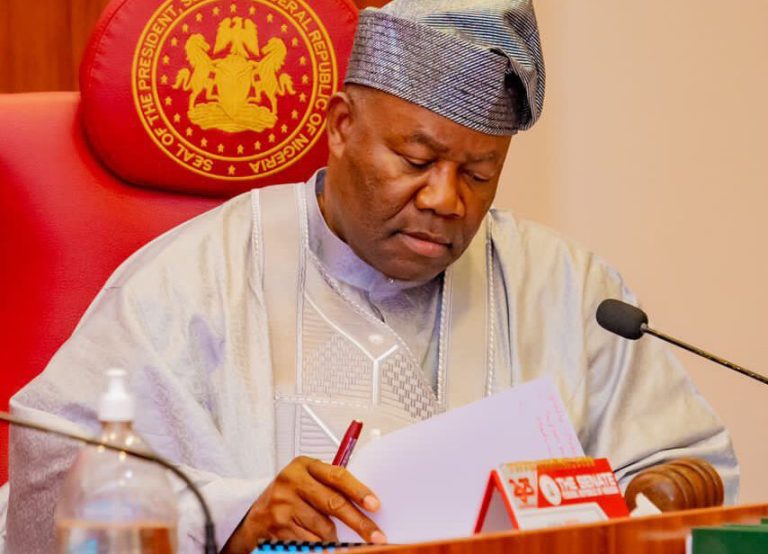
The former vice president said the federal government has no constitutional business funding the construction and renovation of palaces for traditional rulers, describing the ₦22.15 billion allocated for 106 such projects in the 2026 Appropriation Act as a constitutional aberration and an instrument for illegality and official corruption.
Atiku in a statement issued on Thursday by his Senior Special Assistant on Public Communication, Phrank Shaibu, noted that the president took an oath of office and swore to protect Nigeria’s constitution, which he argued has remained unambiguous on the distribution of governmental responsibilities and does not confer on the federal government the powers to construct or renovate palaces belonging to traditional institutions.
He said, “President Tinubu swore an oath to preserve, protect and defend the Constitution, not to amend it through the Appropriation Act. Traditional institutions are matters within the constitutional competence of state and local governments. A federal budget cannot lawfully be used to assume responsibilities that the Constitution has assigned elsewhere.
“Under which provision of the Constitution is the Federal Government appropriating ₦22.15 billion from the Federation Account for the construction and renovation of 106 palaces? Which Constitution is President Tinubu operating?”
“The 1999 Constitution did not establish, fund or assign any executive responsibility over traditional institutions to the Federal Government. Indeed, its only reference to traditional institutions is in the Third Schedule, Part II, where it merely permits states to establish a Council of Chiefs to advise their governors on chieftaincy and customary law matters. Beyond this limited advisory role, the Constitution leaves the creation, administration and funding of traditional institutions to state governments and the laws enacted by their respective Houses of Assembly. President Tinubu cannot, by the instrument of an Appropriation Act, assume powers that the Constitution deliberately withheld from the Federal Government,” he said.
Atiku noted further that the refusal of the Federal Government to disclose the identities of the traditional rulers, the locations of the projects and the communities where the palaces are located was a breach of the constitution, and a “blank cheque for corruption,” adding that the secrecy surrounding the allocations creates the legitimate suspicion that the projects exist only on paper and that even the traditional rulers in whose names the funds were appropriated may never benefit from them.
“Our royal fathers deserve dignity and respect. They must not be used as unwilling instruments to legitimise opaque and constitutionally questionable budgetary allocations. If this administration truly respects the traditional institution, it should stop hiding behind it.
“The national treasury is not a Bourdillon-based private vault, and the Appropriation Act is not a license to suspend the Constitution. No government can claim to uphold the rule of law while appropriating public funds for projects it cannot constitutionally undertake and whose beneficiaries it refuses to identify,” he declared.
He called on the Presidency, the Budget Office and all relevant Ministries, Departments and Agencies, MDAs, to immediately publish the complete list of the 106 palaces, their locations, the amounts allocated to each project, the constitutional basis for the expenditure and the procurement process through which the contracts will be awarded.
In a similar condemnation, the Coalition of United Political Parties (CUPP) rejected the budgetary allocation of ₦22.15 billion for the construction and renovation of palaces in the 2026 budget, describing it as a misplaced priority amid economic challenges facing Nigerians.
National Secretary of CUPP, Peter Ameh, said the allocation for 106 palace projects was inappropriate at a time many citizens were struggling with rising living costs, food insecurity and poverty, describing it as misplacement of priority by the federal government
Ameh argued that government resources should be directed towards programmes with direct impact on citizens, citing the Subsidy Reinvestment and Empowerment Programme (SURE-P) introduced during the administration of former President Goodluck Jonathan as an example of a social intervention programme.
He emphasised that the effectiveness of government spending should be measured by its ability to improve the welfare of ordinary citizens through job creation, support for businesses and development of critical infrastructure.
“Such an approach would ultimately benefit everyone, including our traditional rulers, who would surely prefer to see their subjects empowered and their communities thriving,” he said.
The CUPP secretary described the palace allocation as a misalignment of priorities and urged the government to reconsider its spending plans in favour of initiatives that address pressing economic concerns.
He said government policies should focus on improving the welfare of Nigerians, adding that traditional rulers would also benefit from stronger and more prosperous communities.
Ameh cited Section 14 of the 1999 Constitution, which states that the security and welfare of the people shall be the primary purpose of government.
This is even as the Deputy Speaker of the House of Representatives, Benjamin Kalu, has defended the ₦780 million provision in the proposed 2026 budget for churches in Bende Federal Constituency, describing it as part of a broader youth re-orientation and social support programme aimed at curbing narcotics abuse, sexual offences and violent crimes among young people.
Kalu made the clarification in response to media reports alleging that ₦1 billion had been inserted into the budget solely for the procurement of musical instruments for churches in Bende, Abia State.
The Deputy Speaker in a statement issued by his Chief Press Secretary, Levinus Nwabughiogu, clarified that the actual allocation is ₦780 million after VAT and other tax deductions, adding that it is earmarked for a programme to be delivered through faith-based organisations across the constituency.
The statement explained that Bende Federal Constituency has 13 federal political and electoral wards and over 200 churches, with the first phase of the programme targeting 130 churches — approximately 10 churches per ward.
It noted that each selected church would receive between ₦5 million and ₦6 million to expand existing youth engagement platforms focused on character reform and community outreach.

** DSS kicks, demands death sentence, set to appeal judgement
By Eze Nzeh
There are strong indications that the Department of State Security (DSS) may again head to the appeal court to challenge yesterday’s high court judgement that sentenced three Oriire, Oyo State school abductors to life imprisonment.
Recall that the abductors, who were alleged to belong the Ansari terrorist group abducted about 46 Oyo school children and teachers, who were held in captivity for 56 days before they were reportedly rescued by a joint security forces comprising the DSS, Nigerian military, the Police and Nigeria Civil Security Defence Corps.
The group also beheaded a one of the teachers while in captivity, while one was similarly killed during the kidnap operation.
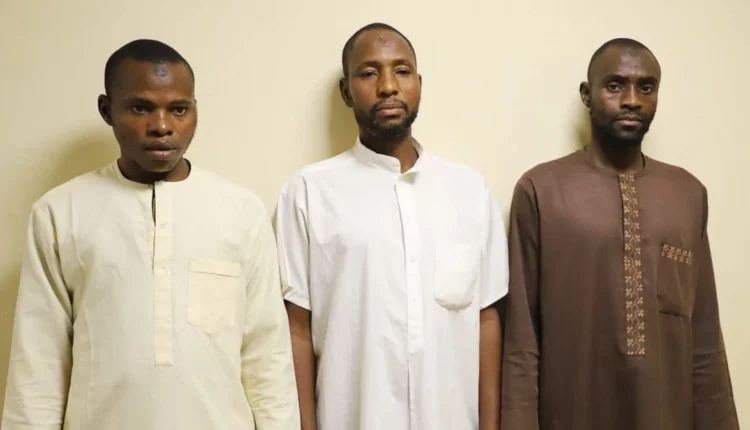
The Federal High Court in Abuja on Thursday, sentenced three persons who were arrested and charged by the DSS for their involvement in the Oriire school killings and abductions to life in prison over their complicity.
Justice Salim Ibrahim in his ruling, convicted and sentenced the defendants, Abdulrazak Umar (a.k.a. Abu Khalifa/Abu Khalid), Yunusa Musa (a.k.a. Yunusa bin Musa), and Shamsu Adamu Sani (a.k.a. Abu Itisar), after they pleaded guilty to some of the 10 count charges that were read before them, which included terrorism, kidnapping, concealment, incitement, and illegal mining amongst others.
Following their arraignment, they admitted that they concealed information about the masterminds of the school attack.
The defendants also admitted to be members of Darul Salam, which was described as an affiliate of Jamaatu Asarul Muslima Fi Bilandis Sudan (Ansaru), a proscribed terrorist organisation in Nigeria.
Following their guilty pleas, leader of the federal government prosecutibg team, the Director of Public Prosecution of the Federation, Rotimi Oyedepo, SAN, who is also the Director of Public Prosecution, urged the court to sentence the defendants on the counts they admitted.
But the defence counsel, however, pleaded with the court for leniency, describing them as first-time offenders who had shown remorse by pleading guilty.
The defence counsel argued that the charges they admitted were not directly related to the kidnapping itself and appealed to the court to consider their family responsibilities, noting that they were married men with children and had aged parents dependent on them.
However, prosecution counsel further countered the defence counsel’s position. arguing that the convicts were aware of the activities of those involved in the attack and, as responsible citizens, ought to have reported the information to security authorities.
The court, after considering the submissions of both parties, convicted the defendants and sentenced them to life imprisonment.
The convicts, who are all from Suleja LGA of Niger State, were among other charges, alleged to have conspired with one Muhammad Sani, Jibril Mohammed, and Ibrahim Khabab, between January and May 2026, to kidnap school children and teachers in Oyo State, contrary to Section 26(1) of the Terrorism (Prevention and Prohibition) Act, 2022.
The prosecution also noted that by their membership in the Ansaru terrorist sect, they were alleged to have acted in breach of Section 25(1) of the Terrorism (Prevention and Prohibition) Act, 2022.
It would be recalled also that another federal high court in Abuja had last week, sentenced two top commanders of the Ansaru terrorist organisation who were also captured by the DSS, to life imprisonment.
The commanders, were Mahmud Muhammad Usman (Abu Bara’a) and his deputy Mahmud al-Nigeri (Mallam Mamuda).
Recall also that part of the demand by the Oriire school abductors were the unconditional barter release of the arrested Ansaru commanders for the release of the abducted school children and their teachers. This, the federal government rejected before they were rounded up and eventually arrested and rescued the abducted school children and teachers after 56 days in the Oyo National Park forest.
However, the Department of State Services, (DSS) rejected the court ruling on the Ansaru commanders and expressed their readiness to challenge it at the appeal court, insisting that the punishment does not reflect the gravity of their crimes committed by the terrorists.
Justice Emeka Nwite had on Monday sentenced Abubakar Abba, also known as Abu Bara’a, and Mahmud Usman, alias Isah Adam/Mahmud, to life imprisonment after they pleaded guilty to a 32-count terrorism charge filed against them by the DSS on behalf of the Federal Government.
While rejecting the earlier sentences, the security agency claimed that the Oriire abductors had demanded the unconditional release of the two Ansaru commanders as a condition for freeing the victims and allegedly beheaded two teachers to pressure the government.
“The reason the terrorists beheaded the two Oriire teachers was to put pressure on government to release these two Ansaru commanders. It, therefore, wouldn’t be fair to see two men beheaded and their families are made to live with the losses without adequately bringing the culprits to book,” the DSS was quoted as saying.
-
Uncategorized2 weeks ago
INEC flags off Mega Continuous Voter Registration Centre, enrols 31,835 new voters
-
Uncategorized2 weeks ago
Ignore unverified HIV figures on social media, verify through official channels, says ANSACA boss
-
Uncategorized2 weeks ago
PCC Anambra Commissioner pays courtesy visit to FRSC sector commander
-
Uncategorized2 weeks ago
My service to my country gave me a profound sense of who I am – Former PSC Boss, Chief Simon Okeke
-
Uncategorized2 weeks ago
Rescue of Oyo schoolchilden: Tinubu commends security agencies, says action breakthrough in fight against criminality
-
Uncategorized3 weeks ago
Hello world!
-
Uncategorized2 weeks ago
COOU Law Faculty honours Chief Dr. Simon Okeke (Ochendu)
-
Uncategorized2 weeks ago
Police arrest parent, two others over alleged killing of teacher who disciplined pupil in Kogi