
Uncategorized
NSIA extends $220,000 grants to Nigerian innovators

…SMEs backbone of Nigeria’s economy – Oyedele
By Sam Otuonye
The Nigeria Sovereign Investment Authority (NSIA) has awarded $220,000 as grant to Nigerian innovators who won the competition under the NSIA Prize for Innovation (NPI) Demo Day, even as the Minister of Finance and Coordinating Minister of the Economy, Taiwo Oyedele, described Small and Medium-sized Enterprises (SMEs) as the backbone of Nigeria’s economy, stressing that their growth is critical to job creation, economic prosperity and national development.
Speaking at the event, held on Saturday, October 24, 2026, in Abuja, the Managing Director and Chief Executive Officer of NSIA, Aminu Umar-Sadiq, who stressed the critical role of small and medium-sized enterprises (SMEs) in job creation and economic growth, said supporting entrepreneurs remained a fundamental component of the Authority’s investment strategy.
The NPI 4.0, reflecting the fourth in the series, themed, “Building for Impact,” showcased 12 finalists selected from approximately 6,000 applications submitted for the competition.
Umar-Sadiq stressed that SMEs were essential to Nigeria’s economic development, noting that their growth was directly linked to employment generation and increased economic activities.
“Without SMEs, you have no job creation. Without SMEs, you are unable to actually grow economically,” he said.
He explained that NSIA’s support for entrepreneurs extended beyond infrastructure investment to include initiatives such as the Fund for Agricultural Finance in Nigeria, the Development Bank of Nigeria and the NSIA Prize for Innovation.
According to him, the programme provides promising Nigerian innovators with education, equity and exposure to help them refine their ideas, strengthen their businesses and scale their operations.
Umar-Sadiq said the authority focused on healthcare, manufacturing and food systems in the fourth edition to encourage innovations capable of creating jobs and achieving sustainable growth.
He added that the programme had expanded over the past four years in terms of prize money, strategic partnerships and support for entrepreneurs.
The NSIA chief executive disclosed that the programme offered accelerator opportunities to the top 200 applicants, while the 12 finalists would also participate in a six-week learning programme at Lagos Business School after the Demo Day.
He identified Wema Bank, Pula and Cascador as strategic partners providing additional prizes and support to selected finalists.
On measuring the programme’s impact, Umar-Sadiq said NSIA would work closely with beneficiary companies to strengthen their business models, improve corporate governance and expand demand for their products.
The Minister of Finance and Coordinating Minister of the Economy, Prof. Taiwo Oyedele, represented at the event, said that although investment, infrastructure, industrialisation and fiscal stability remained important economic priorities, but the strength of the economy ultimately depended on businesses that produce goods, deliver services, employ citizens and create opportunities.
Oyedele said access to finance alone was insufficient to guarantee business success, noting that entrepreneurs also need patient capital, experienced investment partners, market access and opportunities to demonstrate the commercial viability of their ideas.
He described the NSIA Prize for Innovation as an important platform for preparing promising Nigerian businesses for sustainable growth, commending the NSIA for placing commercial viability and execution capacity at the centre of its selection process.
Among the winners were: Come Again Foods, who emerged as the first-prize winner, receiving $100,000, while Protein Kapital secured the second position with $70,000. Instant Rad placed third, receiving $50,000.
Other finalists recognised under the programme included Eight Medicals, Frotics, Plural Health, Ebees Green, Tryctor, Sambal Enterprise, Evet Africa and Unwana Energy.
NSIA Prize for Innovation, (NPI) was launched in 2022 to identify and support innovative Nigerian businesses with the potential to create jobs, address economic challenges and contribute to national development.
The initiative is designed to strengthen Nigeria’s innovation ecosystem by connecting entrepreneurs with funding, business education and strategic partnerships to help promising enterprises grow into sustainable businesses.

General News
Lawyer petitions EFCC, seeks probe of Oyo’s N30bn Bodija explosion fund, N100bn prosperity bond
Ade Oyebode
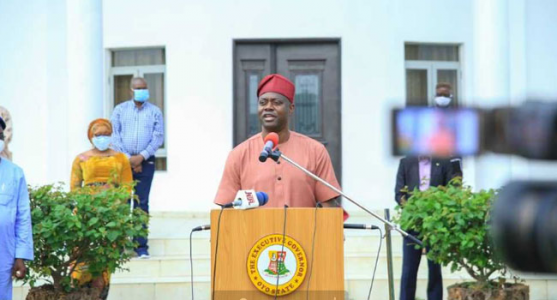
A legal practitioner has petitioned the Economic and Financial Crimes Commission (EFCC) to investigate Oyo State government’s handling of public loans, bonds and budgetary expenditures between 2019 and 2026, raising concerns over a N30 billion federal intervention fund for victims of the January 2024 Bodija explosion.
The petition, filed on behalf of Mr. Akinloye Olusegun by his solicitors on October 20, asked the anti-graft agency to conduct a forensic audit of the state government’s finances and establish how funds approved for infrastructure, healthcare and other public projects were disbursed and utilised.
The lawyers specifically requested an investigation into the N30 billion Bodija explosion intervention fund, which they alleged the state government had acknowledged was domiciled in its Infrastructure Support Account with First Bank of Nigeria Plc. and remained untouched as of December 31, 2025.
They questioned why victims of the explosion were allegedly yet to see the expected reconstruction, more than a year after the funds were released, while also demanding an explanation for the reported expenditure of N24.6 billion from the state government’s own resources on infrastructure and victim support.
The petition, addressed to the EFCC chairman, was submitted pursuant to Sections 6 and 7 of the EFCC Act, 2004, and Section 15(5) of the 1999 Constitution, as amended.
According to the solicitors, their client, an indigene of Oyo State, wants the commission to establish whether the state government complied with public finance regulations and determine whether any public funds were mismanaged or diverted.
The petition traced the controversy to the January 16, 2024 explosion in the Bodija area of Ibadan, which it said killed two people and injured 77 others.
It stated that the Federal Government approved N50 billion for reconstruction, following the disaster, with N30bn subsequently released through the Central Bank of Nigeria (CBN) on November 4, 2024.
The solicitors cited a public statement attributed to the Oyo State Commissioner for Information, Prince Dotun Oyelade, acknowledging that the N30 billion was held in the state government’s Infrastructure Support Account number 2045199879 with First Bank.
The petition alleged that the money remained untouched as of December 31, 2025.
It further stated that the state government claimed to have spent N24.6 billion from its own resources on the intervention, comprising N20.141 billion for infrastructure and N4.085 billion for victim support.
The lawyers asked the EFCC to verify the account balance, establish the movement of the intervention funds and audit the state government’s claims concerning expenditure on the explosion’s aftermath.
They also requested that First Bank produce the account statement and transaction history from November 4, 2024, to date, while the CBN and Federal Ministry of Finance should confirm the approval and disbursement trail of the federal intervention money.
The allegations in the petition have not been independently established.
Beyond the Bodija fund, the solicitors called for a comprehensive investigation into several loans and bond facilities allegedly obtained by the Oyo State government between 2019 and 2025.
The facilities listed in the petition include a N10 billion infrastructure loan in 2019, a N7.6 billion CBN agricultural loan for the Akufo/Eruwa Farm Settlement, a N2.5 billion health loan and a N20 billion loan facility in 2020.
The lawyers also listed a N100 billion Prosperity Bond issued in 2021/2022, allegedly linked to the Iseyin – Ogbomoso road, Ibadan Circular Road, Ibadan Airport upgrade and the Ibadan Dry Port/Rail Corridor.
Another facility identified in the petition was a N50 billion CBN Differentiated Cash Reserve Requirement (DCRR) facility captured in a 2021 supplementary budget.
The petition said the allocation comprised N25 billion for the Circular Road, N15 billion for the Iseyin – Ogbomoso road and N10 billion for the airport.
The solicitors further questioned a N200 billion bond approved in June 2025 for refinancing existing bank facilities allegedly attracting interest rates of between 22 and 26 per cent to rates of 17 to 19 per cent, with an issuance fee of 2.35 per cent.
They also listed a 55 million euro French concessional loan, estimated in the petition at about N85 billion, reportedly obtained in 2025 for the rehabilitation of health facilities, with repayment scheduled to commence under the next administration.
The lawyers urged the EFCC to verify the disbursement and utilisation of the facilities, assess compliance with the Debt Management Office’s requirements and determine whether the projects delivered value for money.
The petition also raised questions about the state’s annual budgets and supplementary appropriations from 2019 to 2026.
It listed the 2019 budget at N182 billion, the 2020 budget at N208.8 billion and the 2021 budget at N318.77 billion, including a N50 billion supplementary appropriation.
The solicitors put the 2022 budget at N294.7 billion, the 2023 budget at N352.28 billion and the 2024 budget at N517.78 billion.
For 2025, the petition listed a combined budget of approximately N984 billion, comprising N684.1 billion and a supplementary allocation of N299.8 billion.
The 2026 budget was put at approximately N1.102 trillion, comprising an initial N892.085 billion and an additional N330 billion, including a N120 billion realignment and a N210 billion supplementary budget.
The petition said the 2026 supplementary appropriation covered several projects and obligations, including the Ibadan Circular Road, Ido – Eruwa Road, Airport – Ajia – New Ife Road, Saki – Igboho Road and Apete – Awotan – Akufo Road.
Other listed items included the Ladoke Akintola Airport, Government House, debt servicing, gratuity payments and local government elections.
The solicitors asked the commission to examine the appropriations against actual releases, expenditure records and project implementation to establish whether public funds were properly accounted for.
In its prayers, the petition urged the EFCC to conduct a forensic audit of the listed loans, bonds, annual budgets and supplementary budgets.
It also asked the commission to investigate the reported N24.6 billion expenditure on the Bodija explosion intervention and determine whether any financial crime, criminal breach of trust, project cost inflation or violation of public procurement laws occurred.
The solicitors said they were prepared to provide relevant publications and supporting documents and produce their client to adopt the petition under oath.
Ade Aremu
A public policy analyst, Adeyemo Adebisi, has warned politicians, journalists and social media users against knowingly publishing false election results in the 2027 general elections, saying offenders risk a four-year imprisonment upon conviction and possibly with a fine.
Adeyemo gave the warning in an article aimed at educating Nigerians on the legal implications of announcing or circulating fabricated election results before the Independent National Electoral Commission (INEC) declares the winners.
He said the growing use of social media and artificial intelligence to spread misleading election information made it necessary for citizens to understand the legal consequences of deliberately publishing false results.
According to him, Section 124(4) of the Electoral Act 2026 provides for four years imprisonment for anyone convicted of announcing or publishing an election result known to be false or at variance with the signed certificate of return.
He cautioned politicians, party agents, bloggers, influencers, broadcasters and ordinary social media users against presenting fabricated figures as official election results.
Adeyemo, however, clarified that Nigerians could campaign for their preferred candidates, analyse electoral performance and share authentic polling-unit figures, “provided they did not knowingly publish false results or misrepresent unofficial figures as official declarations.”
He explained that Section 25 of the Electoral Act 2026 identified the electoral officers of INEC as responsible for official announcements and declarations, stressing that independent calculations or figures circulated online could not replace the legally-authorised declaration.
The analyst also raised concerns about the potential misuse of artificial intelligence to create fake result sheets, manipulate videos and generate audio recordings falsely portraying electoral officials as announcing winners.
He warned that knowingly using AI to manufacture and circulate false election results could attract prosecution where the elements of an applicable offence were established.
Adeyemo further cited “Section 124(3) of the Electoral Act 2026, which criminalises specified conspiracies involving polling agents, political parties or party agents to make false declarations of election results.
”The provision prescribes a maximum fine of N2 million, imprisonment for 12 months, or both.”
He added that Sections 124(4), 124(5) and 124(6) prescribe three years’ imprisonment for specified offences involving the knowing delivery of false certificates of return, with the penalty under Section 124(5) carrying no option of a fine.
On the use of social media, Adeyemo warned against assuming that online publications were automatically protected as personal opinions.
He cited Section 24(1)(b) of the Cybercrimes (Prohibition, Prevention, etc.) Act, as amended in 2024, “which criminalises knowingly sending false messages through computer systems for specified purposes, including causing a breakdown of law and order or posing a threat to life.”
He said the offence attracts a fine of up to N7 million, imprisonment for up to three years, or both, where the statutory requirements are established.
The analyst also recalled that the National Broadcasting Commission (NBC) disclosed in March 2023 that it had sanctioned 25 broadcasting stations for breaches during the presidential election period.
He said the commission specifically sanctioned one station for announcing election results before INEC, contrary to the Nigeria Broadcasting Code.
Adeyemo noted that suspected electoral offences could lead to arrest, criminal investigations, the preservation of relevant digital evidence and prosecution where the law permitted and fine.
He stressed, however, that any arrest, seizure or forensic examination of electronic devices ought to comply with applicable legal requirements, while also noting that deleting a post would not necessarily eliminate evidence of a suspected offence.
The analyst said Section 148 of the Electoral Act 2026 provides for the prosecution of electoral offences by INEC legal officers or appointed legal practitioners before the appropriate courts.
“Elections are decided by voters, not by the speed of social media announcements.
“Ignorance of the law is no excuse,” he said, urging Nigerians to exercise caution before publishing election-related information.
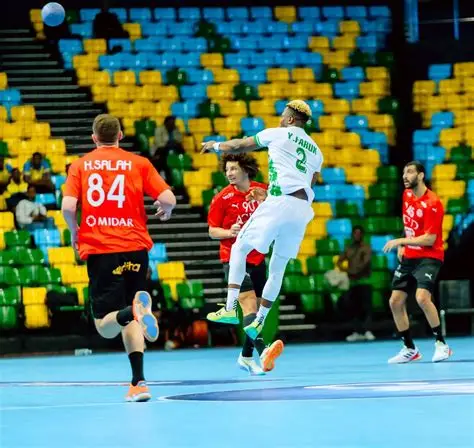
The Handball Federation of Nigeria (HFN) has introduced a mandatory national transfer and loan fee of ₦250,000 for players moving between clubs in the country, with the policy set to take effect from November 1, 2026.
The policy, contained in a circular signed by HFN President, Jibril Saidu Ojih (FNIQS), is aimed at ensuring proper documentation of player transfers, protecting clubs that invest in players’ development and bringing Nigeria’s handball transfer system in line with the regulations of the International Handball Federation (IHF) and the Confederation of African Handball (CAHB).
A statement issued by Cosmos Chukwuemeka Akisi, Media Officer and Vice Chairman,
HFN Media Commission, said the directive, according to Jibril Saidu Ojih, applies to clubs in the Nigeria Handball Premier League and National Division One, state associations, military and para-military clubs, and handball academies. It covers local transfers, international transfers and loans involving male and female amateur and professional players.
Under the new policy, a club signing a player from another Nigerian club must pay a transfer fee of ₦250,000 to cover administrative charges and compensation for player development. Of the amount, ₦100,000 will go to the HFN as administrative charges, while ₦150,000 will be paid to the club releasing the player. The same fee applies to loans between Nigerian clubs for each season, with loans limited to one season but renewable.
The HFN President said the policy became necessary following its observation that several local and international transfers involving Nigerian players were being conducted without proper procedures, the involvement of licensed agents or compensation for clubs responsible for training and developing the players.
He warned that such practices are contrary to Article 9 of the IHF Regulations, Edition of June 4, 2025, which addresses compensation and the protection of minors.
The new rules also provide additional compensation for clubs that have invested in players over a period of time. A club that trains a player for at least two consecutive seasons will be entitled to an additional ₦100,000 for each season of training if the player is transferred as a professional for the first time.
The president also clarified the criteria for determining a player’s professional status. He said player receiving match bonuses exceeding ₦50,000 per month or holding a written employment contract will be regarded as a professional. Clubs are required to submit the names of their professional players to the Federation by September 30 each year for inclusion in the IHF Transfer Management System (TMS).
Another major provision of the policy is the compulsory use of licensed agents for all local and international player transfers and loans. The Federation warned that any transfer conducted without a licensed agent would be declared null and void.
Under the prescribed procedure, a club seeking to sign a player must first send an official letter of interest to the player’s current club, with a copy to the HFN. The releasing club is then expected to issue a clearance letter, after which both clubs and the player will sign a tripartite agreement.
Upon payment of the prescribed fee and submission of proof of payment, the HFN will issue a National Transfer Certificate and update the player’s records on the IHF Transfer Management System. No player will be allowed to register or play for a new club without the required certificate.
For international transfers, the Federation reiterated that no player may move to another club or federation without an International Transfer Certificate issued through the IHF Transfer Management System. All international transfer requests must be channelled through the HFN, as direct dealings between clubs without the Federation’s involvement are not permitted.
The circular further states that international transfers involving players below the age of 16 are prohibited, while players aged 16 to 18 require IHF approval, alongside evidence that their academic and sporting welfare will be protected. All loans must also be supported by a three-party agreement specifying the duration of the arrangement.
In line with international regulations, clubs that train professional players may also be entitled to education compensation of up to CHF 3,500 per season.
The HFN warned that clubs and other stakeholders who fail to comply with the new policy will face strict sanctions. These include forfeiture of matches in which an ineligible player is fielded, with the offending team losing three points and 10 goals, as well as a non-negotiable fine of ₦500,000 and a ban from transfer activities for two transfer windows.
“International violations will be referred to the IHF and CAHB for further sanctions, including possible compensation of CHF 3,500.”
The Federation also stated that any agent not recognised by the CAHB or IHF who is found to be involved in a player transfer will face a ban and a non-negotiable fine of ₦300,000.
The HFN said the policy is part of its efforts to strengthen the administration of handball in Nigeria, protect clubs that invest in player development and ensure that player transfers are conducted transparently and in accordance with international standards.
All clubs, state associations, academies and other handball stakeholders have therefore been directed to familiarise themselves with the new regulations and ensure full compliance ahead of the November 1, 2026 commencement date.
-
 General News3 weeks ago
Rivers 2027: We are not part of Rainbow Coalition – APC Legacy Group slams Wike, Fubara meeting
-
General News1 month ago
JOHESU demands: MHWUN puts FG on notice over fresh action
-

 Politics1 month ago
2027: ASAF backs APC governors, rejects rainbow coalition
-

 Politics2 months ago
You have demonstrated diligence, loyalty, statesmanship in leadership, Ekechi salutes Shetimma at 60
-

 Politics3 months ago
2027: Advertising experts raise concerns over irregular regulation of sector
-
FCT News2 months ago
2027: Hasana-Moneme pledges skills, empowerment, credit access for FCT women
-
General News3 months ago
2027: Dame Princess Esom-Nwafor Orizu confirmed as APC flagbearer for Nnewi North /South /Ekwusigo Federal Constituency as INEC releases names of candidates
-
Uncategorized4 months ago
Rescue of Oyo schoolchilden: Tinubu commends security agencies, says action breakthrough in fight against criminality