
General News
IPMAN kicks as petrol importation soars


**”Warns importation could affect price stability
*** Again, marketers hike petrol pump price
By Nkem Okereh
The Independent Petroleum Marketers Association of Nigeria (IPMAN) has expressed concerns about the reported increase in the importation of petrol into the country.
IPMAN warned that the uncontrolled rise in issuance of petroleum product import licences could worsen price instability, increase pressure on the naira and push petrol prices higher.
National Publicity Secretary of IPMAN, Chinedu Ukadike, who raised the alarm on Sunday, expressed the association’s concern, noting that imported petrol was entering the Nigerian market at prices above locally refined products, thereby undermining efforts to stabilise the downstream sector.
This is even as marketer have hiked the pump price of petrol across the country, as they now sell between N1200 to N1300 per litre, as against the earlier N1800, citing the rise in crude oil prices and adjustments in depot prices by Dangote Refinery and other suppliers, which it blamed on the renewed pressure on oil, following the return of hostilities between the United States of America (USA) and Iran that brought back uncertainty on the Strait of Hormuz.
It would also be recalled that the Nigerian Midstream and Downstream Petroleum Regulatory Authority, NMDPRA, in its June report, said the importation of Premium Motor Spirit, PMS, jumped by 207 per cent to 18.1 million litres per day in June 2026 from 5.6 million litres per day in May as daily petrol consumption surged by 7 per cent to 50.6 ml/d.
NMDPRA data showed that while fuel imports surged significantly, petrol production at Dangote Refinery declined by 22 per cent to 32.5 million litres per day in June from 41.5 ml/d in May.
This means that the country imported more PMS in June than in May. This comes as NMDPRA issued import licences to petroleum product marketers in the period in view.
Ukadike said independent marketers had reviewed developments in the downstream sector, including the import licence regime, price fluctuations and the increasing use of foreign exchange for petroleum transactions.
The IPMAN spokesperson called on the Federal Government, through the Nigerian Midstream and Downstream Petroleum Regulatory Authority (NMDPRA), to urgently address the challenges affecting pricing and supply stability.
He noted that the recent approval of import licences, which was expected to serve as a competitive check on domestic refinery prices, had instead introduced more uncertainty into the market, adding that some companies granted import licences were offering petrol at about N1,350 per litre, a price he described as higher than the rate at which Dangote Refinery supplies marketers.
“What is the essence of issuing this price? This will create a lot of tension in society,” he said, warning that continued volatility was making business planning difficult for independent marketers.
He argued that imported petrol has a landing cost estimated to be about 20 per cent higher than locally refined products from Dangote Refinery, adding that reliance on costly imports was putting additional pressure on Nigeria’s foreign exchange reserves.


By Our Reporter
The Nigerian Consumer Credit Corporation (CREDICORP) has launched a financing scheme to provide affordable consumer credit for laptops and other digital devices to beneficiaries of the federal government’s three million technical talent (3MTT) programme.
The initiative, known as Credit for Laptops, Internet, Connectivity and Knowledge Digital Devices (C.L.I.C.K.D, was unveiled on Tuesday in Abuja in partnership with the federal ministry of communications, innovation and digital economy.
According to a statement by the corporation, the programme will initially provide 1,000 locally assembled laptops to eligible 3MTT fellows through the Learn2Earn platform, with 77 beneficiaries receiving devices at the launch ceremony.
CrediCorp added that Fidelity Bank will serve as the credit administration partner, while the National Agency for Science and Engineering Infrastructure (NASENI) and Imose Technologies will assemble the laptops.
Speaking at the event, Bosun Tijani, minister of communications, innovation and digital economy, said the initiative is designed to ensure Nigerians have access to both digital skills and the tools required to participate in the country’s growing digital economy.
“Nigeria’s digital economy can only thrive when our people have both the skills and the tools to succeed,” Tijani said.
“Through C.L.I.C.K.D., we are helping qualifying Nigerians participate more fully in the opportunities created by the 3MTT initiative while strengthening local manufacturing through the use of locally assembled devices.”
Uzoma Nwagba, managing director and chief executive officer of CREDICORP, said the scheme removes the upfront cost of acquiring digital devices while promoting responsible consumer credit and local manufacturing.
“C.L.I.C.K.D. transforms digital devices from a barrier into an opportunity. By embedding affordable consumer credit into a national talent programme like 3MTT, starting with locally assembled laptops, we are giving qualifying Nigerians a responsible pathway to the tools they need to learn, work and earn, while advancing the federal government’s vision for industrial development and job creation on both sides,” Nwagba said.
CREDICORP said the initiative is its flagship device financing programme and will subsequently be expanded beyond the 3MTT programme to cover other categories of internet-enabled devices and digital tools for working Nigerians.
The corporation added that it plans to work with additional financial institutions, device manufacturers, technology vendors, the Central Bank of Nigeria (CBN), training institutions and other partners to scale access to affordable digital devices nationwide.
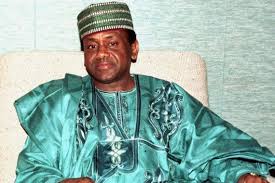
The late Sani Abacha
*** Ex-DSS director reveals how former doctor died in his new book
*** Says it’s a window Major Al-Mustapha missed
Twenty eight years after his death, fresh revelation has emerged on how Nigeria’s former head of the military regime, late Gen. Sani Abacha died
Making a stunning revelation in his book, DSS @40, My journey behind the Shield,’ which was presented to the public on Tuesday in Abuja, a former Assistant Director of the Department of State Services (DSS), Dennis Amachree, claimed that Nigeria’s former military Head of State, Gen. Sani Abacha, died from cardiac arrest during an intimate encounter with his mistress at the Presidential Villa in Abuja.
Amachree, who served as Assistant Director, Operations and Intelligence at the DSS Lagos office, when late General Abacha was the head of Nigeria’s military junta, recounted what he described as the events surrounding his death on June 8, 1998.
He explained that the events began after Abacha’s girlfriend arrived at the Aso Rock Guest House with her younger sister, a pharmacist who was in Abuja for a conference.
According to Amachree, “At approximately 2.40 am, shortly after Gen. Useni left, Abacha’s girlfriend, an Igbo lady (name withheld), arrived at the Aso Rock Guest House from the Nicon Nuga Hilton Hotel.”
“With her was her younger sister, a pharmacist who was in Abuja for a conference. The Head of State had just bought his girlfriend a new SUV, and they decided to stop by to say hello to ‘Oga’.
“Abacha was taken with the younger sister, and after a short while, the girlfriend returned to the hotel, leaving the pharmacist alone with the Head of State.”
The former senior security officer further claimed that the former military ruler became unresponsive during the encounter.
“At about 4.05 am, as they were getting intimate, the pharmacist realized Abacha had stopped moving. She called out to him, but he was unresponsive and stiff. She checked his pulse; there was none.
“In a state of panic, she quickly dressed and left the guest house, telling the soldier on guard duty that ‘Oga’ had asked for a car to take her back to her hotel,
“The soldier, unaware of the gravity of the situation, promptly arranged for her transportation. She returned to the Hilton, and after telling her sister what had happened, was quickly driven to the Abuja Airport to catch the 7 a.m. Okada Airline flight to Lagos.”
The retired DSS officer explained further that security operatives later realised she had been with Abacha shortly before his death.
“This is the window Major Al-Mustapha missed. When he was finally informed of Abacha’s instability at 5 a.m., he asked who had been with the General. He was told about the girlfriend’s younger sister, whom they had just dropped off at the Hilton.
“The State Security Service (SSS) was immediately informed and went to the Hilton to arrest the girlfriend, but the pharmacist they urgently needed was already on her way to Lagos.”
Amachree recalled that the woman was later traced to Lagos, adding that he personally interrogated her before she was flown back to Abuja.
He writes: “My team located and brought her to my office. I interrogated her myself. The first thing she said to me was: ‘I did not kill him, he died on top of me.’
“After her detailed account, I called the Director in Abuja, and she was immediately flown back.
“The lady pharmacist’s account, on whom Abacha apparently had a coitus-induced cardiac arrest, remains the true position, and puts an end to the conspiracy theories and half-truths that have gone viral,” he maintained in his book
Before Amachree:s revelation, there have been several unconfirmed accounts of what led to the death of the former military strongman, with some accounts claiming that he died after eating a poisoned apple, as well as other accounts
It would be recalled that late General Sani Abacha ruled Nigeria from November 1993 until his death in June 1998. Before his death, he was allegedly plotting to transmit into a civilian president.
***Anambra gov, Senator Bamidele raise funding concerns
*** Govs Mbah, Lawal, Abiodun hail move, assure on state assemblies support
***Sen. Oshiomhole, Reps’ Dep. Speaker allay fears of abuse as Sen. Akpoti – Uduaghan, Ukeje caution
By Ezeocha Nzeh
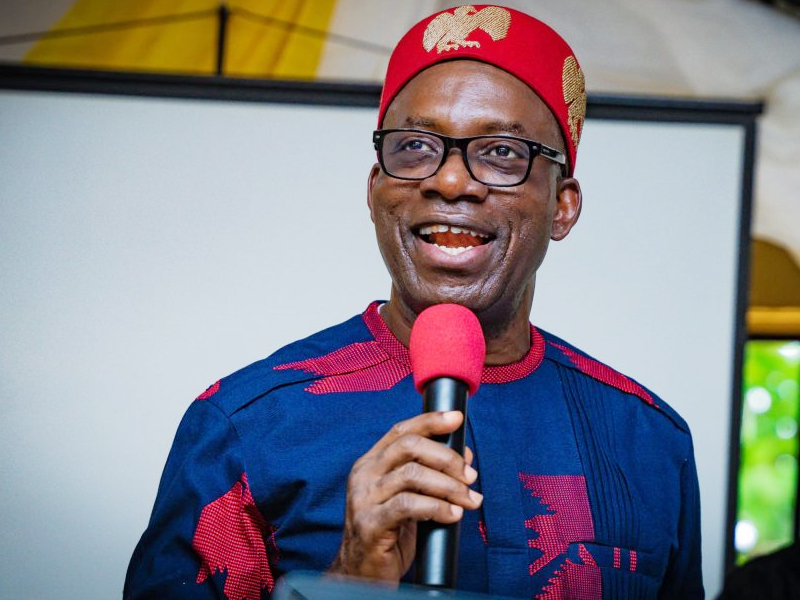
Anambra State Governor, Charles Chukwuma Soludo has raised concerns over the capacity of state governments to adequately fund the proposed state police, which is expected to take effect soon.
Governor Soludo who raised the concerns, when he spoke at the ARISE News Town Hall on State Police in Abuja on Thursday, noted that Nigeria has moved beyond debating to establish state police, adding that the focus should now be on designing an effective framework while pursuing broader constitutional reforms to strengthen the country’s federal security and justice system.
The former Governor of the Central Bank of Nigeria (CBN), who spoke virtually from Awka, his state capital, described the proposed creation of state police as part of a wider journey towards a more functional and effective federal system, even as he called for broader reforms to revenue allocation and the judiciary to guarantee affective implementation of state policing.
He commended the National Assembly for its swift response to passing the state police bills and advancing the constitutional amendment that backed up the president’s signing of the bill to establish it, noting that the national conversation has already settled the question of whether state police should exist.
“The issue is no longer whether or not to have state police. I think we have gone beyond that. The issue now is how.
“I will not spend time talking about what we did in Anambra to clear eight local government areas that were under siege, dismantle 62 criminal camps or end the sit-at-home disruptions. Those successes required coordination and collaboration with federal and private security agencies.
“There are ongoing efforts involving the National Security Adviser, the Attorney General, the Chief of Staff to the President and governors to work out the details. There are practical issues, including the types of arms and ammunition state police should use. You cannot send officers carrying inferior weapons to confront criminals armed with AK-47 rifles and General Purpose Machine Guns.”
The governor, however, emphasised state police should not be considered in isolation, stressing the urgent need for a broader restructuring of Nigeria’s security and governance architecture.
He explained that while significant progress had been made through constitutional devolution of powers —including electricity market reforms, local government autonomy and state policing—critical reforms remain outstanding.
“I am afraid this whole issue of state police should not be seen in isolation. It must be viewed within the context of what I call the unfinished business of building a sustainable federal security and justice system.”
“There are still many elephants in the room. Yes, we have seen devolution in electricity markets, local government autonomy and now state police. But responsibilities are being transferred from the Exclusive Legislative List to the Concurrent List without corresponding changes to the revenue allocation formula.
“The federal government still retains about 53 per cent of federation revenue, while states share only about 26 per cent. If we truly want sustainable federalism, then we must revisit the revenue allocation formula. The federal government should retain no more than 40 per cent of federation revenue, with the balance devolved to the states
“The second unfinished business is the federal judicial system. We currently operate what is essentially a unitary judicial structure.
“If somebody steals a pot of soup in a village in Anambra and the matter goes to court, the appeal can end up at the Supreme Court of Nigeria. Land is exclusively a state matter under the Land Use Act, yet land disputes in Anambra—which account for nearly 70 per cent of litigation and even violence because of our limited landmass—can take 30 or 40 years before reaching final judgment.”
The governor argued that such cases should terminate within state judicial institutions.
“I do not understand why issues relating to land should go beyond the state. In the United States, from where we copied our federal system, every state has its own Supreme Court
“As states begin establishing their own correctional centres, imagine convicting someone only for the appeal process to remain in the federal courts for another 30 or 40 years over a village land dispute. That does not make sense.
“As part of this conversation, we need a broader discussion about building a more sustainable federal security and justice system. That includes the devolution of resources and a fundamental restructuring of our judicial architecture.”
“Let this conversation move towards building a more sustainable federal structure. That is the unfinished business before the National Assembly and the President, who has consistently demonstrated his commitment to advancing true federalism,” Soludo stated
In his own submissions, Senate Majority Leader Opeyemi Bamidele warned that inadequate funding could expose the newly proposed security outfit to political interference, as well as criminal infiltration and undue influence from private interests.
Bamidele who called for financial independence for the agency, said that would be the only way to determine the success of state policing, stressing that the institution must not be left at the mercy of state governors.
He further explained that the constitutional amendment before the National Assembly seeks to move policing from the Exclusive Legislative List to the Concurrent Legislative List, allowing states to establish police services without making it compulsory for every state to do so immediately.
“If the state police is not well funded, it may as well be a highway to nowhere,” he said.
“It’s not every state that will immediately… say, ‘We’re launching our state police.’ All we are trying to achieve is to move this duty from the Exclusive Legislative List to the Concurrent Legislative List
“It’s not only state actors or politicians that can abuse this. Business class, some other organisations, even criminals can abuse it because it is a case of he who pays the piper dictating the tune,” he warned.
To prevent such interference, Bamidele proposed legal provisions guaranteeing an independent source of funding for state police, including setting aside a fixed percentage of every state’s annual budget for policing.
“It might mean that part of the legal provision will be that a certain percentage of the state budget will have to be reserved for the police. The mode of accessing this funding should also be clearly spelt out,” he said.
Other speakers at the Town Hall, including governors Peter Mba (Enugu state), Dauda Lawal (Zamfara state), Dapo Abiodun (Ogun state), as well as senator Adams Oshiomhole (Edo North) and the Deputy Speaker of the House of Representatives, RT Hon. Benjamin Kalu, expressed optimism that the state police will function effectively to address the increasing security challenges in the states, even as they assured that state assemblies will pass the bill together, allaying fears of abuse by state governments
Meanwhile the senator representing Kogi central senatorial district, Natasha Akpoti -Uduaghan, as well as former lawmaker and chieftain of the African Democratic Congress (ADC) Nnenna Elendu -Ukeje called for caution on the rush to establish state police.
The former Member of the House of Representatives warned that Nigeria risks building state police on a weak foundation, insisting the country must first rebuild and strengthen the Nigeria Police Force before creating 36 new state policing institutions.
While senator Uduaghan expressed deep fears that the state police could be negatively used by the controlling political actors against their opponents, Hon. Ukeje said the growing pressure to establish state police reflected Nigerians’ frustration with worsening insecurity, even as she cautioned against mistaking urgency for preparedness, insisting that while she supports devolving policing powers, the country must first put the right institutions in place.
Ukeje noted that the current centralised policing system is still struggling to cope, emphasised that the country must first set the necessary groundwork before embarking on such a far-reaching reform.
“If we do not have a strong national police force, it will be difficult to build 36 effective state police forces on the foundation of a weak national police
“As a result, the police itself has effectively been ‘de-policed’. In many places, large numbers of police officers have been killed alongside military personnel. They have not been adequately replaced. In the South-East, where many of us come from, numerous police stations have been burnt down. Those stations have not been rebuilt,” Ukeje added.
“I support devolution. However, I believe the immediate move towards state police must follow a clearly defined process,” the ex-lawmaker said.
-
Uncategorized2 weeks ago
INEC flags off Mega Continuous Voter Registration Centre, enrols 31,835 new voters
-
Uncategorized2 weeks ago
Ignore unverified HIV figures on social media, verify through official channels, says ANSACA boss
-
Uncategorized2 weeks ago
PCC Anambra Commissioner pays courtesy visit to FRSC sector commander
-
Uncategorized2 weeks ago
My service to my country gave me a profound sense of who I am – Former PSC Boss, Chief Simon Okeke
-
Uncategorized3 weeks ago
Hello world!
-
Uncategorized2 weeks ago
Rescue of Oyo schoolchilden: Tinubu commends security agencies, says action breakthrough in fight against criminality
-
Uncategorized2 weeks ago
COOU Law Faculty honours Chief Dr. Simon Okeke (Ochendu)
-
Uncategorized2 weeks ago
Police arrest parent, two others over alleged killing of teacher who disciplined pupil in Kogi