
General News
Expert urges NUPRC reform drive


A petroleum economist, Prof. Wumi Iledare, has urged the Nigerian Upstream Petroleum Regulatory Commission (NUPRC) to prioritise reforms that attract investment and improve regulatory efficiency.
Iledare, Emeritus Professor of Petroleum Economics and Policy Research at Louisiana State University, United States, made the call in an interview with NAN on Sunday.
He said the success of the Petroleum Industry Act (PIA) should be measured by economic value creation rather than licences issued or regulations enacted.
He said effective regulation should ensure Nigeria’s petroleum resources generate sustainable wealth for present and future generations.
Iledare noted that Nigeria competes with countries including Guyana, Brazil, Norway, the United States and the United Arab Emirates for investment capital.
He said investors increasingly favour jurisdictions offering regulatory certainty, transparent licensing systems, predictable policies and efficient institutions.
The economist identified lengthy approvals, overlapping responsibilities, policy inconsistencies and uncertainties surrounding host community implementation as major investment obstacles.
“Every unnecessary regulatory delay increases project costs, reduces profitability and weakens investor confidence,” he said.
He urged NUPRC to accelerate reforms by shortening approval timelines, strengthening transparency, maintaining fiscal stability and adopting digital technologies.
According to him, electronic licensing, automated reporting systems and artificial intelligence-driven compliance monitoring can significantly reduce bureaucracy and transaction costs.
He added that integrated digital platforms would improve operational efficiency and enhance Nigeria’s competitiveness in the global energy market.
Iledare stressed the importance of maintaining stable regulations throughout petroleum project lifecycles, which often extend between 20 and 30 years.
“Investors require long-term certainty because upstream petroleum investments are capital intensive and span several decades,” he said.
He also advocated investment incentives that improve project economics without undermining government revenues.
Such measures, he said, included flexible royalty structures, accelerated capital allowances, investment tax credits and performance-based incentives.
To support indigenous operators, Iledare recommended stronger reserves certification standards and greater transparency in petroleum sector data.
He also proposed reserve-based lending, infrastructure partnerships and development finance mechanisms to improve access to capital.
On security, he warned that oil theft, pipeline vandalism and production disruptions continue to undermine investment attractiveness.
“Insecurity functions as an implicit tax on investment,” he said, noting that it raises costs and reduces production efficiency.
He emphasised stronger collaboration among government, investors, operators and host communities to reduce operational risks.
According to him, trust and stable community relations help minimise project delays and improve investment outcomes.
Looking ahead, Iledare said the global energy transition should be viewed as an opportunity rather than a threat.
He urged Nigeria to position itself as a lower-carbon, lower-cost and more efficient petroleum producer.
The professor advocated expanded natural gas development, reduced methane emissions and stronger carbon management practices.
He described natural gas as a strategic transition fuel capable of supporting industrialisation and attracting responsible investment.
Iledare said NUPRC’s performance after five years of the PIA should be judged by outcomes rather than administrative activity.
He said success means investors earn competitive returns, government receives fair revenues and host communities benefit from resource development.
The economist added that Nigeria must also strengthen energy security and build greater economic resilience through effective resource management.
He said that regulatory performance should be assessed through efficiency, effectiveness, equity and ethics.
“Regulation should ultimately focus on creating value rather than simply producing more rules,” Iledare said.
He added that NUPRC’s long-term success depends on reducing risks, lowering transaction costs and maximising the value of Nigeria’s petroleum resources.

By Our Reporter
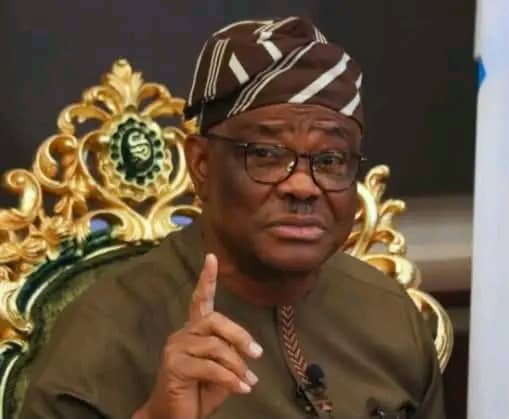
The Minister of the Federal Capital Territory, FCT, Nyesom Wike, has described the strike declared by the Nigeria Labour Congress, NLC, and the Nigeria Union of Teachers, NUT, as politically motivated blackmail aimed at paralysing the government.
Speaking during a media chat in Abuja on Tuesday, Wike claimed that the ongoing labour dispute, which has led to school closures and disrupted public education, was being driven by opposition political interests rather than genuine workers’ grievances.
The minister pointed to the political affiliations of the NLC chairman in the FCT, accusing him of harbouring partisan motives linked to the African Democratic Congress (ADC).
“It was political and so we must stop this blackmail. An ADC person who ran for election in the past area council election is the chairman of the NLC in FCT.
“What do you think he would do? To make sure that the government cripples, to use as a campaign that teachers are on strike,” he said.
Addressing accusations that the FCT Administration owes teachers unpaid entitlements and promotion arrears, Wike insisted that his administration had met its financial obligations and invested heavily in public school infrastructure.
“We are not owing. Go and see the schools today—what we have done in the schools, the rehabilitation of schools and providing the basic infrastructure.
“Labour cannot continue to blackmail us,” he said.
Expressing concern over the plight of primary and secondary school students forced to stay at home, Wike assured residents that the deadlock would soon end.
He threatened to take legal action against labour union leaders, adding that the FCT Administration’s legal advisers were finalising the suit.
“Negotiation has to end because it is the children that will suffer at the end of the day, but don’t worry, we will solve it. I will clip the wings of that NLC chairman,” he said.
Rejecting criticisms that his tough approach reflected autocratic leadership, Wike maintained that any counteraction by the FCT Administration would strictly adhere to statutory provisions and the rule of law.
The NLC FCT Council had declared an indefinite strike on October 7 over unresolved issues between the FCT Administration and the NUT

By Our Reporter with agency report
The International Monetary Fund (IMF) has advised Nigeria against restoring broad petrol subsidy, recommending targeted support for vulnerable households to cushion the impact of rising energy costs.
IMF said blanket petrol subsidies were expensive, often benefited higher-income consumers disproportionately and could worsen fiscal pressures amid rising borrowing costs.
Rodrigo Valdés, director of the IMF’s fiscal affairs department, spoke during a press briefing on the fund’s fiscal monitor at the 2026 annual meetings of the IMF and World Bank in Bangkok, Thailand, on Wednesday.
His comments followed a question on how the fund could recommend allowing energy prices to reflect scarcity when higher fuel prices in Nigeria could raise transport costs, worsen inflation and deepen poverty, particularly when the government was facing calls to restore petrol subsidy ahead of an election year.
“Protecting people is not the same as protecting the price of fuels,” Valdés said.
He said fuel subsidies or measures preventing prices from adjusting fully to an energy shock had cost countries between 1 percent and 1.5 percent of gross domestic product (GDP) in 2026.
“It’s first fiscally very costly, and second, if you look at the pattern of consumption, it’s easy to see that that subsidy is readily regressive in many places,” he said.
Valdés said governments should instead use social safety nets and household data to identify people who need assistance.
“There are better tools to deal with this,” he said.
The federal government recently announced a 30-day petrol discount at Nigerian National Petroleum Company (NNPC) Limited retail stations, with priority for public transport operators, to cushion the impact of rising fuel prices.
Taiwo Oyedele, minister of finance, said NNPC retail would sell petrol at cost by foregoing its retail profit margin, describing the measure as temporary relief rather than a return to petrol subsidy.
The government also proposed negotiating a ceiling of N1,350 per litre on petrol’s ex-gantry or landing cost, subject to monthly reviews
IMF URGES FG TO REDIRECT SUBSIDY GAINS TOWARDS VULNERABLE PEOPLE
The IMF also recommended targeted interventions to cushion the effect of higher fuel prices on transportation costs.
Davide Furceri, a division chief in the fund’s fiscal affairs department, said governments could redirect some of the resources spent on blanket subsidies towards vulnerable consumers.
“For example, you mentioned transportation costs. Yeah, gasoline could go up, and perhaps bus fees may be subsidised in a way that is a much better policy at the end of the day than just a blanket subsidy for everybody,” Furceri said.
He also suggested alternatives such as school feeding programmes, geographical targeting and assistance for vulnerable farmers.
READ ALSO: Atiku accuses Tinubu of copying his fuel subsidy proposal
Furceri acknowledged that some countries lacked household registries and digital payment systems needed to deliver targeted support effectively.
However, he said governments could adopt alternative approaches in the short term while developing stronger systems.
He recommended that assistance should be limited, targeted and temporary.
Valdés explained that fuel subsidies could worsen global energy pressures by preventing demand from adjusting when supplies were constrained.
“When you subsidise, you don’t allow, at the end of the day, demand to adjust,” he said.
“And reality is that we have less fuels in the world economy. That means that someone else has to adjust more, and the market produces a higher price for that.”
The IMF official said subsidies were not only costly and regressive but could also have spillover effects on the global economy.
TheCable

The Nigerian Communications Commission (NCC) the telecoms industry regulator, has commended Globacom on its outstanding performance in consumer complaint management and resolution.
In a letter to the company, which was signed by Kabiru S. Haruna, Principal Manager, Consumer Protection & Advocacy
Consumer Affairs Bureau (CAB), the Commission expressed happiness at Globacom’s treatment and resolution of customer issues during the month of August, 2026.
The letter read in part: “We are pleased to note that your organization achieved and surpassed the Commission’s complaint resolution thresholds of 90% and 97% for Level 2 (L2) complaints. This accomplishment reflects your commitment to regulatory compliance, consumer satisfaction, and the continuous improvement of service delivery.”
NCC noted that Globacom’s dedication to timely complaint resolution and adherence to established Service Level Agreements (SLAs) put in place by the Commission has contributed significantly to enhancing consumer confidence and promoting a positive customer experience within the telecommunications sector.
The Commission further encouraged Globacom to sustain this level of outstanding performance while continuing to implement measures aimed at further improving service quality and consumer satisfaction.
Globacom noted that constant training of its customer-interfacing staff and investment in the latest technology were responsible for observed improvement. The company promised not to relent in this regard.
-
General News3 weeks ago
JOHESU demands: MHWUN puts FG on notice over fresh action
-

 Politics4 weeks ago
2027: ASAF backs APC governors, rejects rainbow coalition
-

 Politics1 month ago
You have demonstrated diligence, loyalty, statesmanship in leadership, Ekechi salutes Shetimma at 60
-
 General News5 days ago
Rivers 2027: We are not part of Rainbow Coalition – APC Legacy Group slams Wike, Fubara meeting
-

 Politics2 months ago
2027: Advertising experts raise concerns over irregular regulation of sector
-
FCT News2 months ago
2027: Hasana-Moneme pledges skills, empowerment, credit access for FCT women
-
General News2 months ago
2027: Dame Princess Esom-Nwafor Orizu confirmed as APC flagbearer for Nnewi North /South /Ekwusigo Federal Constituency as INEC releases names of candidates
-
Uncategorized3 months ago
Rescue of Oyo schoolchilden: Tinubu commends security agencies, says action breakthrough in fight against criminality