
General News
How to apply for FG loan to build, buy a house through National Housing Fund


By Our Reporter
The Federal Mortgage Bank of Nigeria offers mortgage financing to eligible Nigerians through the National Housing Fund, providing a route to buy, build, improve or renovate a home.
The NHF Mortgage Loan is currently available to contributors at an interest rate of 6 per cent per annum, with repayment of up to 30 years.
According to FMBN on its website, the current information shows that eligible contributors can access up to ₦50 million, subject to affordability and the value of the property.
Here are the key things applicants should know about the scheme and how to apply.
What is the FMBN mortgage loan?
The NHF Mortgage Loan is a housing finance facility administered by FMBN through accredited and licensed Primary Mortgage Banks (PMBs).
The facility can be used to buy, build, improve or renovate an owner-occupied home. The property being financed serves as security for the loan.
Unlike a conventional commercial mortgage, the NHF facility is designed to provide contributors with longer repayment periods and a concessionary interest rate.
Who is eligible?
Applicants generally have to meet the following conditions:
- Be a Nigerian citizen aged 18 or above.
- Be a contributor to the National Housing Fund.
- Have made continuous NHF contributions for at least six months.
- Have a stable source of income or, for self-employed applicants, provide evidence of regular income.
- Apply through an FMBN-accredited and licensed mortgage loan originator/Primary Mortgage Bank.
- Have a property that meets the relevant legal and planning requirements.
FMBN also states that loan repayment affordability is assessed using a maximum of one-third of the applicant’s income.
How much can you borrow?
FMBN’s current NHF Mortgage Loan page says a contributor can access up to ₦50 million, subject to affordability and other lending conditions.
The property also matters. FMBN’s published conditions state that an individual should not receive more than 90 per cent of the cost or value of the property being mortgaged.
The older ₦15 million figure still appears in some FMBN documents and online guides, but FMBN’s current product page now states ₦50 million. Applicants should therefore rely on the latest terms provided by FMBN and their accredited mortgage institution.
What is the interest rate?
The interest rate for NHF contributors is not more than 6 per cent per annum. FMBN currently describes the facility as being provided to accredited PMBs at 4 per cent for onward lending to NHF contributors at 6 per cent.
How long do you have to repay?
The maximum repayment period is 30 years, subject to factors including the applicant’s age, income and years in service.
READ ALSO: How to Apply: ECOWAS offers $65,000 to Nigerian startups
Repayments are made through the mortgage loan originator through which the applicant obtained the loan.
How to apply
Confirm your NHF contribution
You must first be registered as an NHF contributor and have made the required continuous contributions.
FMBN now provides an online personal/individual NHF registration portal for new contributors.
Choose an accredited mortgage institution
Applicants do not simply walk into FMBN and collect the mortgage loan directly. The application is made through a licensed and FMBN-accredited Primary Mortgage Bank/mortgage loan originator, which processes the application and submits it to FMBN.
Obtain the mortgage application form
The mortgage institution will provide the relevant application form and guide you on the documentation required for your particular application.
Prepare your documents
Depending on the nature of the application, applicants may be required to provide documents such as:
- Completed mortgage loan application form;
- Evidence of NHF contribution;
- Proof of income;
- Recent payslips or other income evidence;
- Property title documents;
- Valuation report for the property;
- Bill of quantities where the loan is for construction;
- Relevant tax and employment documents; and
- Other legal documents required by the mortgage institution.
The exact documentation can vary depending on whether the applicant is buying, building or renovating a property.
Submit the application
The application and supporting documents are submitted to the accredited mortgage institution.
The institution assesses the applicant’s income, repayment capacity, property and documentation before forwarding the application to FMBN where applicable.
Property and legal checks
The property is subjected to valuation and legal checks. FMBN’s conditions require the mortgaged property to provide adequate security and comply with relevant planning and legal requirements.
Approval and disbursement
Once the relevant conditions are satisfied and the loan is approved, the funds are disbursed through the mortgage loan originator for the approved housing purpose.
What can the loan be used for?
The NHF Mortgage Loan can be used to:
- Buy a residential property;
- Build a home;
- Improve an existing home; or
- Renovate an existing home.
FMBN specifically describes its NHF facility as covering these housing purposes.
How can Nigerians check their NHF contributions?
FMBN provides digital channels through which contributors can access information about their NHF accounts. The Bank’s website also provides online registration and account services for contributors.
Important warning for applicants
Applicants should be careful of individuals who claim they can “secure” an FMBN loan in exchange for money.
FMBN’s official website carries warnings about fraudsters posing as NHF facilitation officers. Applicants should deal only with FMBN and its accredited mortgage institutions and verify any request for payment before proceeding.
FMBN’s official website provides information on its mortgage products, NHF services and application channels.
Apply Here: https://fmbn.gov.ng/products/nhf_mortgage_loan

By Omoniye Ahire
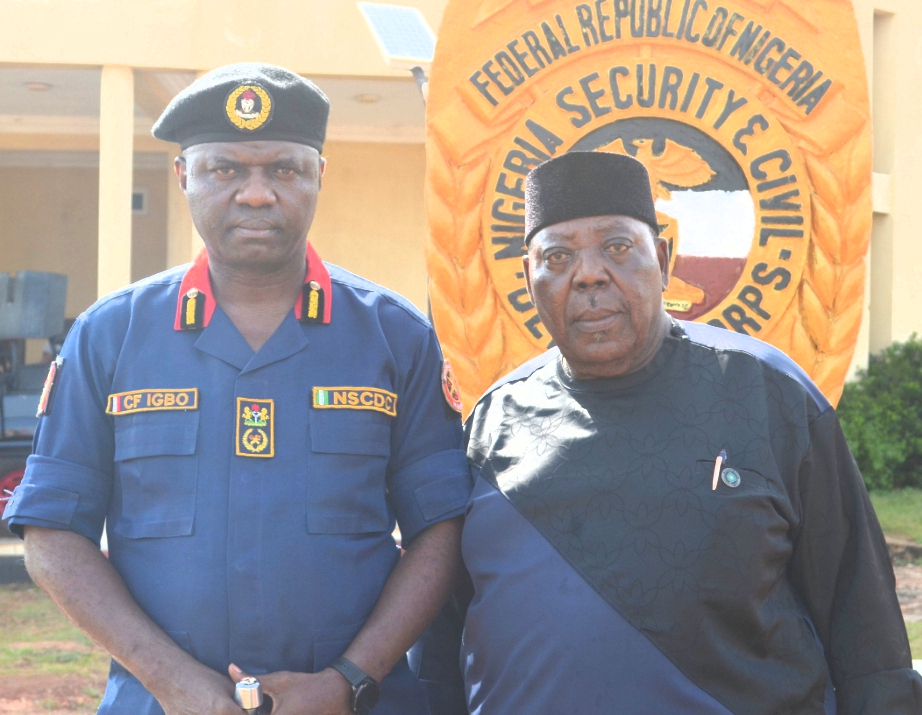
The Nigeria Security and Civil Defence Corps (NSCDC), Delta State Command, has charged private security practitioners under ALPSPN across Delta State to uphold high standards of professionalism and strict adherence to regulatory standards in the discharge of their duties.
The State Commandant, Chibedu Igbo delivered this charge during an interactive stakeholders’ meeting with the leadership and members of the Association of Licensed Private Security Practitioners of Nigeria (ALPSPN), Delta State Chapter, at the Command Headquarters in Asaba.
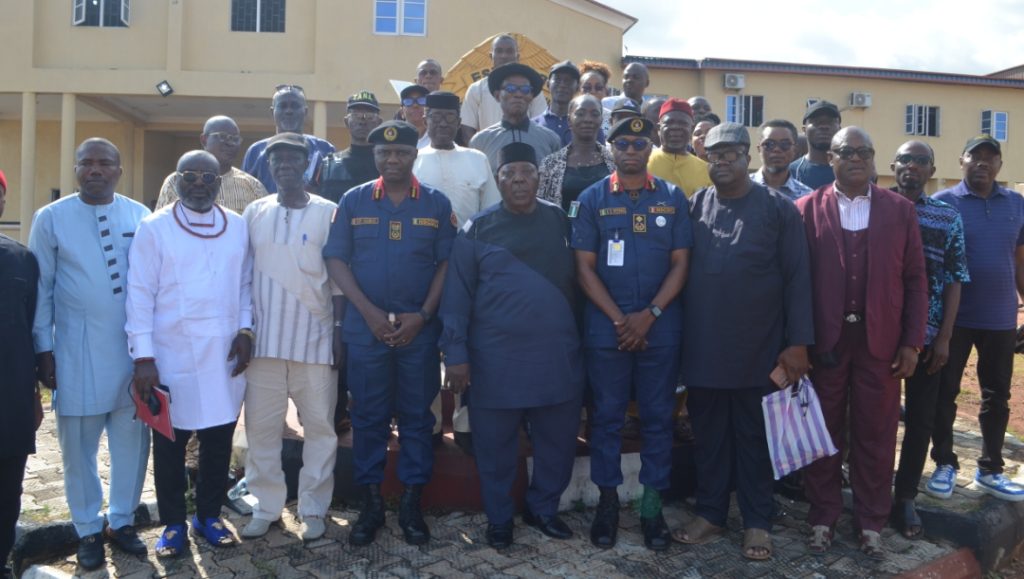
Addressing the security practitioners, Commandant Chinedu emphasized that private guard companies play a vital role in complementing the efforts of conventional security agencies in maintaining law and order, safeguarding life and property, and protecting critical national assets across the state.
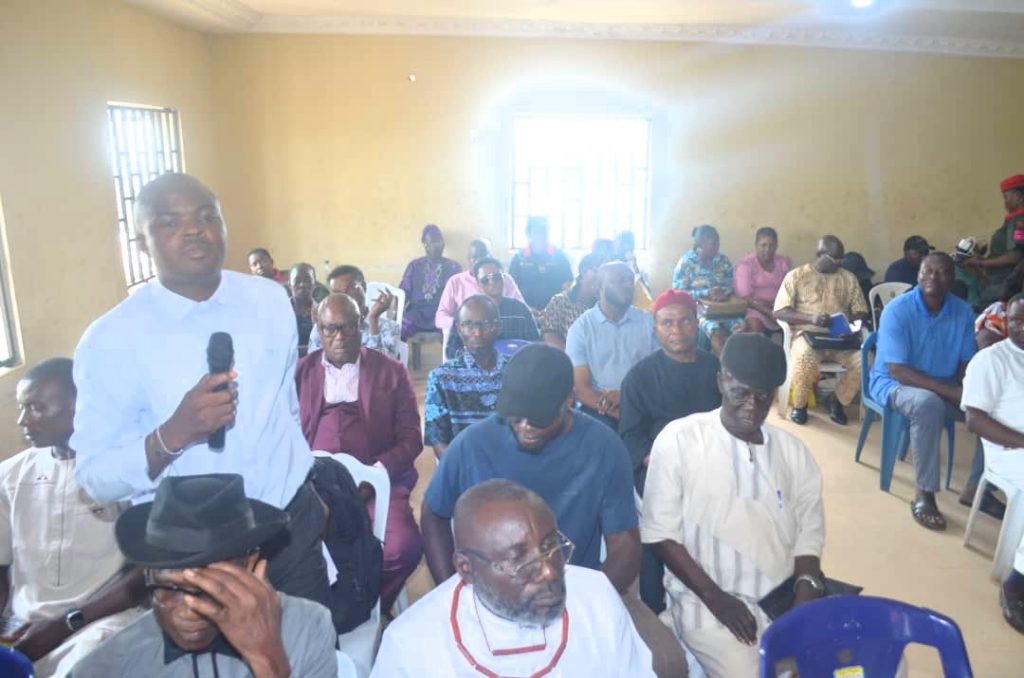
To ensure effective operational synergy and maintain industry standards, the Commandant highlighted several key mandates and operational guidelines which includes but not limited to the following:
He said that all private guard companies (PGCs) operating within Delta State must ensure full renewal of operational licenses, complete registration, and regular audit of their personnel database, and warmed that any unlicensed PGC operating under invalid permits will not be tolerated.
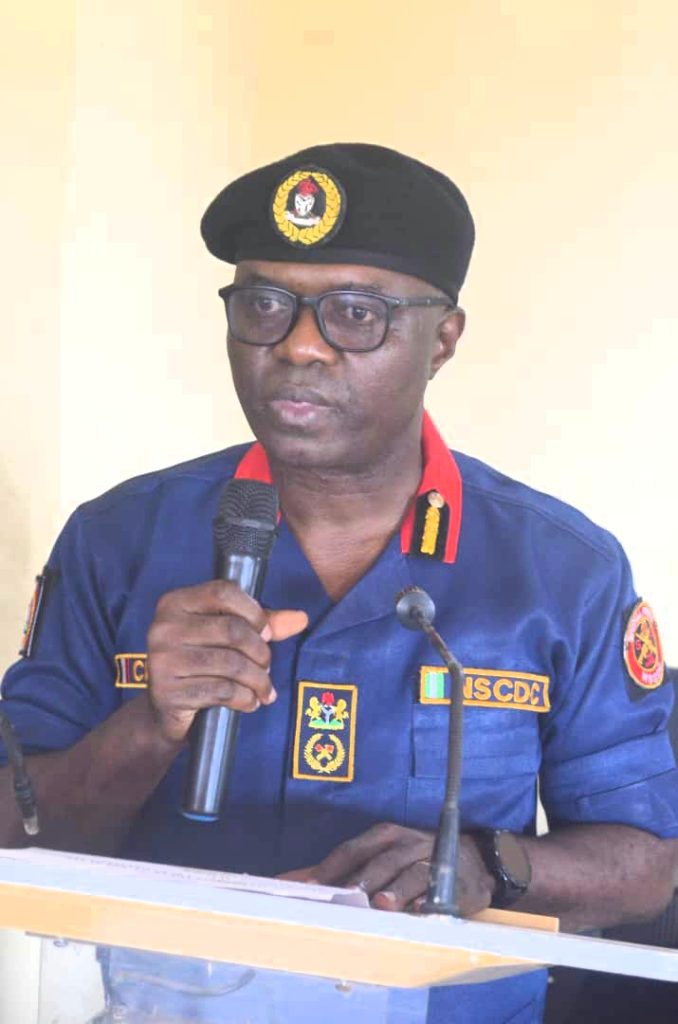
He used the occasion to inform security operators on the plans to conduct thorough background checks and biometric profiling of all managers, guards and prospective guards prior to mitigate internal security breaches.
On intelligence sharing, Commander Igbo urged ALPSPN members to use communication channels for timely intelligence reporting to the NSCDC, enabling swift proactive measures against criminal activities.
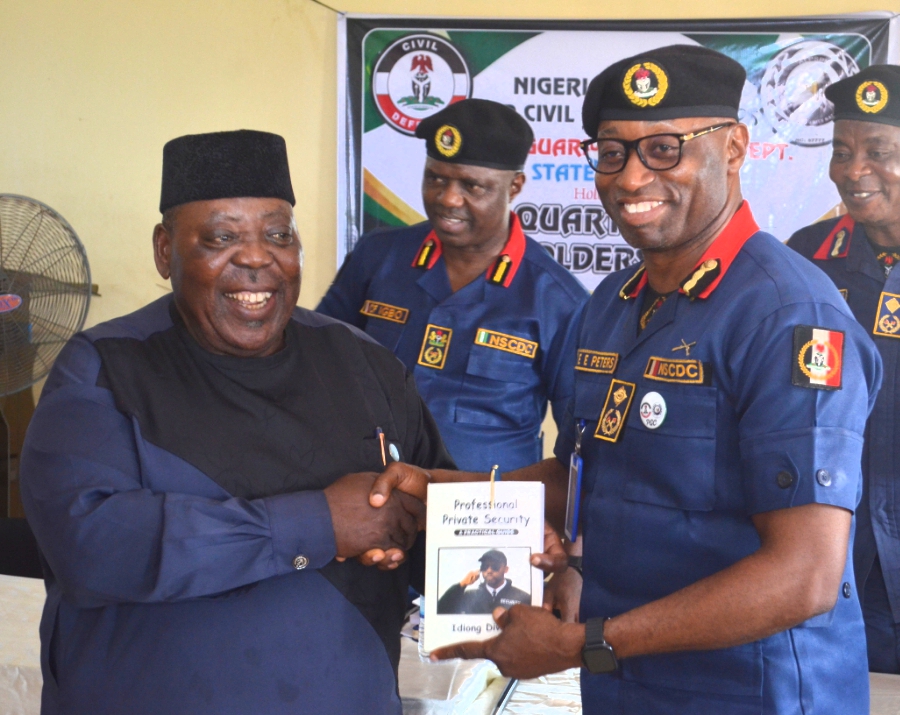
He advised private security firms to prioritize regular training programs in conflict resolution, crowd control, and emergency response for their field personnel.
He also clarified all matters on branch operations of PGCs, applicable fees and issues on Notification of Change of Directors.
Commandant Igbo reiterated the Command’s zero-tolerance stance for unregistered and illegal private security outfits, warning that intelligence operations will commence soonest to identify, seal off, and prosecute defaulting operators in accordance with the Private Guard Companies Act.
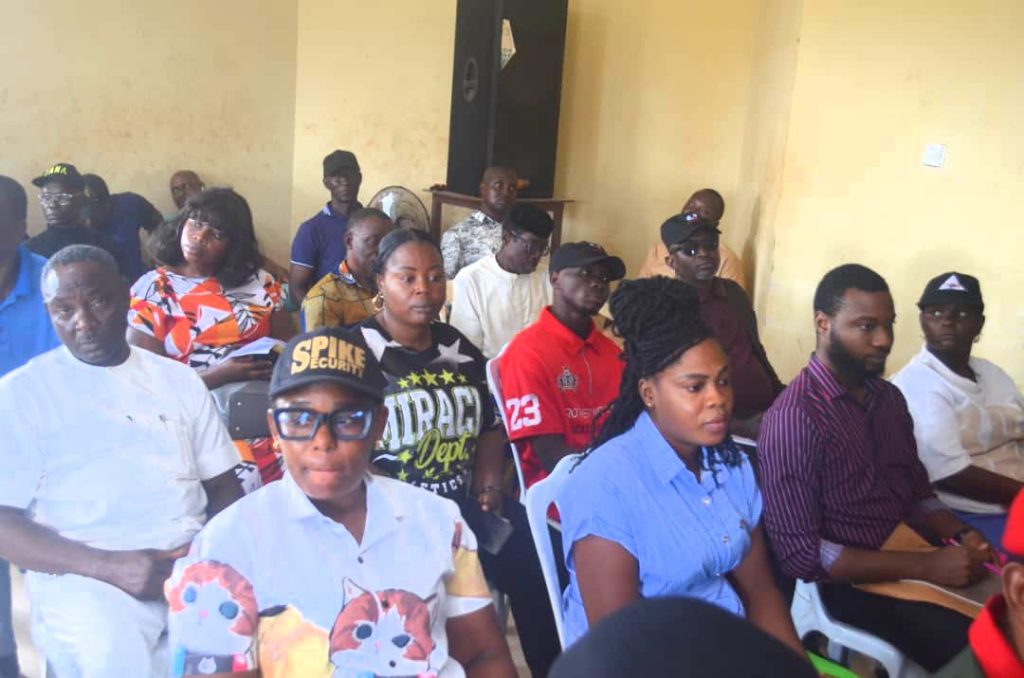
In response, the Chairman of ALPSPN Delta State Chapter, Prof. Emmanus Odikaesieme expressed appreciation to the NSCDC for its continuous oversight, guidance, and support, assuring the State Commandant of their unwavering commitment to professionalism, regulatory adherence, and strategic partnership to ensure maximum security across Delta State.
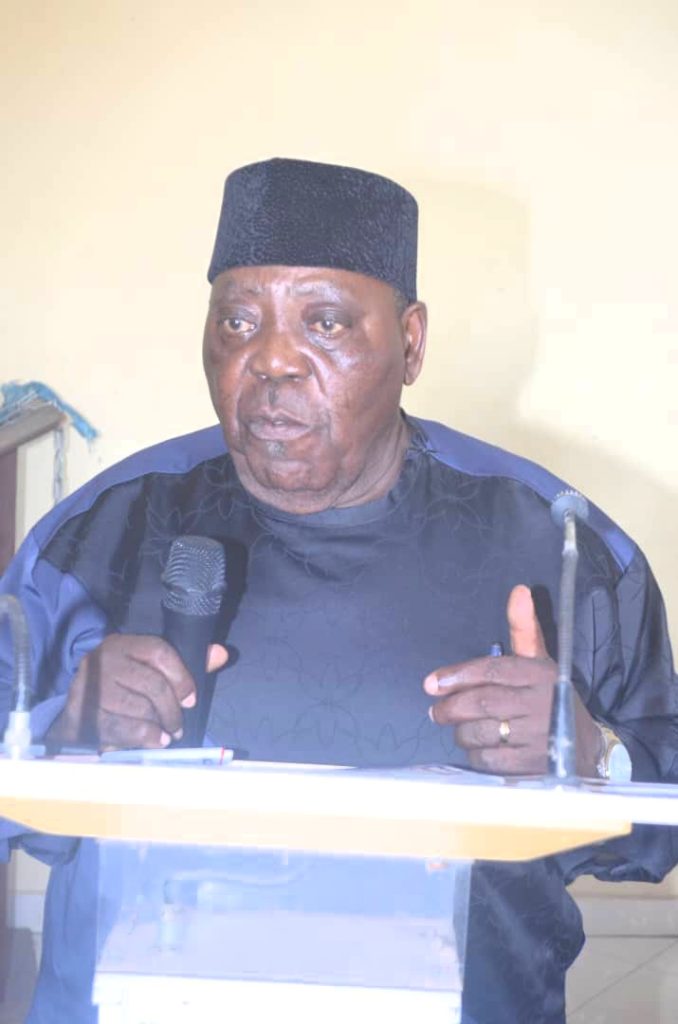
In his remarks, the head of PGC Department (Domestic Security Services) DCC E.E Peters urged the practitioners to look into the general welfare of their guards especially Remuneration which is not expected to be less than minimum wage and uniforms. He hinted that, having been briefed by the regulator (NSCDC) Enforcement drive will commence soonest.
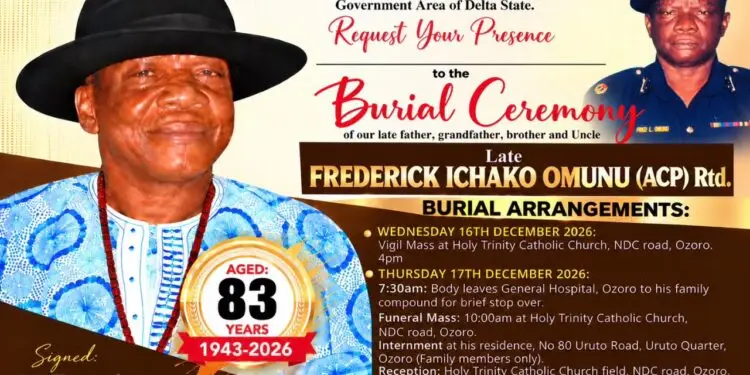
The family of retired Assistant Commissioner of Police (ACP) Frederick Ichako Omunu has announced that he will be laid to rest on Thursday, December 17, 2026, in Ozoro, Isoko North Local Government Area of Delta State, following his death at the age of 83.
The burial programme, jointly announced by the Omunu family of Uruto Quarters and the Omoba family of Urude Quarters, will feature a vigil Mass on December 16 and a funeral Mass on December 17 at Holy Trinity Catholic Church, Ozoro.
Retired ACP Frederick Ichako Omunu died in 2026 at the age of 83.
His burial is scheduled for December 17 in Ozoro, Delta State.
A vigil Mass will hold on December 16 at 4:00 p.m.
The funeral Mass is scheduled for December 17 at 10:00 a.m.
The deceased will be buried at his residence on Uruto Road, Ozoro.
The family has invited relatives, friends and well-wishers to the funeral ceremonies.
According to the funeral announcement, the vigil Mass will take place at 4:00 p.m. on Wednesday, December 16, at Holy Trinity Catholic Church, NDC Road, Ozoro.
On Thursday, December 17, the deceased’s body will leave General Hospital, Ozoro, at 7:30 a.m., with a brief stopover at his family compound.
The funeral Mass will follow at 10:00 a.m. at Holy Trinity Catholic Church, along NDC Road, Ozoro.
Omunu to Be Buried at His Ozoro Residence
Following the funeral Mass, Omunu will be laid to rest at his residence at No. 80 Uruto Road, Uruto Quarters, Ozoro. The family stated that the interment ceremony would be restricted to family members.
A reception for guests will subsequently hold at the field of Holy Trinity Catholic Church, along NDC Road, Ozoro.
The family described the deceased as a father, grandfather, brother and uncle, inviting relatives, friends and well-wishers to join them in honouring his memory.
The burial announcement was signed by family representatives Henry Omunu, Editor, Trumpet Newspaper and Benedict Omunu.
By Our Reporter
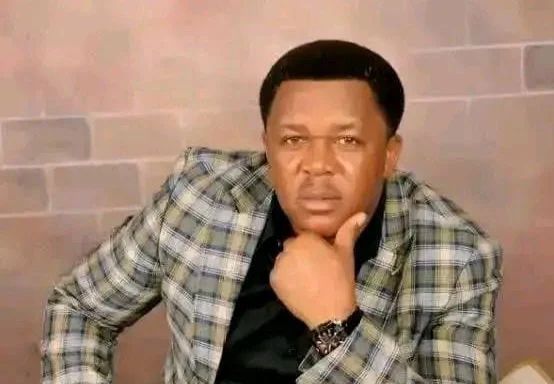
Veteran Nollywood actor Francis Duru has died at the age of 57 following a brief illness, his family has announced.
The family disclosed his death in a statement published on the actor’s official Instagram page in the early hours of Friday.
“We, the family of Francis Duru, regret to announce his passing following a brief illness,” the post reads.
“We appreciate your prayers, love, and understanding. May his soul rest in perfect peace. Amen.”
Duru’s death comes months after he dismissed reports circulating on social media that he was battling a life-threatening illness.
The rumours intensified in June after a video showing the actor looking frail went viral, prompting concerns among fans and colleagues in the entertainment industry.
Responding to the speculation at the time, Duru released a video on Instagram in which he described the footage as “fabricated and malicious”.
Born on July 27, 1969, in Cameroon to Nigerian parents from Imo State, Duru completed his primary and secondary education in the Central African country before moving to Nigeria for university education.
He gained admission to the University of Port Harcourt, Rivers State, where he studied Theatre Arts and graduated with a Bachelor of Arts degree in 1996.
Duru began his acting career in 1989 when he featured in Missing Mark, a film directed by the late Ndubuisi Oko. However, the role did not immediately establish him as a prominent figure in the Nigerian movie industry.
His breakthrough came in 1995 following his appearance in Rattlesnake, an action-comedy produced by the late filmmaker Amaka Igwe. In the film, he played the character Ahanna, a role that helped raise his profile in Nollywood.
Throughout his career, Duru earned several awards and honours in recognition of his contributions to the entertainment industry.
He was named a United Nations ambassador of peace for his positive influence on young people.
In 2020, he won the Best Actor in a Leading Role (Igbo) award at the Best of Nollywood Awards for his performance in Mboputa.
Beyond his acting career, Duru was married to Adokiye, whom he wed in 2003. Their union produced four children.
The family suffered a major loss in August 2024 when one of their children, Ifeanyi, died.
Duru’s death marks the loss of an actor whose career spanned several decades in Nigeria’s film industry.
-
 General News2 weeks ago
Rivers 2027: We are not part of Rainbow Coalition – APC Legacy Group slams Wike, Fubara meeting
-
General News1 month ago
JOHESU demands: MHWUN puts FG on notice over fresh action
-
 Politics1 month ago
2027: ASAF backs APC governors, rejects rainbow coalition
-

 Politics2 months ago
You have demonstrated diligence, loyalty, statesmanship in leadership, Ekechi salutes Shetimma at 60
-

 Politics2 months ago
2027: Advertising experts raise concerns over irregular regulation of sector
-
FCT News2 months ago
2027: Hasana-Moneme pledges skills, empowerment, credit access for FCT women
-
General News3 months ago
2027: Dame Princess Esom-Nwafor Orizu confirmed as APC flagbearer for Nnewi North /South /Ekwusigo Federal Constituency as INEC releases names of candidates
-
Uncategorized3 months ago
Rescue of Oyo schoolchilden: Tinubu commends security agencies, says action breakthrough in fight against criminality