
Uncategorized
Ignore unverified HIV figures on social media, verify through official channels, says ANSACA boss


By Uzo Ugwunze
The Executive Director of the Anambra State AIDS Control Agency (ANSACA), Dr. Nkem Okeke, has urged members of the public to rely on verified information from official health authorities for HIV-related updates, warning against the spread of unconfirmed figures and misinformation on social media.
Dr. Okeke made the call on July 7 during an interview with Udala FM, where he explained that HIV statistics should be interpreted with caution because the number of confirmed cases depends largely on the scale, coverage and targeting of testing, noting that Anambra State has intensified community-based HIV testing through several initiatives, including the Moonlight Testing programme, which operates between 7:00 p.m. and midnight in identified hotspots to reach key populations.
According to him, the initiative is aimed at expanding access to HIV testing, linking those who test positive to treatment and care, while providing preventive services such as counselling and free condoms.
He explained that HIV testing in the state is regularly conducted in communities, markets, religious centres and other public locations through approved outreach programmes. Recent exercises, he said, were carried out in collaboration with healthcare institutions and medical students in communities including St. Paul’s, Ogidi, Nanka, Onitsha and Awka emphasizing that HIV test results remain confidential and are protected by ethical and legal standards, noting that responsible organisations do not publicly disclose the identities or results of individuals.
The ANSACA boss said that any organisation intending to carry out HIV-related programmes in government institutions or public facilities in Anambra State must obtain approval from ANSACA or the State Ministry of Health to ensure proper coordination, quality assurance and compliance with national guidelines.
Speaking on the state’s HIV response, Dr. Okeke said HIV remains a significant public health concern despite remarkable advances in prevention and treatment, observing that the COVID-19 pandemic diverted public attention and health resources from HIV, slowing awareness campaigns and affecting service delivery in many communities.
He identified adolescents and young people as a priority group for prevention efforts, pointing to social, economic and behavioural factors that increase their vulnerability to HIV infection, stressing the need for stronger parental involvement, community participation, school-based education and sustained youth-focused awareness campaigns to discourage risky behaviours and prevent new infections.
Dr. Okeke disclosed that Anambra State is supporting the implementation of the National HIV Prevention Plan, which focuses on reaching young people with age-appropriate HIV prevention education before they become exposed to high-risk behaviours, expressing optimism that sustained awareness, expanded testing, early diagnosis and prompt treatment would significantly reduce new HIV infections and strengthen the state’s efforts to eliminate HIV as a public health threat.
He reaffirmed that the fight against HIV requires the collective commitment of government, healthcare workers, educational institutions, faith-based organisations, community leaders, civil society groups and residents. According to him, increased public awareness, wider access to HIV testing and early treatment remain critical to achieving an HIV-free Anambra State.

Ade Aremu
A public policy analyst, Adeyemo Adebisi, has warned politicians, journalists and social media users against knowingly publishing false election results in the 2027 general elections, saying offenders risk a four-year imprisonment upon conviction and possibly with a fine.
Adeyemo gave the warning in an article aimed at educating Nigerians on the legal implications of announcing or circulating fabricated election results before the Independent National Electoral Commission (INEC) declares the winners.
He said the growing use of social media and artificial intelligence to spread misleading election information made it necessary for citizens to understand the legal consequences of deliberately publishing false results.
According to him, Section 124(4) of the Electoral Act 2026 provides for four years imprisonment for anyone convicted of announcing or publishing an election result known to be false or at variance with the signed certificate of return.
He cautioned politicians, party agents, bloggers, influencers, broadcasters and ordinary social media users against presenting fabricated figures as official election results.
Adeyemo, however, clarified that Nigerians could campaign for their preferred candidates, analyse electoral performance and share authentic polling-unit figures, “provided they did not knowingly publish false results or misrepresent unofficial figures as official declarations.”
He explained that Section 25 of the Electoral Act 2026 identified the electoral officers of INEC as responsible for official announcements and declarations, stressing that independent calculations or figures circulated online could not replace the legally-authorised declaration.
The analyst also raised concerns about the potential misuse of artificial intelligence to create fake result sheets, manipulate videos and generate audio recordings falsely portraying electoral officials as announcing winners.
He warned that knowingly using AI to manufacture and circulate false election results could attract prosecution where the elements of an applicable offence were established.
Adeyemo further cited “Section 124(3) of the Electoral Act 2026, which criminalises specified conspiracies involving polling agents, political parties or party agents to make false declarations of election results.
”The provision prescribes a maximum fine of N2 million, imprisonment for 12 months, or both.”
He added that Sections 124(4), 124(5) and 124(6) prescribe three years’ imprisonment for specified offences involving the knowing delivery of false certificates of return, with the penalty under Section 124(5) carrying no option of a fine.
On the use of social media, Adeyemo warned against assuming that online publications were automatically protected as personal opinions.
He cited Section 24(1)(b) of the Cybercrimes (Prohibition, Prevention, etc.) Act, as amended in 2024, “which criminalises knowingly sending false messages through computer systems for specified purposes, including causing a breakdown of law and order or posing a threat to life.”
He said the offence attracts a fine of up to N7 million, imprisonment for up to three years, or both, where the statutory requirements are established.
The analyst also recalled that the National Broadcasting Commission (NBC) disclosed in March 2023 that it had sanctioned 25 broadcasting stations for breaches during the presidential election period.
He said the commission specifically sanctioned one station for announcing election results before INEC, contrary to the Nigeria Broadcasting Code.
Adeyemo noted that suspected electoral offences could lead to arrest, criminal investigations, the preservation of relevant digital evidence and prosecution where the law permitted and fine.
He stressed, however, that any arrest, seizure or forensic examination of electronic devices ought to comply with applicable legal requirements, while also noting that deleting a post would not necessarily eliminate evidence of a suspected offence.
The analyst said Section 148 of the Electoral Act 2026 provides for the prosecution of electoral offences by INEC legal officers or appointed legal practitioners before the appropriate courts.
“Elections are decided by voters, not by the speed of social media announcements.
“Ignorance of the law is no excuse,” he said, urging Nigerians to exercise caution before publishing election-related information.
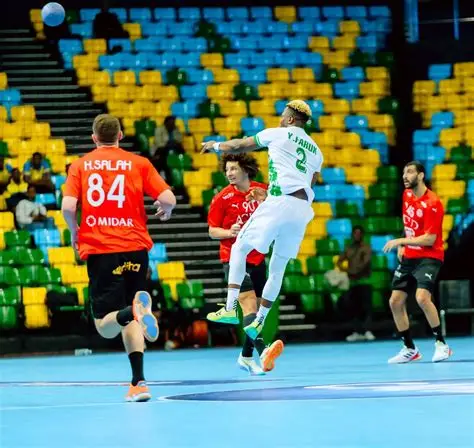
The Handball Federation of Nigeria (HFN) has introduced a mandatory national transfer and loan fee of ₦250,000 for players moving between clubs in the country, with the policy set to take effect from November 1, 2026.
The policy, contained in a circular signed by HFN President, Jibril Saidu Ojih (FNIQS), is aimed at ensuring proper documentation of player transfers, protecting clubs that invest in players’ development and bringing Nigeria’s handball transfer system in line with the regulations of the International Handball Federation (IHF) and the Confederation of African Handball (CAHB).
A statement issued by Cosmos Chukwuemeka Akisi, Media Officer and Vice Chairman,
HFN Media Commission, said the directive, according to Jibril Saidu Ojih, applies to clubs in the Nigeria Handball Premier League and National Division One, state associations, military and para-military clubs, and handball academies. It covers local transfers, international transfers and loans involving male and female amateur and professional players.
Under the new policy, a club signing a player from another Nigerian club must pay a transfer fee of ₦250,000 to cover administrative charges and compensation for player development. Of the amount, ₦100,000 will go to the HFN as administrative charges, while ₦150,000 will be paid to the club releasing the player. The same fee applies to loans between Nigerian clubs for each season, with loans limited to one season but renewable.
The HFN President said the policy became necessary following its observation that several local and international transfers involving Nigerian players were being conducted without proper procedures, the involvement of licensed agents or compensation for clubs responsible for training and developing the players.
He warned that such practices are contrary to Article 9 of the IHF Regulations, Edition of June 4, 2025, which addresses compensation and the protection of minors.
The new rules also provide additional compensation for clubs that have invested in players over a period of time. A club that trains a player for at least two consecutive seasons will be entitled to an additional ₦100,000 for each season of training if the player is transferred as a professional for the first time.
The president also clarified the criteria for determining a player’s professional status. He said player receiving match bonuses exceeding ₦50,000 per month or holding a written employment contract will be regarded as a professional. Clubs are required to submit the names of their professional players to the Federation by September 30 each year for inclusion in the IHF Transfer Management System (TMS).
Another major provision of the policy is the compulsory use of licensed agents for all local and international player transfers and loans. The Federation warned that any transfer conducted without a licensed agent would be declared null and void.
Under the prescribed procedure, a club seeking to sign a player must first send an official letter of interest to the player’s current club, with a copy to the HFN. The releasing club is then expected to issue a clearance letter, after which both clubs and the player will sign a tripartite agreement.
Upon payment of the prescribed fee and submission of proof of payment, the HFN will issue a National Transfer Certificate and update the player’s records on the IHF Transfer Management System. No player will be allowed to register or play for a new club without the required certificate.
For international transfers, the Federation reiterated that no player may move to another club or federation without an International Transfer Certificate issued through the IHF Transfer Management System. All international transfer requests must be channelled through the HFN, as direct dealings between clubs without the Federation’s involvement are not permitted.
The circular further states that international transfers involving players below the age of 16 are prohibited, while players aged 16 to 18 require IHF approval, alongside evidence that their academic and sporting welfare will be protected. All loans must also be supported by a three-party agreement specifying the duration of the arrangement.
In line with international regulations, clubs that train professional players may also be entitled to education compensation of up to CHF 3,500 per season.
The HFN warned that clubs and other stakeholders who fail to comply with the new policy will face strict sanctions. These include forfeiture of matches in which an ineligible player is fielded, with the offending team losing three points and 10 goals, as well as a non-negotiable fine of ₦500,000 and a ban from transfer activities for two transfer windows.
“International violations will be referred to the IHF and CAHB for further sanctions, including possible compensation of CHF 3,500.”
The Federation also stated that any agent not recognised by the CAHB or IHF who is found to be involved in a player transfer will face a ban and a non-negotiable fine of ₦300,000.
The HFN said the policy is part of its efforts to strengthen the administration of handball in Nigeria, protect clubs that invest in player development and ensure that player transfers are conducted transparently and in accordance with international standards.
All clubs, state associations, academies and other handball stakeholders have therefore been directed to familiarise themselves with the new regulations and ensure full compliance ahead of the November 1, 2026 commencement date.
ByLemmy Ughegbe, Ph.D
Nigeria speaks passionately about fighting corruption. Yet it repeatedly struggles to prove its most celebrated corruption allegations in court.
We have built an elaborate anti-corruption architecture. We have enacted laws, created specialised investigative units and committed considerable public resources to prosecuting financial crimes. Still, when the most consequential cases reach judgment, the outcome often raises uncomfortable questions about the competence of those entrusted with enforcing the law.
The latest judgment in the long-running Malabu Oil saga brings those questions back into national focus.
On Thursday, 15 October 2026, the Federal High Court in Abuja discharged and acquitted businessman Aliyu Abubakar, Malabu Oil and Gas Limited and six other defendants of money laundering charges linked to Oil Prospecting Licence 245. Justice Inyang Ekwo held that the Economic and Financial Crimes Commission (EFCC) failed to prove its case beyond reasonable doubt.
The decision closes another chapter in one of Nigeria’s most controversial oil-related prosecutions. It also exposes investigative and prosecutorial weaknesses that deserve serious public scrutiny.
Malabu is no ordinary financial dispute. At its centre is OPL 245, an immensely valuable offshore block first awarded in 1998 and later entangled in disputes involving government officials, multinational oil companies and allegations of illicit payments. The 2011 settlement involving the Federal Government, Malabu, Shell and Eni was valued at about $1.3 billion. For years, the affair drew international attention and came to symbolise Nigeria’s struggle to enforce accountability in its petroleum sector.
Yet the real significance of this judgment lies less in the size of the transactions than in the court’s assessment of the prosecution.
Justice Ekwo faulted the EFCC for pressing charges despite a 2018 advice from the Office of the Attorney-General of the Federation against prosecution for insufficient evidence. The court also found that the investigation had not been concluded before the charges were filed. In related proceedings involving Abubakar, it noted deficiencies in forensic evidence, including reliance on photocopies rather than original documents.
These are not trivial procedural lapses. They strike at the foundations of criminal justice.
One principle must be stated plainly. An acquittal is not a licence to keep treating defendants as criminals in the court of public opinion. The presumption of innocence is a constitutional guarantee, not an inconvenience to be discarded whenever public anger runs high.
The defendants were entitled to insist that the prosecution prove every essential element of its case. It did not. The judgment must therefore be respected, however strongly anyone feels about the wider Malabu controversy.
But respecting an acquittal does not require silence about institutional performance.
If investigators pursue complex financial crime allegations without completing the necessary groundwork, what mechanism exists to catch such failures before defendants endure years of litigation? Who reviews the evidential foundation of major prosecutions? Who decides whether the prospect of conviction justifies the public expense? And when courts identify serious investigative failings, what consequences follow?
Nigeria must stop measuring anti-corruption success by the number of arrests, the prominence of suspects or the drama surrounding charges.
An arrest is not a conviction. An allegation is not evidence. A press conference is no substitute for a properly assembled prosecution brief.
The credibility of criminal justice rests on patient investigation, competent forensic analysis, admissible evidence and prosecutors able to present a coherent case that meets the demanding standard of proof beyond reasonable doubt.
There is also a constitutional question about the relationship between the EFCC and the Attorney-General.
Section 174 of the Constitution vests the Attorney General of Federation with wide powers over federal criminal proceedings, including the power to institute, take over or discontinue prosecutions, having regard to the public interest, the interests of justice and the need to prevent abuse of legal process. The EFCC, for its part, holds statutory investigative and prosecutorial powers.
Effective law enforcement requires both institutions to operate within their mandates, without bureaucratic rivalry or political interference.
Equally, the Attorney-General’s authority must never become a shield against legitimate investigation. Advice against prosecution may be entirely justified where evidence is weak, but it must itself serve the public interest. The right response is neither blind obedience nor reckless defiance. It is a transparent, legally defensible process guided by evidence, constitutional authority and professional judgment.
Repeated failures in high-profile cases carry a double danger.
They expose individuals to prolonged prosecution without adequate evidential basis. They also erode public confidence in the state’s capacity to pursue genuine wrongdoing. Both outcomes injure justice. The innocent deserve protection from wrongful prosecution, just as society deserves competent investigation where credible evidence exists.
The EFCC should treat this judgment as an occasion for serious institutional reflection, not merely another unfavourable ruling.
A thorough review of the investigation, evidential preparation and prosecution strategy is warranted. That review should separate genuine professional failings from reasonable decisions that simply did not persuade the court. Not every acquittal proves incompetence, just as not every prosecution is justified because the allegations sound grave. The distinction matters.
The National Assembly also has a legitimate oversight role. It should examine whether our anti-corruption agencies have the forensic capacity, technical expertise and internal safeguards that complex financial investigations demand.
Crimes involving multinational transactions, offshore structures and intricate banking records cannot be prosecuted on assumptions or shortcuts. They require specialised knowledge, international cooperation and painstaking preparation.
The Malabu judgment should prompt a more mature national conversation about what success in the anti-corruption fight truly means.
Nigeria does not need agencies that merely look formidable before television cameras. It needs institutions whose investigations are rigorous, whose prosecutions are fair and whose conduct inspires confidence even when verdicts disappoint the public.
The real scandal would be to learn nothing from the failures the court has identified.
The fight against corruption must itself be governed by competence, accountability and the rule of law. Otherwise, Nigeria risks becoming a country where allegations make headlines, prosecutions consume years, and justice is left to explain why the evidence was never good enough.
Lemmy Ughegbe, Ph.D, FIMC, CMC
Email: lemmyughegbeofficial@gmail.com
WhatsApp ONLY: +2348069716645
-
 General News2 weeks ago
Rivers 2027: We are not part of Rainbow Coalition – APC Legacy Group slams Wike, Fubara meeting
-
General News1 month ago
JOHESU demands: MHWUN puts FG on notice over fresh action
-

 Politics1 month ago
2027: ASAF backs APC governors, rejects rainbow coalition
-

 Politics2 months ago
You have demonstrated diligence, loyalty, statesmanship in leadership, Ekechi salutes Shetimma at 60
-

 Politics2 months ago
2027: Advertising experts raise concerns over irregular regulation of sector
-
FCT News2 months ago
2027: Hasana-Moneme pledges skills, empowerment, credit access for FCT women
-
General News3 months ago
2027: Dame Princess Esom-Nwafor Orizu confirmed as APC flagbearer for Nnewi North /South /Ekwusigo Federal Constituency as INEC releases names of candidates
-
Uncategorized4 months ago
Rescue of Oyo schoolchilden: Tinubu commends security agencies, says action breakthrough in fight against criminality